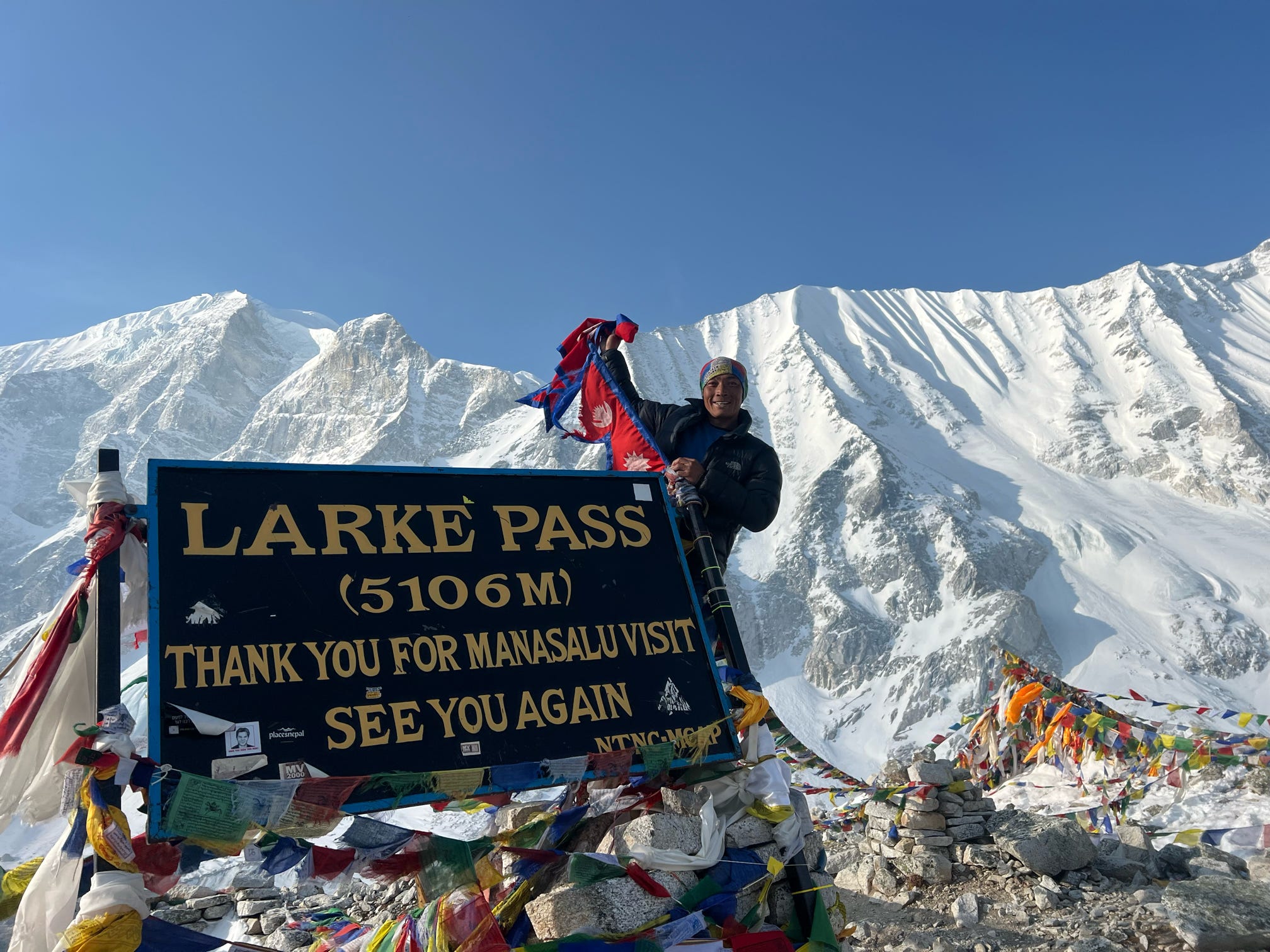
Bhim Tamang
- Trekking leader
"Live The Adventure Of A Lifetime"
Not every Himalayan trek is about reaching a high mountain pass or standing beneath the tallest peaks. Some journeys are defined by the stories, traditions, and people you encounter along the way. The 13 Days Tsum Valley Trek is one such experience, offering a remarkable introduction to one of Nepal’s most culturally preserved regions within a relatively short trekking itinerary.
Located in the remote northern part of the Gorkha district, Tsum Valley remained isolated from the outside world for centuries. This long period of seclusion helped preserve its unique Tibetan Buddhist heritage, creating a destination where ancient monasteries, prayer-carved mani walls, and traditional mountain villages continue to play an important role in everyday life.
The journey begins in the lower Budhi Gandaki Valley before leaving the main Manaslu trail and entering the peaceful landscapes of Tsum. As the route climbs deeper into the valley, modern influences gradually fade, replaced by quiet settlements, spiritual landmarks, and a slower pace of life that feels increasingly rare in today’s world. While this itinerary focuses on the valley’s most significant cultural and religious highlights, those interested in spending additional time exploring its remote communities and lesser-visited corners often option for a longer Tsum Valley journey.
Rather than focusing on physical challenges alone, this trek rewards travelers with meaningful cultural encounters. Villages such as Chumling, Chhokang Paro, and Nile provide opportunities to observe local customs, interact with welcoming communities, and experience traditions that have been passed down through generations.
The valley is also home to some of the region’s most significant Buddhist sites. Visits to Mu Gompa, Rachen Gompa, and the sacred Milarepa Cave offer a deeper understanding of the spiritual identity that has shaped Tsum Valley for centuries and continues to attract pilgrims from across the Himalayan region.
While culture remains the defining feature of the trek, the scenery is equally captivating. Throughout the journey, trekkers are accompanied by views of Ganesh Himal, Himalchuli, Sringi Himal, and other snow-capped peaks that rise dramatically above the valley’s rugged landscapes.
Designed for travelers who want to experience the cultural heart of the Himalayas without committing to a longer expedition, the 13 Days Tsum Valley Trek combines spiritual discovery, authentic village life, and spectacular mountain scenery into one unforgettable adventure.
Upon your arrival at Kathmandu International Airport, Lhasso Adventure representative will warmly welcome you and transfer you to your hotel. After check-in, you’ll have some free time to rest, freshen up, and enjoy a meal. In the evening, we gather for team introductions, a briefing session, and general discussions about the adventure ahead. Later, we head out for a welcome dinner at one of our favorite local restaurants, where you can experience authentic Nepali cuisine.
The drive from Kathmandu to Machha Khola, spanning around 160 km, takes 7–8 hours and offers a mix of scenic views and rugged adventure. Starting on the smooth Prithvi Highway, the route transitions to off-road trails, passing through Dhading Besi, Arughat, and alongside the Budhi Gandaki River. Highlights include lush hills, traditional villages, and waterfalls.
The first day of the trek begins with a crossing of the Tharo Khola, followed by a gentle walk to Khorlabesi. Along the way, there’s an opportunity to visit a natural hot spring. After crossing a suspension bridge over the Budhi Gandaki River, we ascend to Dovanthan and then climb toward the Yaru Khola. We cross another suspension bridge and follow a staircase, eventually reaching the west bank of the Budhi Gandaki River and arriving at Jagat Village for an overnight stay.
In the morning, we follow the Manaslu Circuit Trek route, then after lunch, we head towards the Tsum Valley. We pass through rivers, streams, forests, and villages like Salleri, Siribass, and the larger Gurung village of Philm. We then reach Ekle Bhatti, which leads to a river gorge and another crossing of the Budhi Gandaki River. At this point, we can see the route to the Tsum Valley and anticipate entering it the next day. Before stopping for the night at Lokpa, we take in views of Himalchuli and other snow capped peaks.
Today, we tackle steep climbs surrounded by stunning scenery that distracts from our sore legs. Pine, juniper, and rhododendron forests occasionally block mountain views, but the peaks remain visible above. we have the afternoon to explore Panago Gompa and Gurwa Gompa, the first of many monasteries we will encounter on the trek. We spend the night in Chumling, a stone-paved village resembling Tibet.
Today, we journey into the Upper Tsum Valley, crossing a landslide area and climbing a high ridge with breathtaking views of Ganesh Himal. If we’re up early, we can catch a stunning sunrise at Shringri Himal. In the Upper Tsum Valley, the houses and people appear even more Tibet-like, reflecting the area’s history. The Nepali Gurung and Tamang people, as well as the Tsum communities, are believed to have originated from Tibet centuries ago. Overnight at Chhokung Paro.
On the way to Nile, the last settlement in the Tsum Valley, we pass by caves where the Buddhist scholar and yogi Milarepa meditated during his travels in the 11th century. We also visit Rachen Gompa nearby. Nile, located close to the Tibetan border, has a spiritual and peaceful atmosphere, with its traditional Tibetan-style architecture. It’s known for its proximity to important monasteries like Mu Gompa. We overnight in Nile.
Early morning today, our peaceful, spiritual atmosphere continues as we hike to Mu Gompa, surrounded by mountains. Mu Gompa, the most famous monastery in the area, is home to lamas and monks who pray and meditate in this serene setting. We admire the beautiful murals on the monastery walls, including depictions of Tara and Guru Padmasambhava. We may also have the chance to participate in a Buddhist ritual or light oil lamps for our loved ones. Afterward, we return to Nile for the night.
We begin descending towards Chumling through lush greenery. On the return journey, Chumling offers a peaceful environment where trekkers can relax, explore local monasteries, and engage with friendly locals eager to share their customs and stories, allowing us to appreciate the cultural richness of the Lower Tsum Valley. We overnight in Chumling.
The trail from Chumling descends through terraced fields and lush forests, crossing the Siyar Khola River on a suspension bridge with scenic views. Continuing on, you reach the impressive Samba Falls. The path winds through small villages, fields, and forests, offering stunning mountain views, including Shringi Himal. Along the way, you’ll encounter friendly locals, yaks, and other livestock. We overnight in Philim Village.
We continue our return journey along the Budi Gandaki River, hiking from the ridge to Labubesi village. We reach Machha Khola marking the final full day hiking o the train. We overnight in Machha Khola Village.
The drive from Machha Khola to Kathmandu takes 8 – 9 hours, passing through scenic landscapes, terraced fields, and small villages. Following the Marshyangdi River, the journey offers a relaxing transition from the mountains to the vibrant capital, marking the end of the Tsum Valley Trek. Back in Kathmandu.
Your adventure in Nepal comes to an end today! There is nothing to do but trade emails with travel companions and organize the photos. If you have more time you can do some shopping or sightseeing. A representative from our company will take you to the airport approximately 3 hours before the scheduled flight. On your way home you’ll have plenty of time to plan your next adventure in the wonderful country of Nepal.
Our standard itinerary may vary slightly due to weather, trail conditions, government regulations, or individual health needs. In all cases, Lhasso Adventure guides evaluate the situation and find the best safe alternative. We recommend arriving in Kathmandu at least one day before the trek start date, and booking international flights with 2–3 buffer days after your return date.
At Lhasso Adventure, we believe travel should create a positive impact. That’s why we donate 10% of our profits to the Mother and Children Art Foundation (MCAF), supporting education, healthcare, and sustainable opportunities for underprivileged women and children across Nepal.
Through our partnership with MCAF, we also support community initiatives, including medical health camps, school volunteering programs, and projects that improve the well-being of local mountain communities. Every trek with us helps give back to the people who make Nepal truly special.
Lhasso Adventure holds active membership with Nepal’s leading trekking bodies and enforces strict responsible tourism standards on every departure.
All Lhasso Adventure group departures for the Tsum Valley Trek have a maximum of 16 participants. Small groups mean a more personal experience, better acclimatization monitoring, and less impact on the trail. Can't find a date that works? We also offer private departures on any date,
| Start | Finish | Availability | Price | |
|---|---|---|---|---|
| 05/10/2026 | 17/10/2026 | Trip Status available | Starting from $ 1100 | Book Now |
| 16/10/2026 | 28/10/2026 | Trip Status available | Starting from $ 1100 | Book Now |
| 06/11/2026 | 18/11/2026 | Trip Status available | Starting from $ 1100 | Book Now |
| 10/11/2026 | 22/11/2026 | Trip Status available | Starting from $ 1100 | Book Now |
| 02/12/2026 | 14/12/2026 | Trip Status available | Starting from $ 1100 | Book Now |
| 14/12/2026 | 26/12/2026 | Trip Status available | Starting from $ 1100 | Book Now |
| 02/01/2027 | 14/01/2027 | Trip Status available | Starting from $ 1100 | Book Now |
| 09/01/2027 | 21/01/2027 | Trip Status available | Starting from $ 1100 | Book Now |
| 01/02/2027 | 13/02/2027 | Trip Status available | Starting from $ 1100 | Book Now |
| 04/02/2027 | 16/02/2027 | Trip Status available | Starting from $ 1100 | Book Now |
| 04/03/2027 | 16/03/2027 | Trip Status available | Starting from $ 1100 | Book Now |
| 16/03/2027 | 28/03/2027 | Trip Status available | Starting from $ 1100 | Book Now |
| 01/04/2027 | 13/04/2027 | Trip Status available | Starting from $ 1100 | Book Now |
| 15/04/2027 | 27/04/2027 | Trip Status available | Starting from $ 1100 | Book Now |
| 08/05/2027 | 20/05/2027 | Trip Status available | Starting from $ 1100 | Book Now |
| 12/05/2027 | 24/05/2027 | Trip Status available | Starting from $ 1100 | Book Now |
| 04/06/2027 | 16/06/2027 | Trip Status available | Starting from $ 1100 | Book Now |
| 16/06/2027 | 16/06/2027 | Trip Status available | Starting from $ 1100 | Book Now |
| 02/07/2027 | 14/07/2027 | Trip Status available | Starting from $ 1100 | Book Now |
| 02/08/2027 | 14/08/2027 | Trip Status available | Starting from $ 1100 | Book Now |
| 15/08/2027 | 27/08/2027 | Trip Status available | Starting from $ 1100 | Book Now |
Looking for personalized. We organize privately guided journey which is mainly designed to fit your taste and interest. Please fill out the form below to get started.
Lhasso Adventure provides a 70–80L duffel bag for your porter to carry (keep it under 20–25 kg). You can rent a 4-season sleeping bag or down jacket for USD 35 each, let us know before the trek starts. You can store non-trekking items at your Kathmandu hotel at no extra cost.
In addition to making trekking more enjoyable, having the appropriate gear guarantees your safety and readiness for a range of situations. Regardless of skill level, every hiker has to invest in high-quality equipment and understand how to utilize it properly. A delightful journey can differ from a difficult ordeal depending on the level of planning and equipment used. Please make your selections of the necessary equipment from the list below.
If you have any more specific questions or need further details, please feel free to contact us anytime.
Contact UsThe Tsum Valley Trek is a scenic hike in Nepal, taking you through the remote Tsum Valley, known for its Tibetan culture, stunning landscapes, and ancient monasteries.
The trek is moderately challenging, requiring a good level of fitness. It involves high-altitude trekking and some steep sections, but is manageable for most trekkers with prior hiking experience.
The best time to trek is during the spring (March to May) and autumn (September to November) months, when the weather is clear and temperatures are moderate.
You will need the Manaslu Conservation Area Permit (MCAP) and a Special Trekking Permit for Tsum Valley.
The trek typically takes around 13 to 16 days, depending on the itinerary and pace.
Yes, there are tea houses and lodges along the route that offer basic accommodations and meals.
Meals consist of traditional Nepali food such as dal bhat (lentil soup with rice), momos (dumplings), and Tibetan dishes like tsampa and noodles.
Yes, altitude sickness can occur above 3,500 meters. It is important to acclimatize properly by taking rest days and drinking plenty of water.
Yes, a guide is required for the trek as the region is remote, and a guide can help with navigation, provide cultural insights, and ensure safety.
Yes, the Tsum Valley Trek can be combined with the Manaslu Circuit Trek, allowing you to explore the Manaslu region as well.