




Jons Lama
- Trekking Guide
"Live The Adventure Of A Lifetime"
The 14-Day Nepal Education Expedition with Mardi Himal Trek combines community service, cultural learning, adventure, and Himalayan trekking into one meaningful journey. Rather than focusing only on sightseeing, the expedition allows participants to experience Nepal through direct interaction with local communities, hands-on service, outdoor activities, and exploration of the Annapurna region.
The journey begins in Kathmandu with a trip orientation and guided visits to important UNESCO World Heritage Sites. These cultural experiences introduce participants to Nepal’s history, architecture, traditions, and way of life before the group travels to Kakani for the community service component of the expedition.
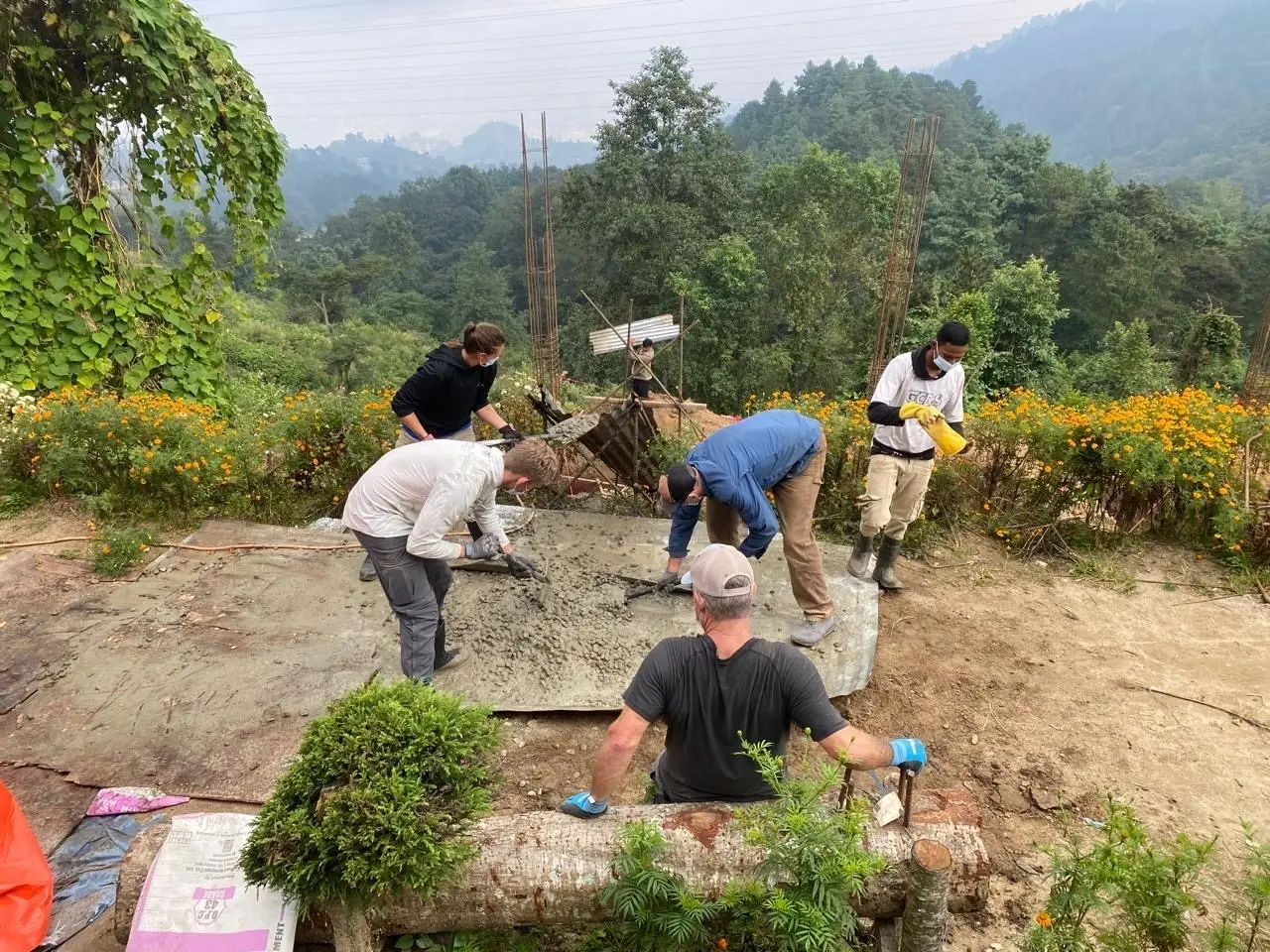
At Kakani Brighter Secondary School, participants take part in school-building and community development activities alongside local skilled workers. They also have opportunities to interact with students and community members through conversations, shared activities, and cultural exchange. Spending several days within the community makes the service project an important part of the educational experience, allowing participants to better understand local life and contribute in a practical way.
After completing the school project, the expedition continues with white water rafting on the Trisuli River, offering an active outdoor experience before travelling to Pokhara. In Pokhara, participants explore attractions including Phewa Lake, the World Peace Pagoda, Pumdikot, and the International Mountain Museum, providing a combination of natural, cultural, and educational experiences.
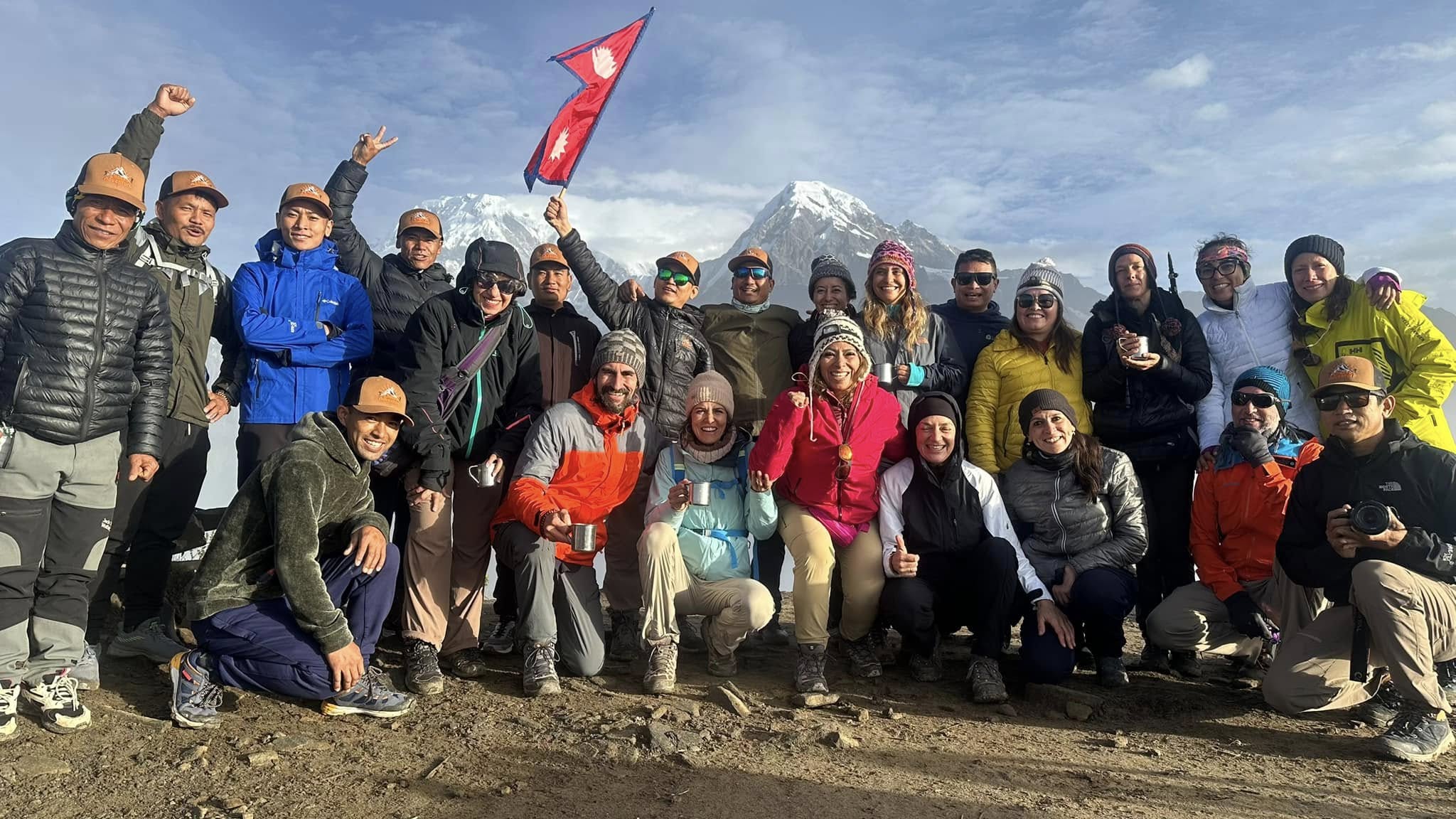
The final stage of the journey takes participants into the Annapurna region for the Mardi Himal Trek. The trail moves through peaceful villages, forested sections, mountain landscapes, and higher Himalayan terrain, offering opportunities to experience local mountain culture while enjoying views of the surrounding Annapurna region. The trek provides a rewarding conclusion to an expedition that has already combined service, adventure, and cultural discovery.
By bringing together community service, education, cultural exploration, rafting, Pokhara sightseeing, and Himalayan trekking, this 14-day expedition offers a well-rounded way to experience Nepal. It is designed for participants who want their time in Nepal to involve not only adventure, but also learning, meaningful interaction, and contribution to a local community.
Upon arrival at Tribhuvan International Airport, complete immigration formalities and collect your baggage. Our representative will greet you and transfer you to your hotel in Thamel, the vibrant tourist hub of Kathmandu (Altitude: 1,350m).
Today you can:
If the team arrives in Nepal before dark, we will hold a meeting for team introduction and trip orientation this evening before dinner. The guide and the team leader will conduct the meeting with team introductions and a comprehensive trip orientation, covering logistics, safety, and daily routines, followed by a question-and-answer session.
If the team arrives in Nepal late this evening, our guide will meet you at your hotel tomorrow morning for the team meeting. The meeting time will be confirmed during airport pickup.
18:00 – We will then proceed to our welcome dinner at a traditional Nepali restaurant featuring cultural performances.
Accommodation: Hotel Kailash Kutee, Thamel Kathmandu
06:30 : Student wake up and pack bags for the day
07:00 – Enjoy your first breakfast in Nepal at the hotel.
08:00 – If the team meeting did not happen yesterday, our guide and the team leader will conduct the meeting with team introductions and a comprehensive trip orientation, covering logistics, safety, and daily routines, followed by a question-and-answer session.
10:00 – Following the meeting, enjoy a full-day guided tour of Kathmandu’s most iconic UNESCO World Heritage Sites:
Lunch will be served at an appropriate time during the day.
15:00 – Arrive back from the tour to Hotel Kailash Kutee, Thamel. Rest and preparation for community project until we meet for dinner.
18:00 – Dinner in a restaurant near by the hotel
06:30 – Student wake up and pack bags for the day
07:00 – Enjoy breakfast at the hotel before departing Kathmandu.
09:30 – We drive 25 km, approximately 1.5 hours to Kakani Village, nestled in the hills north of the valley.
11:00 – Arrive at Kakani Brighter Secondary School. You will be welcomed by the school community and given a tour of the school to see the available facilities. You will also receive an orientation covering the tasks for the coming days, introductions to the local team, and preparation for the work ahead.
You will be provided with a lockable room for storing your belongings, resting, and holding group meetings during the volunteering period.
Note: Local skilled laborers, tools and project supplies will be pre-arranged
Tasks may include:
12:30- Lunch time. Lunch will be provided at the project site for the duration of your volunteer work.
You may begin working alongside the local skilled laborers after lunch.
16:00 – Conclude the tasks for the day and walk to Kakani Adventure Camp for your overnight stay (40-minute walk). We will walk this distance daily to and from the project site. This daily walking serves as excellent warm-up for your upcoming Poon Hill trek.
Your backpacks and other belongings will be transported to the campsite by jeep.
Upon arrival, you will be shown to your safari tents and given a tour of the camp facilities. Here, we settle into our base for the volunteering period.
18:30 – Dinner time.
06:30 – Student wake up and pack bags for the day.
07:00 – Breakfast
08:30 – Walk to the project school (40 minutes)
Today marks a full day of hands-on community service. Working alongside local skilled laborers and community members, students will contribute to meaningful infrastructure improvements at a local school.
Throughout the day, students will rotate through different workstations, ensuring everyone gains a variety of experiences. The focus is on collaboration, teamwork, and cultural exchange. In the evening, engage with the local community through storytelling, games, and music.
Additional activities include play games, exchange stories and languages with the local community.
Leadership & Creativity Opportunities:
12:30- Lunch time.
16:00 – Return back to the campsite for overnight.
18:30 – Dinner time
06:30 – Student wake up and pack bags for the day.
07:00 – Breakfast
08:30 – Walk to the project school (40 minutes)
The final day of the community project is dedicated to completing remaining tasks and leaving the site in good order. Students will work alongside locals to finish renovations, clean up the work area, and celebrate the achievements of the past three days.
12:30 – Lunch time.
Community Farewell in the late afternoon: The local community will host a farewell ceremony, expressing gratitude through traditional songs, dances, and speeches. This is a powerful moment of cultural exchange and reflection on the impact of your contribution.
16:00 – Return back to the campsite for overnight.
18:30 – Dinner time
06:00 – Student wake up and pack bags to leave the place.
06:30 – Breakfast
07:30 – Drive to Trisuli 120 km.
Lunch on the way at suitable time.
After breakfast, bid farewell to the Kakani community and embark on a scenic drive of approximately 4 hours (120 km) toward the Charaudi, Trishuli River, one of Nepal’s most popular white-water rafting destinations, where your rafting adventure begins!
With a thorough safety briefing from rafting guide and being fitted with safety gear, you will work with your rafting guides to navigate through rapids like Snell’s Nose, Monkey, and Teen Devi before heading to the shore for an overnight stay at a riverside camp.
After an adrenaline-fuelled day on the river, unwind at a riverside camp, gather around the bonefire, and enjoy a delicious dinner while sharing stories with your crew.
16:00 – Arrive Safari Tented, Rafting Camp, Trishuli River
18:00 – Dinner time
06:30 – Student wake up and pack bags to leave the place.
07:00 – Breakfast
08:00 – Drive to Pokhara 96 km. (3 hour)
Embark on a scenic 3 hour drive to Pokhara, Nepal’s beautiful lakeside city and the gateway to the Annapurna region.
The journey winds through river valleys, hillside farms, and rural villages, offering your first glimpses of Nepal’s dramatic landscapes.
11:00 – Arrive Hotel Crown Himalayas, Lakeside Pokhara. Settle in.
12:00 – Start guided tour to the World Peace Pagoda, a gleaming white stupa that sits above Phewa Lake. From here you can enjoy wide views of Pokhara and the surrounding hills and on a clear day the distant Himalayan peaks.
Lunch will be served at an appropriate time during the day.
Later you can wander through the lively lakeside streets and explore local shops and cafes and pick up any last minute gear you may need for the trek.
17:30 – Group meeting at your hotel, where your leaders and guides will brief you on backpacking, trek route, daily routines, altitude awareness, and safety protocols for the days ahead.
18:00 – Dinner time
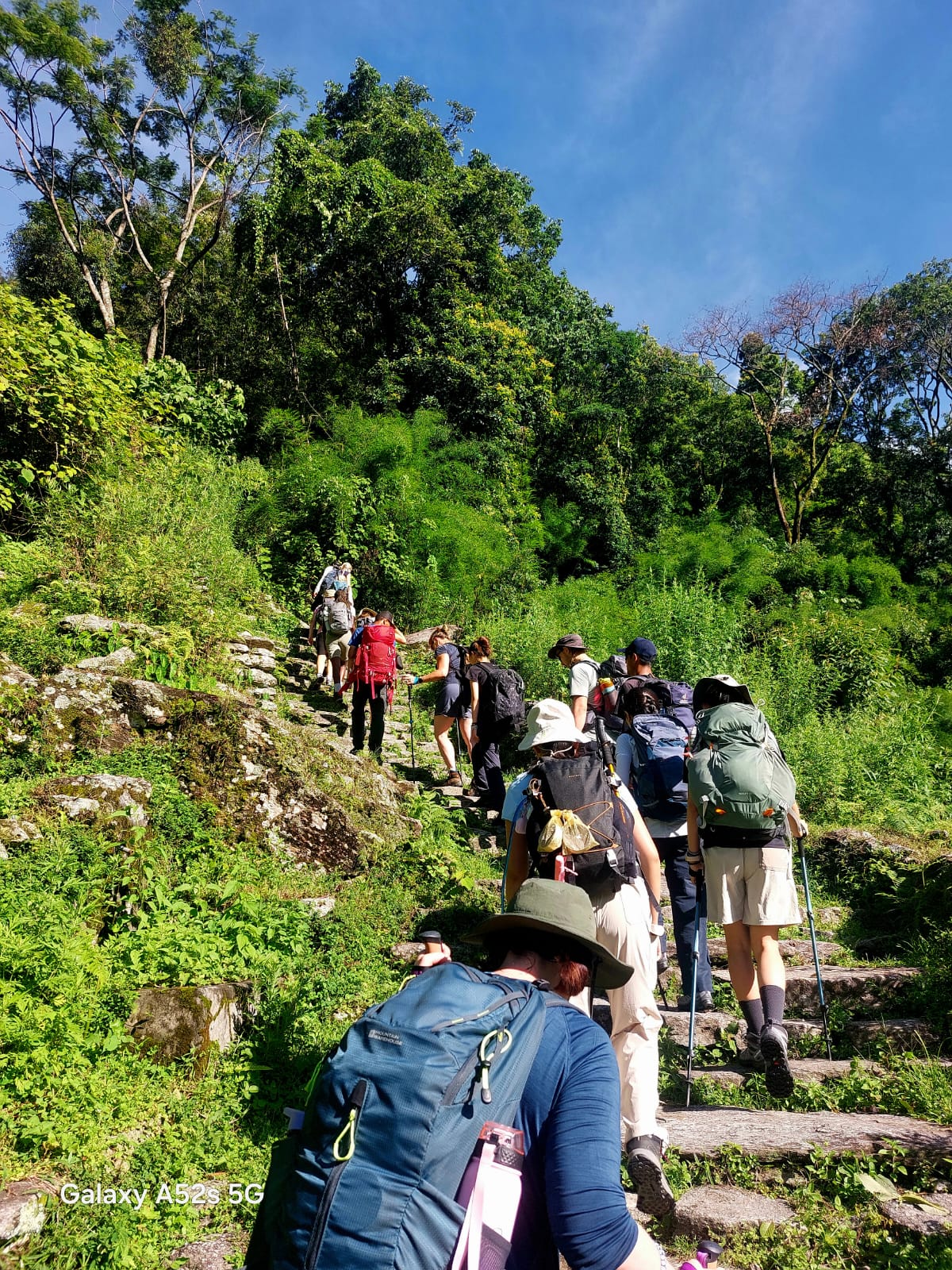
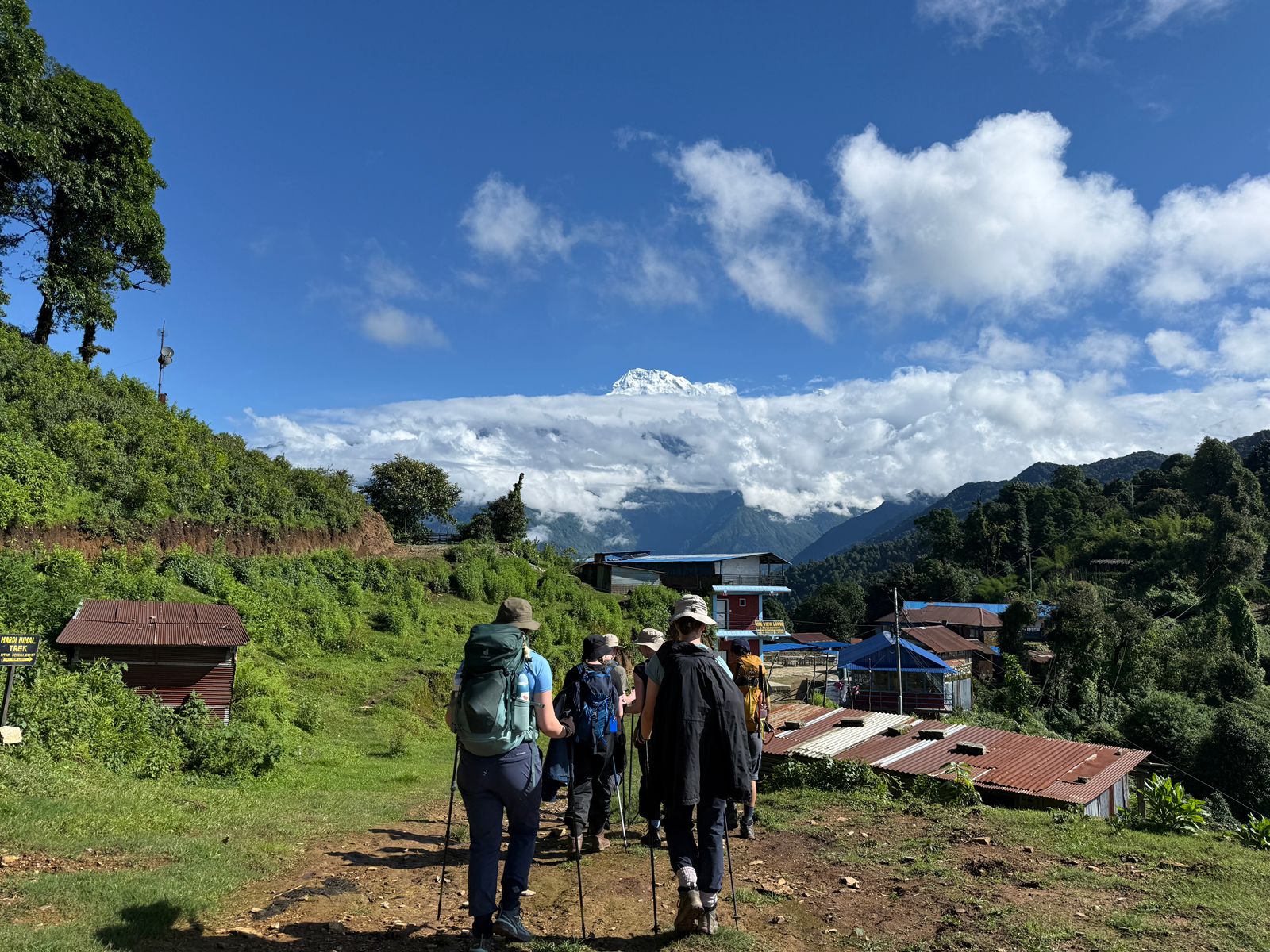
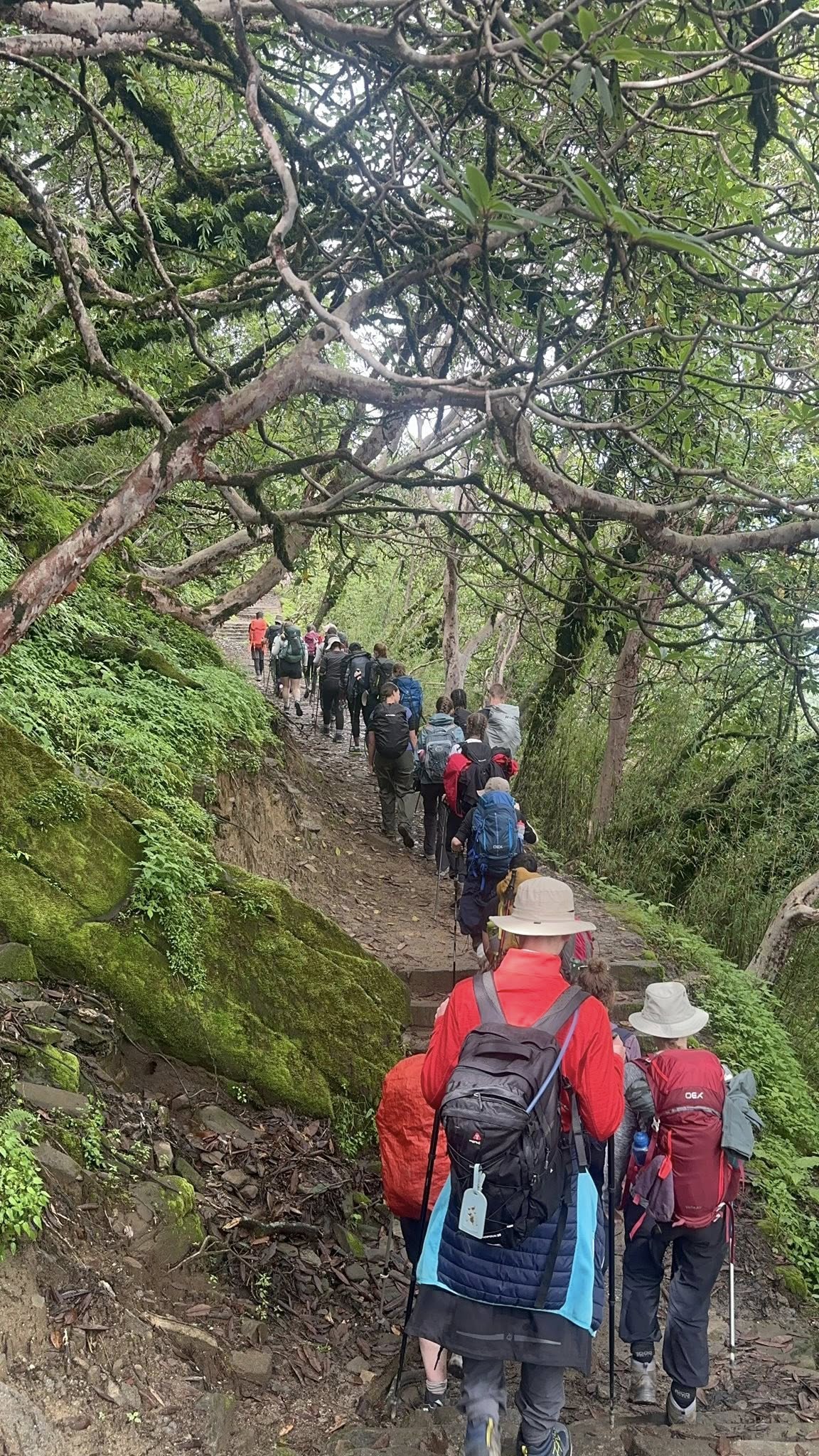
After breakfast, take a short 1.5-hour drive to Kande (1,770m), the starting point of your trek. From here, begin your uphill hike through beautiful rhododendron and oak forests. The trail passes through Australian Camp (2,050m) and Pothana before reaching Pittam Deurali, a small settlement with a few teahouses and stunning views of Annapurna South and Machhapuchhre.
Today’s trail winds through dense forests and gradual ascents along a peaceful path. You’ll likely see fewer trekkers on this route, making the walk serene. Watch for colorful birds and occasional glimpses of the mountains as you reach Rest Camp, a quiet stop nestled among forested ridges.
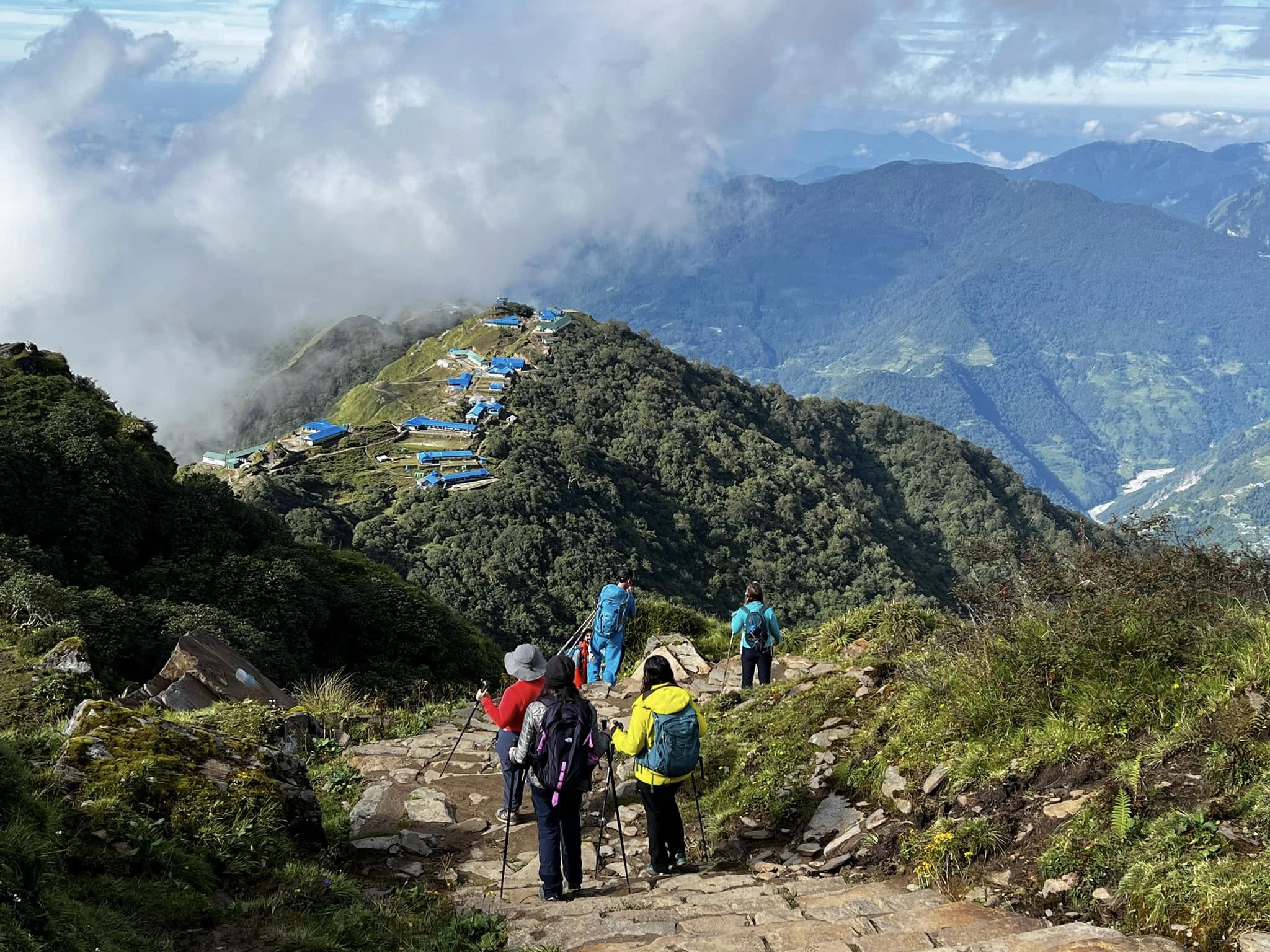
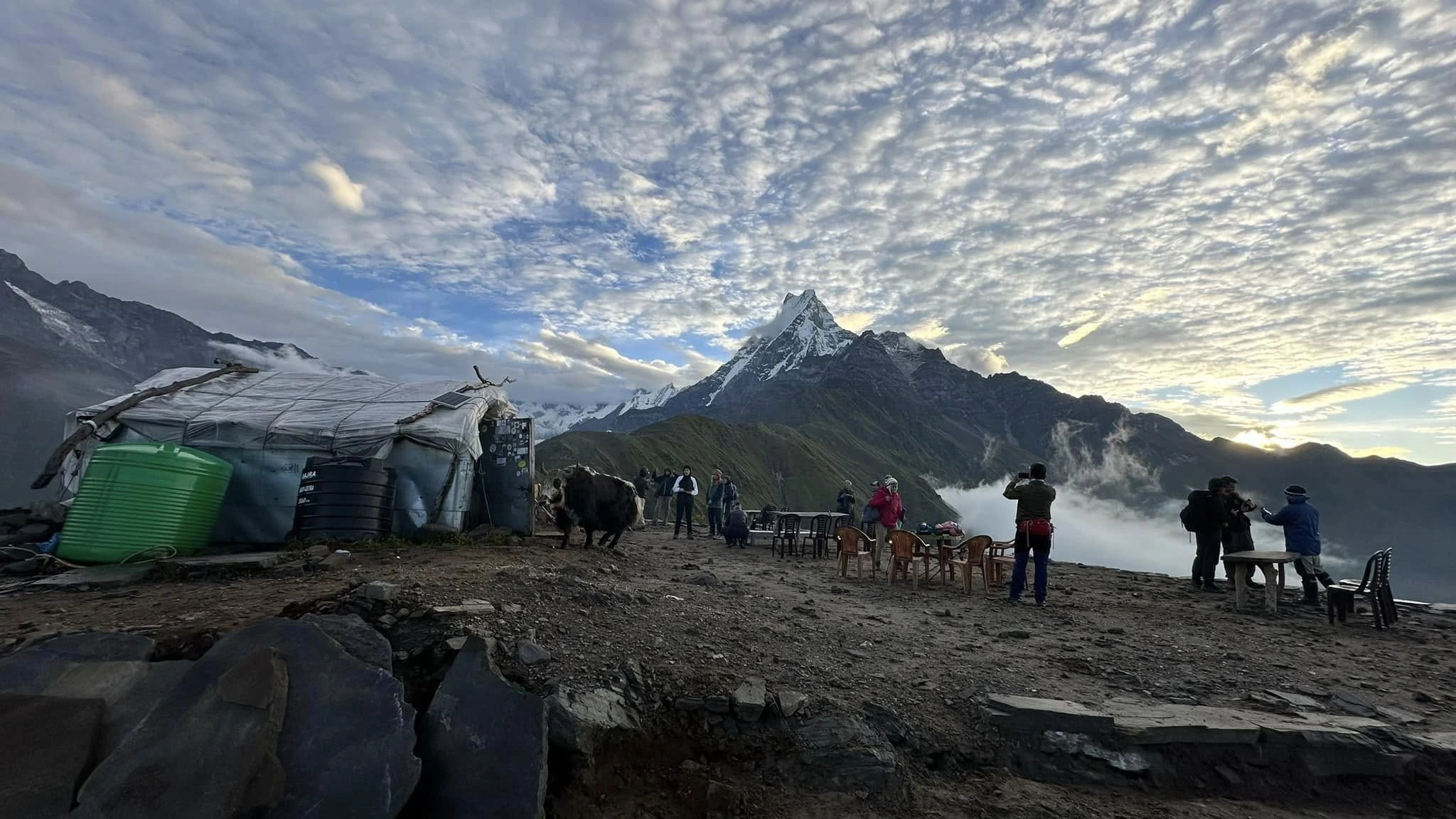
The trek today ascends further into alpine terrain, with thinning forests and panoramic views. As you climb past Low Camp (2,970m), the scenery opens up dramatically. The route becomes steeper and more rugged, but you’re rewarded with stunning views of Machhapuchhre (Fishtail), Mardi Himal, and Annapurna South. High Camp sits above the tree line, offering a close-up view of the snow-covered peaks.
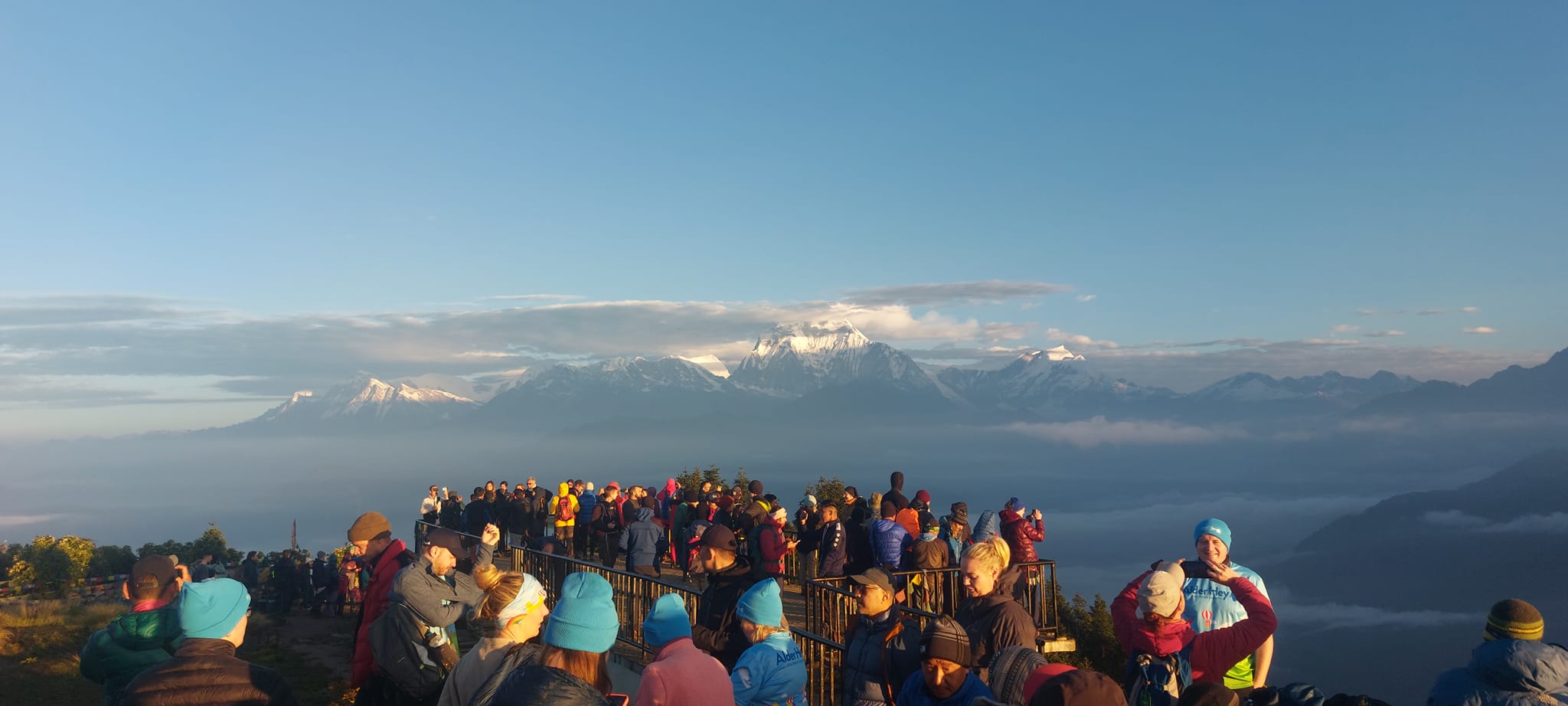
Begin early to catch the sunrise from Mardi View Point. The trail is steep and challenging, but the breathtaking views of Mardi Himal, Annapurna I, and the surrounding Himalayan range make the effort worthwhile. After soaking in the panorama, descend to High Camp for a short rest and lunch before continuing down to Low Camp.
After a fabulous time on the high ridges of Mardi Himal with beautiful views, we went back into a forest of rhododendron and pine trees, retracing the journey back on the same trail at Jungle Camp and beyond with a more downhill walk to reach Siding village. Then take a drive to Pokhara. The journey leads beautiful green hills with a lot of views of mountains on route Pokhara, where our wonderful Annapurna Mardi Himal Trekking completes at picturesque Pokhara by the calm lake of Phewa Lake for our last overnight stop around the Annapurna region.
06:00 – Student wake up and pack bags to leave the place.
06:30 – Breakfast
07:30 – Drive from the hotel to Kathmandu 200 km (7-8 hours). Leave Pokhara after breakfas for Kathmandu, winding through river valleys, hillside farms, and rural villages. The journey offers a final opportunity to appreciate Nepal’s dramatic landscapes.
Lunch on the way at suitable time.
14:00 – On arrival in of Kathmandu you will head to Thamel to check into your accomodation. Spend the late evening relaxing at your hotel or wandering around the streets of Thamel.
18:00 – Dinner time
07:00 – Student wake up pack bags.
08:00 – Breakfast. Enjoy a final breakfast in Kathmandu.
09:30 – If time permits, your guide will take you to:
Afterward, transfer to Tribhuvan International Airport 3 hours before your flight departure time, carrying with you memories, friendships, and a newfound sense of confidence to take on the world.
*Note:
We always do everything in our power to follow the set itinerary, however occasionally trips are subject to itinerary changes based on a variety of circumstances, including but not limited to: Lodging availability, extreme weather, political or bureaucratic obstacles, strikes, earthquakes, fires, flooding and more. Normal terms and conditions apply to trips with itinerary changes
Suggested donation to support service project: $200 or more per person.
In addition to making trekking more enjoyable, having the appropriate gear guarantees your safety and readiness for a range of situations. Regardless of skill level, every hiker has to invest in high-quality equipment and understand how to utilize it properly. A delightful journey can differ from a difficult ordeal depending on the level of planning and equipment used. Please make your selections of the necessary equipment from the list below.
If you have any more specific questions or need further details, please feel free to contact us anytime.
Contact UsYes. Participants work alongside local skilled workers, with the project coordinator providing orientation and guidance for the school-building activities.
The project focuses on helping with school-building and construction activities. Participants also have opportunities to interact with local students and community members through cultural exchange and sports.
Yes. Interaction with students and the local community is an important part of the Kakani project, including cultural exchange and shared activities.
Participants stay at the school project site in Kakani. The project accommodation is camping, and participants are expected to bring their own sleeping bag.
No. The service-project contribution is separate from the trip cost. The expedition information recommends a contribution of at least US$200 per participant toward the Kakani school-building project.
The expedition combines several different activities, including community work, rafting, sightseeing, and Himalayan trekking. Participants should be comfortable with regular walking and several days of trekking. The exact trekking demands will depend on the Mardi Himal itinerary used for the departure.
Previous high-altitude trekking experience is not necessarily required, but participants should be prepared for consecutive days of walking on mountain trails. A reasonable level of fitness and preparation is important.
After the service project concludes, the group returns to Kathmandu, then travels for a day of white water rafting on the Trisuli River before continuing to Pokhara.
The Trisuli rafting section includes a safety briefing from the rafting crew before participants enter the river. The source itinerary describes approximately three hours of rafting over around 15 km, with Class 2–3 rapids.
Yes. The itinerary includes a guided Pokhara sightseeing day, including Phewa Lake, the World Peace Pagoda, Pumdikot, and the International Mountain Museum.
Participants should bring practical clothing suitable for physical work and a sleeping bag for the camping stay at the school site. The project also requires participants to assist with food preparation and cleanup.
Meals are provided during the service-project and trekking portions of the journey. The package information specifies catered meals during the project and breakfast, lunch, and dinner during the trekking phase.
The expedition uses 3-star hotels in Kathmandu and Pokhara, camping during the school service project, and locally operated teahouses or lodges during the trekking section.
Yes, the expedition format is particularly suited to groups looking to combine educational travel, community engagement, outdoor activities, and Himalayan trekking. Group-specific arrangements can be discussed when planning the expedition.
Participants are responsible for arranging their own travel and evacuation insurance. The expedition information specifically states that clients must have travel and evacuation insurance.
Personal expenses, tips, personal trekking equipment, the school-project contribution, client travel and evacuation insurance, and expenses caused by unavoidable events are excluded from the listed package.