


Gopal Raj Tamang
- Trekking leader
"Live The Adventure Of A Lifetime"
There are few places left in the Himalayas where ancient traditions continue to shape everyday life as they have for centuries. Tsum Valley is one of them. Hidden in the remote mountains of northern Gorkha near the Tibetan border, this sacred valley offers a rare opportunity to experience a culture, landscape, and way of life that remain remarkably preserved from the influences of modern development.
The 17 Days Tsum Valley Trek is designed for travelers who wish to go beyond the surface and truly immerse themselves in the region. Rather than rushing between highlights, the extended itinerary allows time to appreciate the rhythm of mountain life, explore traditional settlements, and gain a deeper understanding of the valley’s spiritual significance.
As the trail gradually leaves the Budhi Gandaki corridor and enters the upper valley, the atmosphere becomes noticeably quieter. Prayer wheels spin beside ancient mani walls, monks continue centuries-old Buddhist practices, and local communities maintain traditions that have been passed down through generations. Travelers with limited time often prefer a shorter Tsum Valley experience, while this itinerary provides additional opportunities to explore the valley’s cultural and religious heritage in greater depth.
The journey passes through villages such as Chumling, Chhokang Paro, and Nile, each offering a unique glimpse into the daily life of the Tsumba people. Stone houses, cultivated terraces, and welcoming communities create meaningful encounters that are often remembered long after the trek itself has ended.
Among the most significant highlights are visits to Mu Gompa and Rachen Gompa, two of the valley’s most important Buddhist monasteries. These sacred sites serve not only as spiritual centers but also as living reminders of the deep connection between the local people and their religious traditions.
While culture forms the heart of the experience, the natural beauty of the valley is equally captivating. Throughout the trek, panoramic views of Ganesh Himal, Himalchuli, Sringi Himal, and surrounding snow-capped peaks provide a spectacular backdrop to the journey, creating a perfect balance between cultural exploration and Himalayan scenery.
For those seeking a trekking experience defined by authenticity rather than crowds, the 17 Days Tsum Valley Trek offers a rewarding journey through one of Nepal’s most fascinating hidden valleys, where spiritual heritage, mountain landscapes, and traditional Himalayan life come together in an unforgettable way.
Lhasso Adventure believes the mountains belong to the people who call them home. Since our founding, we have partnered with the Mother and Children Art Foundation (MCAF) and The Wild Medic Project Inc. to run free health camps in remote communities along and near our trekking routes, areas like Chitre (Helambu) and Dhodeni that otherwise have limited access to medical care.
We also run active school volunteering programs in communities such as Budhanilkantha, Pokhara, and the Kathmandu Valley, matching the skills of international travelers with the real needs of local schools. Trekking with us is not just a journey through the mountains, it is a contribution to the communities that make those mountains alive.
Lhasso Adventure holds active membership with Nepal’s leading trekking bodies and enforces strict responsible tourism standards on every departure.
Upon your arrival at Kathmandu International Airport, Lhasso Adventure representative will warmly welcome you and transfer you to your hotel. After check-in, you’ll have some free time to rest, freshen up, and enjoy a meal. In the evening, we gather for team introductions, a briefing session, and general discussions about the adventure ahead. Later, we head out for a welcome dinner at one of our favorite local restaurants, where you can experience authentic Nepali cuisine.
After breakfast at the hotel, we’ll drive to Swayambhunath Stupa, also known as the Monkey Temple, located close to Kathmandu’s center. It only takes a few minutes to reach this self-made stupa. Next, we’ll visit Boudhanath Stupa, the largest stupa in Nepal and one of the biggest in the world. Here, you’ll immerse yourself in Tibetan Buddhism, culture, and lifestyle, with plenty of authentic Tibetan items available for purchase in the surrounding area. Following that, we’ll proceed to Pashupatinath Temple, one of the holiest sites in Hinduism. This sacred temple is where Hindus come to be cremated, and it features a grand double-roofed pagoda adorned with brass and silver-plated gateways. The temple complex also houses statues of Shiva, Brahma, and other deities, along with numerous shrines and temples. A stroll through the Pashupati area reveals ancient Buddha and Brahma statues, as well as rows of Shiva shrines where Hindu devotees from across South Asia gather to worship. Finally, we’ll return for an overnight stay at a 4-star hotel in Kathmandu.
A westward picturesque ride along the Prithvi Highway, via the lush hills, leads us to Malekhu. Then, driving past Dhading Besi, the road turns curvy and leads us uphill to Gola Bhanjyang where enthralling views of snow-capped mountain peaks can be seen. The road then goes downhill to cross Ankhu Khola, and later, at Arughat, we meet Budhi Gandaki River. A further drive up the west bank of Budhi Gandaki River finally brings us to Machha Khola. Overnight at a lodge in Machha Khola.
Continue up and down over a couple of ridges to Tatopani (930m; ‘hot water’) where there are hot water spouts under the sheer cliffs that provide a delightful evening shower. Climb over a ridge and cross the Buri Gandaki on a rickety suspension bridge, climb on well made marble stairs in the narrow valley for some time and through Doban (1000m; Duvan). Shyaule Bhatti 1hr later has large rock with views where you can take tea and look at the wild gorges ahead. After crossing a landslip and the bridge across the Yaru Khola (1363m), emerge onto river flats for lunch at Yaru (1140m) at the Sandbar Hotel. Look downstream at the massive rock fall that chokes the river. Just past Yaru, cross to the left bank and enjoy easy up and down to Jagat (1410m), a neatly Flag stoned Gurung village where Jagat (‘tax’) is collected on Tibetan trade. There’s a small lodge here and you will need to show your MCAP permit. In this area, potato, maize and climbing beans are all planted at the same time — the potato for food and to suppress weeds, the maize for food and to supply a trellis for the beans, which are an important source of protein.
Marijuana is a major weed problem. Walk up the riverbed then climb over a rocky ridge to Salleri (1440m) with views of Sringi Himal (7187m). Overnight at a lodge in Jagat.
Morning descend to Sirdibas (1430m; Setibas, Tara) where there is said to be a lodge. You’ll see your first signs of Buddhist culture here. Continue up-river on the left bank, up and down before crossing Nepal’s longest suspension bridge to the east bank and a tiring climb up to prosperous Philim (1590m; Dodang) surrounded by rich fields of maize, potato and millet. If you are not taking the Tsum Valley side-trip then today you will continue on to Ghap towards the Larkya-La. Traverse north out of Philim on the obvious track signposted to the Larkya-La, through some pretty forest with views up the narrowing valley. After 1hr climbing enter the increasingly misnamed Ekle Bhatti (1600m; ‘lone teashop’) with at least six bhatti, then traverse high above a spectacular gorge, entering a largely uninhabited area of pine trees. Eventually drop to a trail junction going left to Ghap and right to the Tsum Valley. Climb on a well-graded but exposed track through pines and rhododendrons, looking down on the other trail across the river. If the slopes here have recently had their annual burn there is a real risk of stone fall from the cliffs above, especially if there are goats grazing. Climb on zigzag steps, increasingly exposed, and gain your first glimpses of the narrow lower Tsum Valley, very steep across the Shiar Khola which drains from the very top of the valley. Across the Buri Gandaki is Himalchuli (7893m) above steep cliffs. Walk through a largely intact and peaceful temperate forest into Lokpa (2240m; Lakuwa), surrounded by barley fields, where there is a comfortable lodge, toilet. Overnight at a lodge in Lokpa.
Descend through beautiful forest, crossing three side streams (one shown wrongly on the Map as Shiar Khola) on bridges, circle under a huge bluff on the river then climb steeply on well-made but exposed stairs. After about 30mins start to traverse north through pines and rhododendrons, still climbing and with very steep slopes. The hidden valley of Tsum stretches enticingly ahead. Eventually descend to a lone bhatti Ghumlong (2130m) on the river. The path straight ahead climbs steeply to Ripchet (2470m; Ripche) in about 1hr; the path to Chumling (2360m) crosses the Shiar Khola on a wooden bridge and up. It is not for those afraid of heights – several locals have fallen to their death from this track while drunk. Make sure you climb up to Chumling and check out the old gompa, the traditional houses, orchards, clinic and beautiful stone streets. This is Buddhist agriculture, with conical pine needle haystacks among the 4 prayer flags. Overnight at a lodge in Chumling.
From here on trails are lined with artistic chortens and mani walls made of thousands of stone slabs carved with deities and prayers. An easier day after yesterday, Cross the suspension bridge just east of the hotel and traverse through rich farming land of maize and potatoes. The houses are classic Tibetan with barricades of firewood on the roof, but without flat roofs as it rains and snows here. Cross a huge slip where rocks and flood cleared the area even up onto the opposite bank, killing five in 1999, but is now covered with a forest of new trees. Up the valley to the east are superb views of the 7000m Ganesh Himal, of long suspension bridges on the opposite bank, and far above the perched village of Ripchet (2468m). Lunch is possible at Rainjham (2400m), a single bhatti with enclosed courtyard. Cross the Serpu Khola and climb for 2.5hrs on well-graded but exposed track to upper Tsum and the large village of Chhokangparo (3501m), stone houses nestled under cliffs without a single iron roof. The valley opens here into spacious fields of barley, maize, buckwheat and potato, but wheat has been abandoned due to ‘hill bunt’, a disease which turns the heads black and causes total crop failure. Herds of Thar often graze the wild cliffs to the north, coming right down to the fields. If the air is clear Himalchuli (7893m) can be seen down valley. Overnight at a lodge in Chhokangparo.
Most people can climb to 2800m without getting altitude sickness, but the altitude gain in these track notes above Chhokang exceeds the 200m per day suggested for safety. Watch for signs of altitude sickness and be prepared to rest or retreat if they emerge. Take time to explore the joined villages of Chhokang and Paro and climb north to a retreat where Lama Kongchog died after 26 years of meditation. His child reincarnation, found in the village, was subject of the award-winning DVD Unmistaken Child (available in Kathmandu). Thar are often sighted near here. The friendly people speak Tsumba, related to Tibetan, but often little Nepali and are quite unused to visitors. Head east through small villages and past a local school, climb over a ridge of chortens and past Lamagaon (3202m) through the flat fields, looking across the extensive crops and river to the huge courtyard of the Rachen Gompa (3240m). This nunnery is the female equivalent of the main Kathmandu Kopan Monastery. Climb up and visit Milarepa’s Cave (Piren Phu), where the bringer of Buddhism to Tibet is reputed to have meditated. The cave is being extensively restored. Cross the Shiar Khola, pass through hamlets of Phurbe (3251m) and Pangdun (3258m) and pass an unusual round stupa before reaching the larger village of Chhule (3347m) through an impressive entrance gate (kani). The children here all wear the Tibetan dressing gown called chubas and there are many yaks. Head upstream to cross the bridge and climb to Nile (3361m; Nyile). Both villages are in traditional style with inclusion of livestock compounds into the houses and sheltered verandahs for drying crops. Overnight at a lodge in Nile.
Early morning today, our peaceful, spiritual atmosphere continues as we hike to Mu Gompa, surrounded by mountains. Mu Gompa, the most famous monastery in the area, is home to lamas and monks who pray and meditate in this serene setting. We admire the beautiful murals on the monastery walls, including depictions of Tara and Guru Padmasambhava. We may also have the chance to participate in a Buddhist ritual or light oil lamps for our loved ones. Afterward, we return to Nile for the night.
The trek from Nile to Chokhang is a scenic 5–6 hour descent through the heart of Tsum Valley, offering stunning views of Ganesh Himal and rich cultural encounters. Following the Shiar Khola, the trail passes traditional villages like Phurbe and offers the chance to visit Rachen Gompa, a peaceful nunnery adorned with vibrant murals. With mani walls, prayer flags, and daily glimpses of Tibetan life, the route is both relaxing and spiritually enriching. Chokhang, the cultural center of the valley, welcomes trekkers with its stone houses, barley fields, and lively monastic atmosphere.
Drop below Chhokangparo on the previous trail for about 2hrs, until a small gompa is reached at Gho (2485m). Descend on a narrow trail to the left through the village and drop to a wooden bridge over the Shiar Khola. Cross the bridge to Dhumje (2440m, Tumje) which has a Tibetan herbal medicine clinic and school. The track onwards climbs just behind the clinic. Climb very steeply on an indistinct track through pines and rhododendrons until the track starts traversing at a mani wall with prayer flags. The track is exposed and narrow. Finally, in the pine forest, take an uphill trail and make a steep zigzag climb through huge silver pines to reach Gumba Lungdang (3200m), perched on a ridge with small cells for the nuns through the beautiful rhododendrons above. This small gompa with 40 nuns has an intense and engrossing puja every night. The mountain views in all directions are amazing. Overnight at Monastery’s dormitory room in Gumba Lungdang.
Your guide will be required for this trip since the track is poorly marked. Circle from the gompa past the nuns’ housing, drop on dusty or muddy zigzags to regain the lower track and continue up valley on a rocky indistinct track through the forest. Cross the Laudang Khola to the west bank on a rickety wooden bridge and climb steeply through pristine pines and rhododendrons on a ridge. There is a hut in a kharka about halfway up, with the track continuing behind it, then up a birch-lined dry creek bed and eventually you emerge into grassy flats behind the lateral moraine of the Toro Gompa glacier. Continue climbing past seasonal yak huts and you will find a track on the moraine wall that gives superb views of the Cirque of mountains. The camp is somewhere about here. It takes about 4hrs to reach the Ganesh Himal Base Camp (4200m). The map shows another base camp on the east side of the glacier, but there appears to be no obvious track between them, so return to Gumba Lungdang in time for the evening puja by retracing your steps. Altitude can make this day difficult for some, but the intact forest wilderness and views make it an outstanding trip. Overnight at Monastery’s dormitory room in Gumba Lungdang.
This can be a taxing day so start early. Descend from Gumba Lungdang by the upward track. In Dumje cross the Laudang Khola and stay on the south bank of the Shiar Khola (contrary to the map). Climb over some very deep gorges and shaky cantilever bridges to picturesque Ripchet (2470m; Ripche). Take time to look around at this perched fertile valley of barley and buckwheat with evocative chortens in the fields backed by pine forest. Descend on steep stairs to the lone bhatti Ghumlong (2130m) on the river, which you passed through six days ago. Climb again through the pristine temperature forest to Lokpa (2240m). Overnight at a lodge in Lokpa.
You will descend down towards Philim. You will then trek along the Budi Gandaki River and after few ascends and descends, you will reach Philim. Further, you will descend down, and cross a long suspension bridge over Budi Gandaki River. You will then reach Sirdibas passing through the Gatte Khola. From here, you will go through small villages, and trek on the rocky path to reach Jagat. You will stay overnight at the lodge in Jagat.
You will descend down to the lower Jagat and trek on the rocky path. You will then cross a suspension bridge and descend down through the forest to reach Yarubagar. You will trek on the rocky trail and walk down through the forest. Further, you cross numerous rivers on multiple occasions and reach Machha Khola. You will stay overnight at the lodge in Machha Khola.
Today, you will drive back to the Kathmandu on a private 4W vehicle. The route will go through the dusty newly built road to Arughat Bazaar. From here, you will drive towards Gorkha Bazaar with the views of Ganesh Himal ranges and reach Kathmandu. Upon reaching Kathmandu, you will be taken to our hotel. Overnight at a 4-star hotel in Kathmandu.
Your adventure in Nepal comes to an end today! There is nothing to do but trade emails with travel companions and organize the photos. If you have more time you can do some shopping or sightseeing. A representative from our company will take you to the airport approximately 3 hours before the scheduled flight. On your way home you’ll have plenty of time to plan your next adventure in the wonderful country of Nepal.
Our standard itinerary may vary slightly due to weather, trail conditions, government regulations, or individual health needs. In all cases, Lhasso Adventure guides evaluate the situation and find the best safe alternative. We recommend arriving in Kathmandu at least one day before the trek start date, and booking international flights with 2–3 buffer days after your return date.


All Lhasso Adventure group departures for the Tsum Valley Trek have a maximum of 16 participants. Small groups mean a more personal experience, better acclimatization monitoring, and less impact on the trail. Can't find a date that works? We also offer private departures on any date,
| Start | Finish | Availability | Price | |
|---|---|---|---|---|
| 01/07/2026 | 16/07/2026 | Trip Status available | Starting from $ 1450 | Book Now |
| 11/07/2026 | 26/07/2026 | Trip Status available | Starting from $ 1450 | Book Now |
| 02/08/2026 | 17/08/2026 | Trip Status limited | Starting from $ 1450 | Book Now |
| 10/08/2026 | 25/08/2026 | Trip Status available | Starting from $ 1450 | Book Now |
| 08/08/2026 | 23/08/2026 | Trip Status available | Starting from $ 1450 | Book Now |
| 05/09/2026 | 20/09/2026 | Trip Status available | Starting from $ 1450 | Book Now |
| 11/09/2026 | 26/09/2026 | Trip Status available | Starting from $ 1450 | Book Now |
| 10/10/2026 | 25/10/2026 | Trip Status available | Starting from $ 1450 | Book Now |
| 25/10/2026 | 09/11/2026 | Trip Status available | Starting from $ 1450 | Book Now |
| 09/11/2026 | 24/11/2026 | Trip Status available | Starting from $ 1450 | Book Now |
| 10/12/2026 | 25/12/2026 | Trip Status available | Starting from $ 1450 | Book Now |
| 14/12/2026 | 30/12/2026 | Trip Status available | Starting from $ 1450 | Book Now |
Looking for personalized. We organize privately guided journey which is mainly designed to fit your taste and interest. Please fill out the form below to get started.
Lhasso Adventure provides a 70–80L duffel bag for your porter to carry (keep it under 10–12 kg). You can rent a 4-season sleeping bag or down jacket for USD 35 each, let us know before the trek starts. You can store non-trekking items at your Kathmandu hotel at no extra cost.
In addition to making trekking more enjoyable, having the appropriate gear guarantees your safety and readiness for a range of situations. Regardless of skill level, every hiker has to invest in high-quality equipment and understand how to utilize it properly. A delightful journey can differ from a difficult ordeal depending on the level of planning and equipment used. Please make your selections of the necessary equipment from the list below.


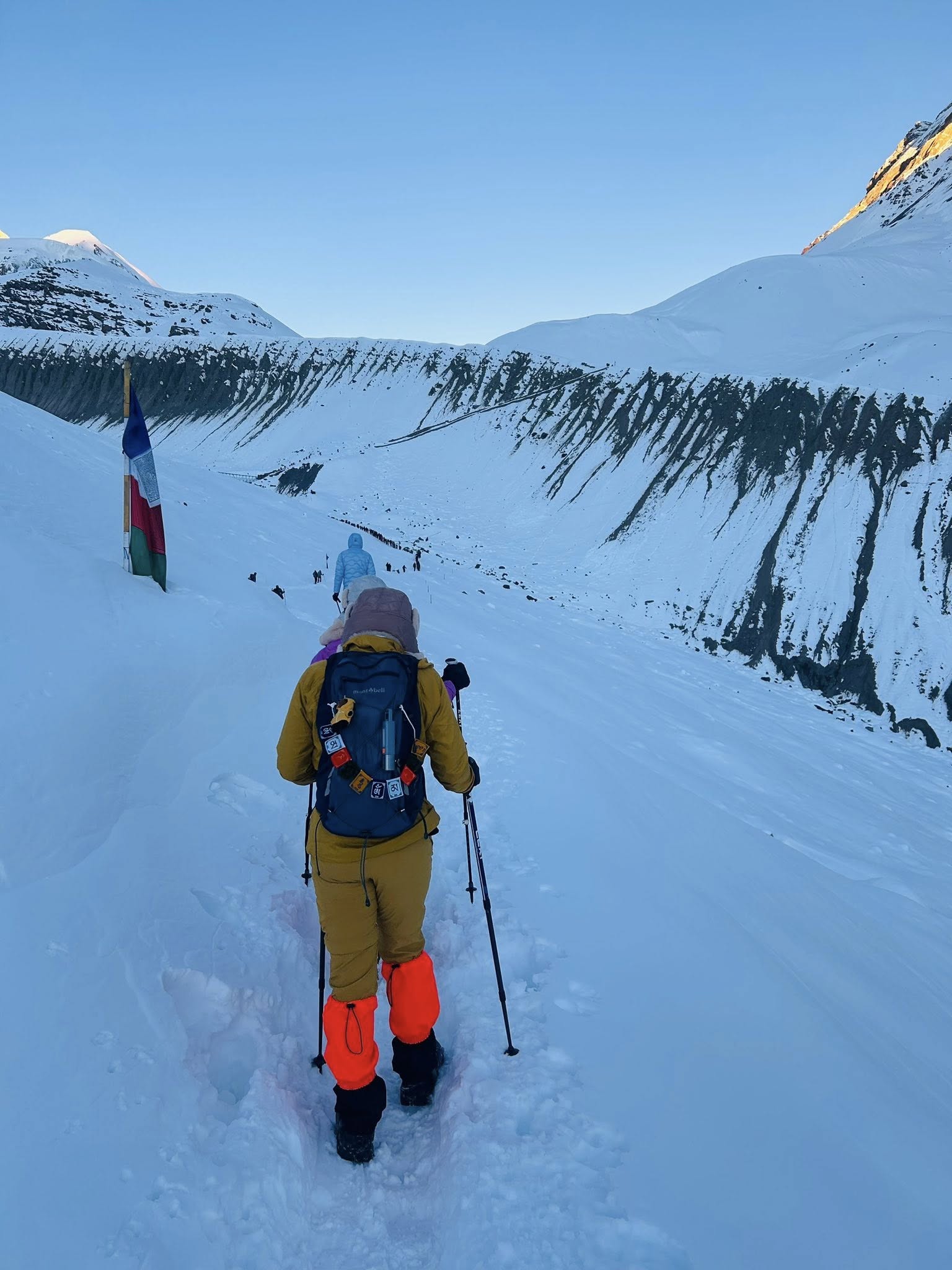


The Tsum Valley Trek is a trekking route in the northern part of the Gorkha district in Nepal. It is known for its unique cultural heritage, stunning landscapes, and traditional Tibetan Buddhist practices.
Tsum Valley is situated in the northern part of the Manaslu region, near the Tibetan border.
The trek typically takes around 14 to 21 days, depending on the route and the pace of the trekker.
The best time to trek in Tsum Valley is during the spring (March to May) and autumn (September to November) seasons when the weather is stable and the skies are clear.
The Tsum Valley Trek is considered moderately difficult. It involves several days of walking on rugged terrain with significant altitude gain.
While it is possible to trek independently, it is highly recommended to hire a licensed guide. The region is remote, and a guide can help with navigation, cultural insights, and emergency situations.
Trekkers need a Tsum Valley Restricted Area Permit and a Manaslu Conservation Area Permit. A TIMS (Trekkers' Information Management System) card is also required.
Yes, there is a risk of altitude sickness as the trek involves significant altitude gain. It is important to acclimatize properly, stay hydrated, and be aware of the symptoms.
Medical facilities in the Tsum Valley are limited. guide has basic first aid knowledge and will carry a first aid kit to assist with minor issues. In case of serious health problems, helicopter evacuation can be arranged. Please ensure your travel insurance covers helicopter evacuation.
Accommodation is available in tea houses and lodges along the trekking route. These are basic but provide necessary amenities like food and shelter.
Tea houses and lodges offer a variety of meals, including traditional Nepali dishes like dal bhat, as well as international cuisine like pasta, noodles, and pancakes.
Essential items include good-quality trekking boots, warm clothing, a sleeping bag, trekking poles, a first aid kit, and personal hygiene products.
Yes, travel insurance is highly recommended. It should cover high-altitude trekking and emergency evacuation.
Respect local customs and traditions. Always ask for permission before taking photos of people. Dress modestly and be mindful of religious practices.
Yes, many trekkers combine the Tsum Valley Trek with the Manaslu Circuit Trek for an extended adventure.
If you have any more specific questions or need further details, please feel free to contact us anytime.
Contact Us


