Annapurna Circuit vs Annapurna Base Camp: Which Trek Should You Choose?
October 8, 2026 Lhasso Adventure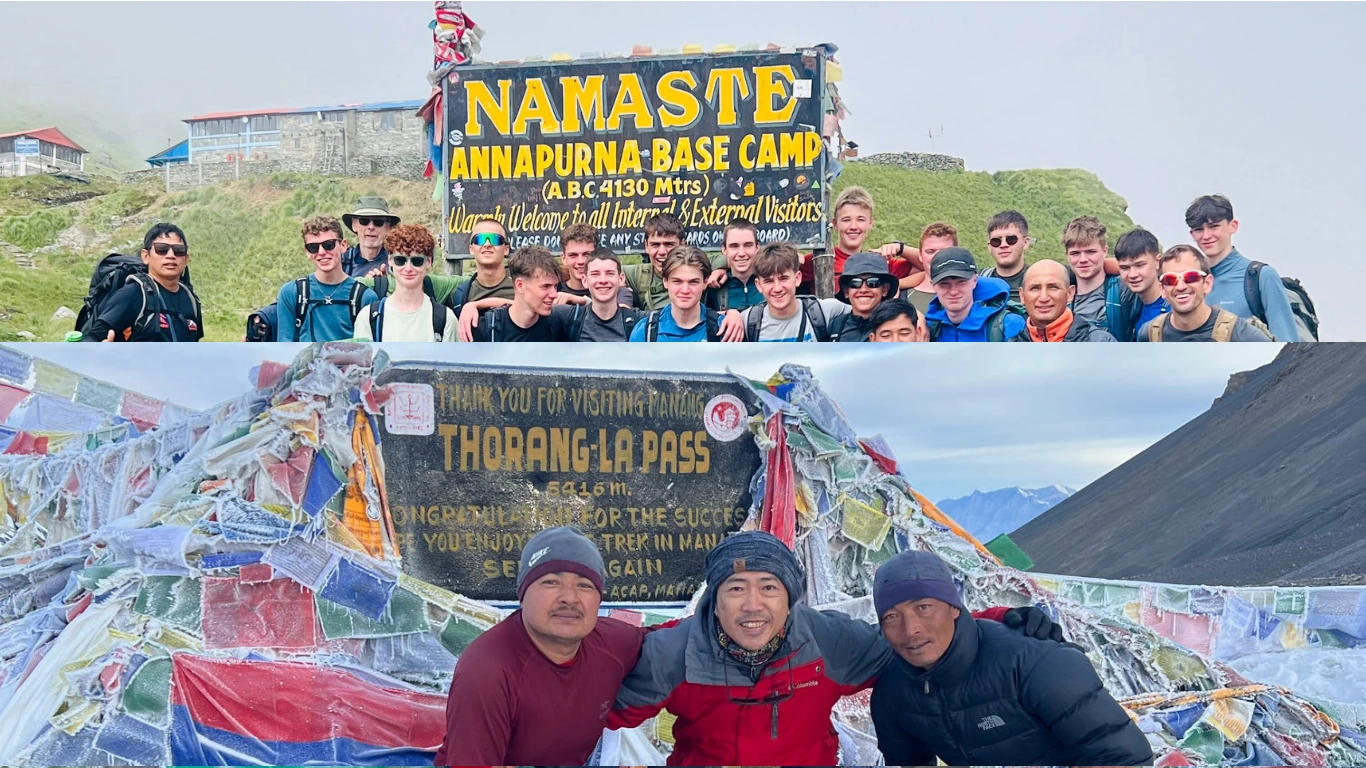
Annapurna Circuit vs Annapurna Base Camp is the first question most trekkers ask once they start planning a Himalayan trip. Both routes sit in the same mountain range, but they offer two genuinely different trips.
The Circuit’s main 14-day departure crosses Thorong La at 5,416 meters. A longer 17-day version is also available. And the Annapurna Base Camp is a 12-day push into a single glacial sanctuary at 4,130 meters.
Neither route wins in every sense. Neither is automatically the better choice. This guide compares both treks directly on duration, altitude, distance, cost, difficulty, and scenery, so you can match the right one to your time and priorities.
Annapurna Circuit vs Annapurna Base Camp: Quick Comparison
| Factor | Annapurna Circuit Trek | Annapurna Base Camp Trek |
| Duration | 14 days (17-day extended option available) | 12 days |
| Max Altitude | 5,416 m (Thorong La) | 4,130 m |
| Distance | 160–230 km | 110–115 km |
| Starting Price (2-4 pax) | USD 1,273 (USD 1,421 for the 17-day option) | USD 922 |
| Difficulty | Challenging, high-altitude pass crossing | Challenging, no pass crossing |
| Route Shape | Full loop around the Annapurna massif | Out-and-back into a single valley |
This table captures the structural differences, but each factor is worth unpacking on its own, since the right choice usually comes down to one or two of these mattering more to you than the rest.
Duration: How Many Days Does Each Trek Take?
The Annapurna Circuit’s main departure runs 14 days, with a longer 17-day version available for trekkers who want extra time on trail. Annapurna Base Camp runs 12 days, covering Kathmandu to Kathmandu including the drive or flight to and from Pokhara.
That gap, two days on the 14-day Circuit, five on the 17-day version, is the practical difference most trekkers planning around limited vacation time need to weigh. A trekker with two weeks available can comfortably fit either Base Camp or the 14-day Circuit with a buffer day to spare, while the extended 17-day Circuit needs closer to three weeks once Kathmandu arrival and departure days are factored in.
Neither duration is padded. Both itineraries build in acclimatization time rather than rushing between villages, which is part of why cutting either trek significantly shorter raises real safety concerns rather than simply making for a faster trip.
Annapurna Circuit vs Annapurna Base Camp Altitude: How High Does Each Trek Go?
Annapurna Base Camp tops out at 4,130 meters, while the Annapurna Circuit climbs considerably higher to 5,416 meters at Thorong La. That roughly 1,300-meter gap is the main reason the Circuit demands a longer, more gradual acclimatization schedule than Base Camp does.
Base Camp’s lower ceiling doesn’t mean altitude sickness isn’t a risk, since Acute Mountain Sickness can still develop above 3,000 meters on either route. What changes is the margin for error: Base Camp’s single push above 4,000 meters is shorter and less sustained than the multi-day climb the Circuit requires before its pass crossing.
Trekkers specifically seeking a true high-altitude pass crossing, rather than just a high viewpoint, will find only the Circuit delivers that experience. Base Camp’s destination is a dramatic amphitheater of peaks, not a mountain pass.
Whichever route you choose, the pace of ascent between overnight stops rather than the summit altitude itself is what most directly determines how your body copes, which is worth understanding in more depth before committing to either trek’s itinerary.
Annapurna Circuit vs Annapurna Base Camp Distance: How Far Will You Walk?
Annapurna Base Camp covers roughly 110 to 115 kilometers round trip, while the Annapurna Circuit covers 160 to 230 kilometers depending on how much of the lower valley is walked versus driven. Base Camp’s shorter total distance is a direct result of its out-and-back structure through a single valley.
Daily walking also differs in character rather than just total length. Base Camp trekkers typically cover 10 to 15 kilometers a day over 5 to 7 hours, largely on stone-stepped trail through Ghandruk and Chhomrong, while Circuit trekkers face a wider range, from flatter 15 to 20 kilometer lower-valley days to the shorter but far more demanding push over Thorong La.
Total distance alone doesn’t predict difficulty well on either route. The day-by-day elevation gain mapped against each overnight stop explains far more about how each day actually feels than the kilometer count by itself, which is why the steepest, shortest days on either trek are often the hardest ones.
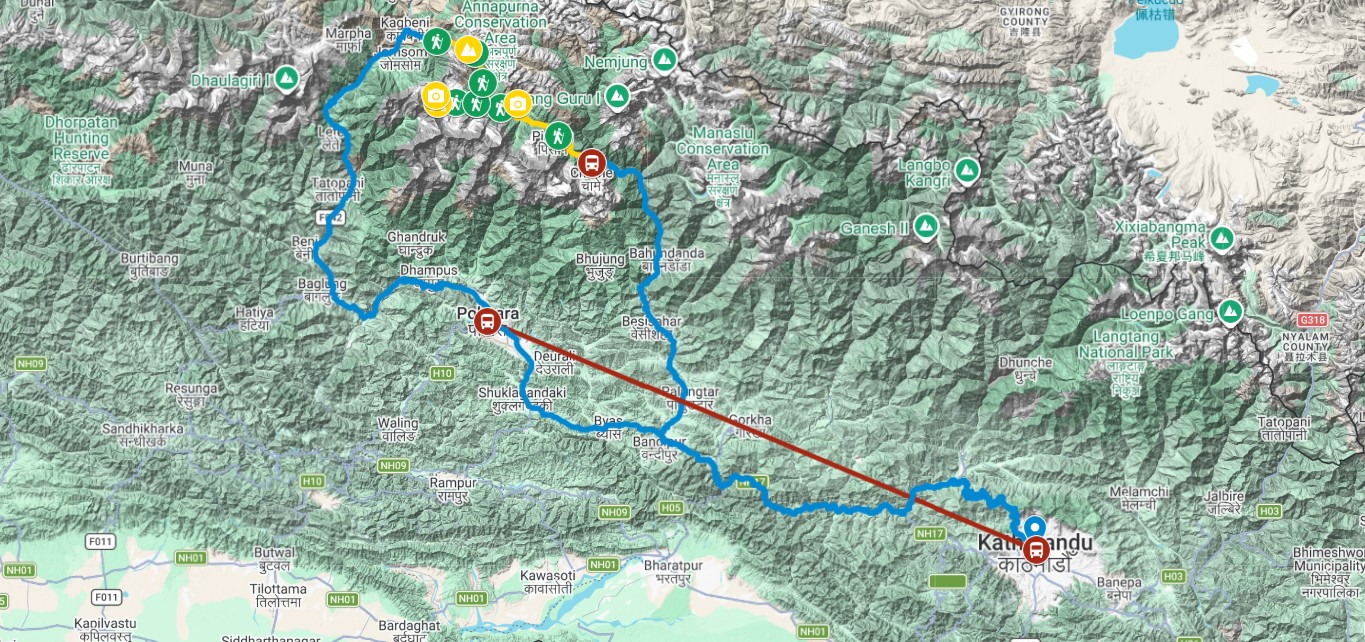
Annapurna Circuit vs Annapurna Base Camp Trek Map
Looking at both routes on a map makes the structural difference obvious in a way numbers alone don’t. The Annapurna Circuit traces a full loop, starting near Besisahar, climbing the Marshyangdi valley to Manang, crossing Thorong La, then descending through Muktinath and Jomsom on the opposite side of the range.
Annapurna Base Camp follows a single out-and-back line instead. The trail runs from Nayapul through Ghandruk and Chhomrong, pushes up the Modi Khola valley, and ends at the sanctuary itself before retracing the same path back down.
This shape difference matters for planning, not just visualization. On the Circuit’s map, the steepest climbing bunches up in the final stretch from Manang to Thorong Phedi, right before the pass. On Base Camp’s map, the hardest stone-step climbing sits earlier, around Ghandruk and Chhomrong, well before the final push to the sanctuary.
A detailed elevation chart for either route shows this unevenness clearly, which is useful for pacing each day realistically rather than judging effort by distance alone. For a full stage-by-stage map with elevation and distance for every day on the Circuit, a dedicated route map resource covers the complete loop in more depth than a comparison guide can.
Base Camp’s simpler out-and-back shape means fewer route decisions along the way, since there’s really only one trail to follow in each direction. The Circuit’s loop structure, by contrast, includes a few optional side trails, including the detour to Tilicho Lake near Manang, which don’t appear on a basic Base Camp map at all.
Scenery and Landscape: What Each Trek Actually Looks Like
Annapurna Base Camp delivers a concentrated, dramatic payoff: a single glacial sanctuary completely ringed by Annapurna I, Annapurna South, Hiunchuli, and Machhapuchhre, reached after days of climbing through one continuous valley. The landscape shifts from terraced farmland and rhododendron forest into bare alpine moraine, but it stays within a single river system the entire way.
The Annapurna Circuit covers far more ground variety by comparison, since the loop structure carries trekkers from subtropical lowland near Besisahar through pine forest, high desert beyond Manang, and finally into the dry, Tibetan-influenced Mustang valley on the far side of Thorong La. Where Base Camp offers one spectacular destination, the Circuit offers a continuously changing landscape across its full loop, whether trekked over 14 or 17 days.
Neither approach is better in absolute terms. Trekkers who want a single, unforgettable mountain panorama tend to prefer Base Camp’s focused structure, while trekkers who value variety and a sense of genuine journey across different terrain tend to prefer what the Circuit’s loop delivers.
Teahouse and Accommodation Along Each Route
Both treks rely on the same style of accommodation, twin-sharing teahouse rooms with shared bathrooms in most villages, so neither route offers a meaningfully different lodging experience in terms of comfort. Base Camp’s shorter, more concentrated trail through Ghandruk and Chhomrong means slightly more consistent teahouse density, since fewer remote stretches separate one stop from the next.
The Circuit’s longer route includes a wider range of village sizes, from Chame’s larger, better-stocked lodges to the more basic teahouses above Thorong Phedi just before the pass. Neither route sees teahouses close seasonally the way some more remote Himalayan corridors do, since both sit within well-established, heavily trekked conservation areas.
Cost: Annapurna Circuit vs Annapurna Base Camp Price
Annapurna Base Camp starts at USD 922 per person for a group of 2 to 4, dropping to USD 741 for groups of 14 to 16. The Annapurna Circuit’s 14-day departure starts at USD 1,273 for the same small-group tier, dropping to USD 1,022 for the largest groups.
| Group Size | Annapurna Base Camp Trek | Annapurna Circuit Trek (14 Days) | Annapurna Circuit Trek (17 Days) |
| 2 to 4 pax | US$922 | US$1,273 | US$1,421 |
| 5 to 7 pax | US$846 | US$1,168 | US$1,304 |
| 8 to 10 pax | US$812 | US$1,121 | US$1,252 |
| 11 to 13 pax | US$780 | US$1,076 | US$1,202 |
| 14 to 16 pax | US$741 | US$1,022 | US$1,142 |
Trekkers who choose the extended 17-day Circuit instead pay somewhat more, from USD 1,421 down to USD 1,142 across the same group-size tiers, reflecting the additional days on trail rather than any change in what’s included.
What Drives the Price Gap
The price gap between the Circuit and Base Camp tracks closely with the duration difference, since both treks include the same categories of cost, permit fees, guide and porter rates, and daily food and lodging costs that shift with group size. Trekkers comparing the two purely on price should weigh that gap against what the extra days on the Circuit actually deliver, a full loop and a genuine pass crossing, rather than treating the lower number as the better deal on its own.
Annapurna Circuit vs Annapurna Base Camp Trek Difficulty: Which Trek Is Harder?
The Annapurna Circuit is harder than Annapurna Base Camp, primarily because of the sustained altitude gain leading up to Thorong La and the length of the pass-crossing day itself. Base Camp’s single push above 4,000 meters is shorter and doesn’t involve a high-altitude pass, which keeps its overall demand lower despite still being rated Challenging.
Both treks share similar terrain challenges in their lower sections, including long stone-stepped stretches around Ghandruk and Chhomrong on the Base Camp side, and the Marshyangdi valley on the Circuit side. Where they diverge is the Circuit’s multi-day climb from Manang up to the 5,416-meter crossing, a demand Base Camp’s itinerary never asks of trekkers.
Trekkers unsure which difficulty level suits them should weigh prior trekking experience alongside available time, since Base Camp offers a genuine high-altitude challenge in a shorter, slightly more forgiving package.
Thorong La Pass: The Circuit’s Defining Challenge
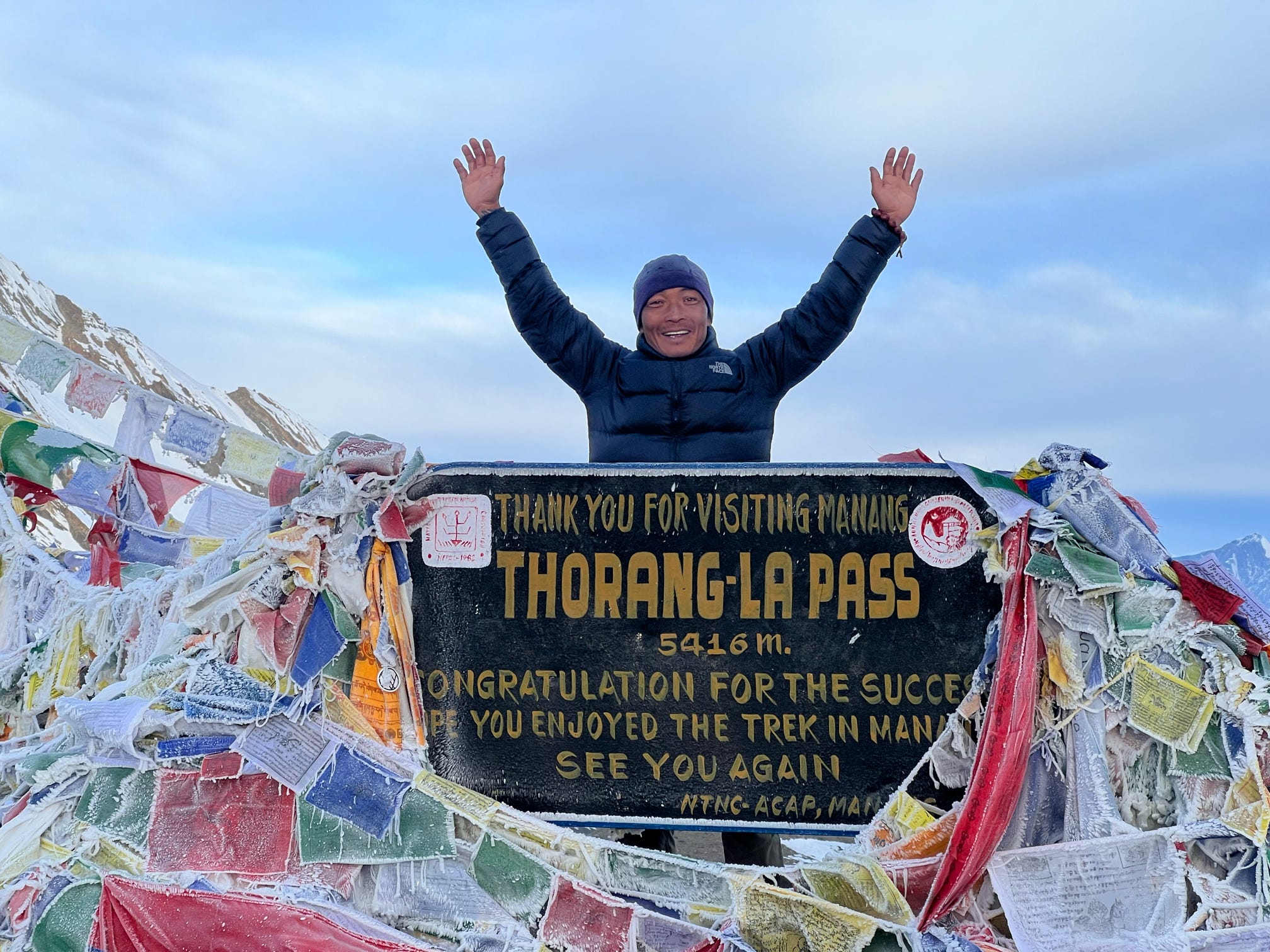
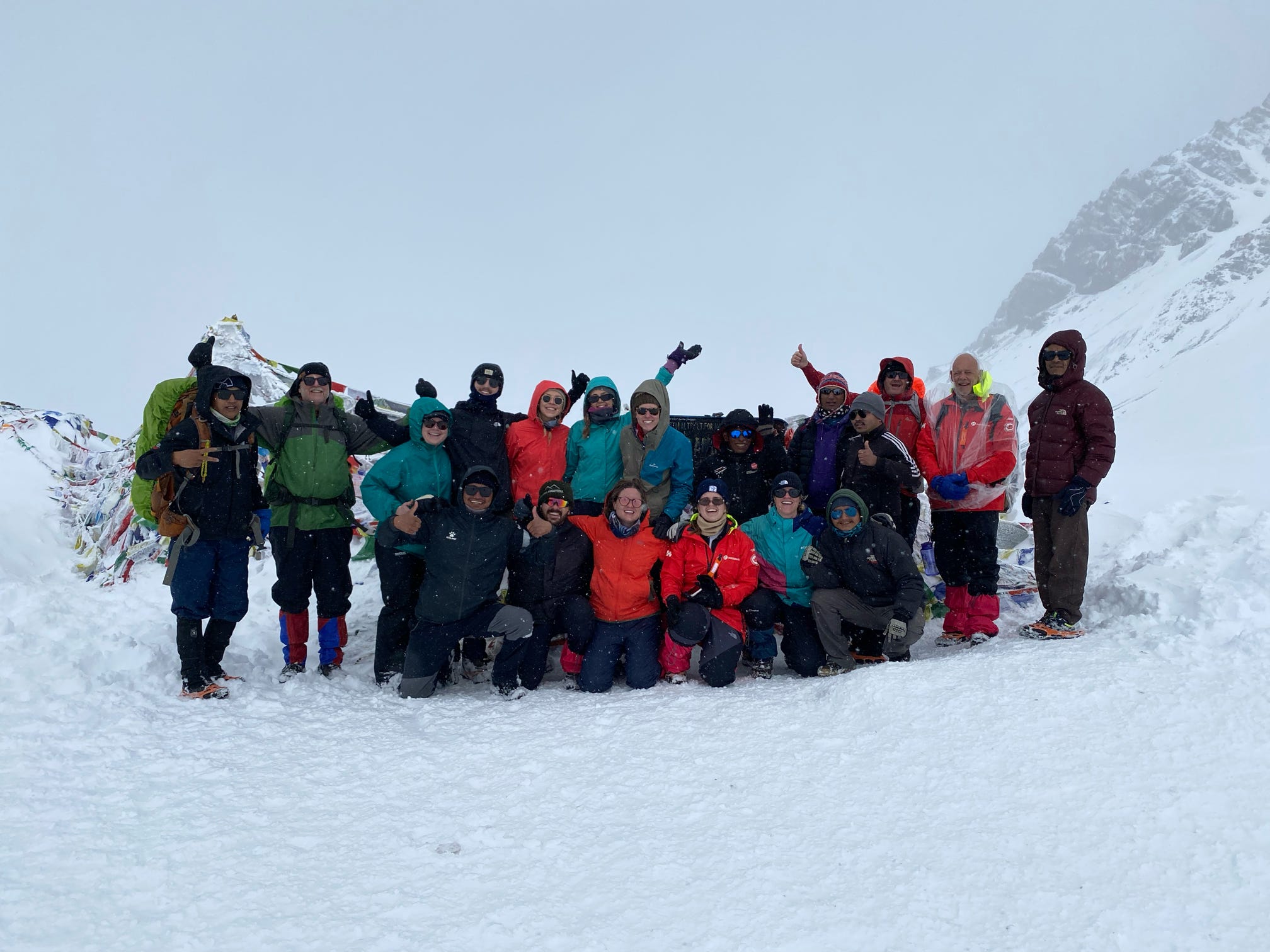
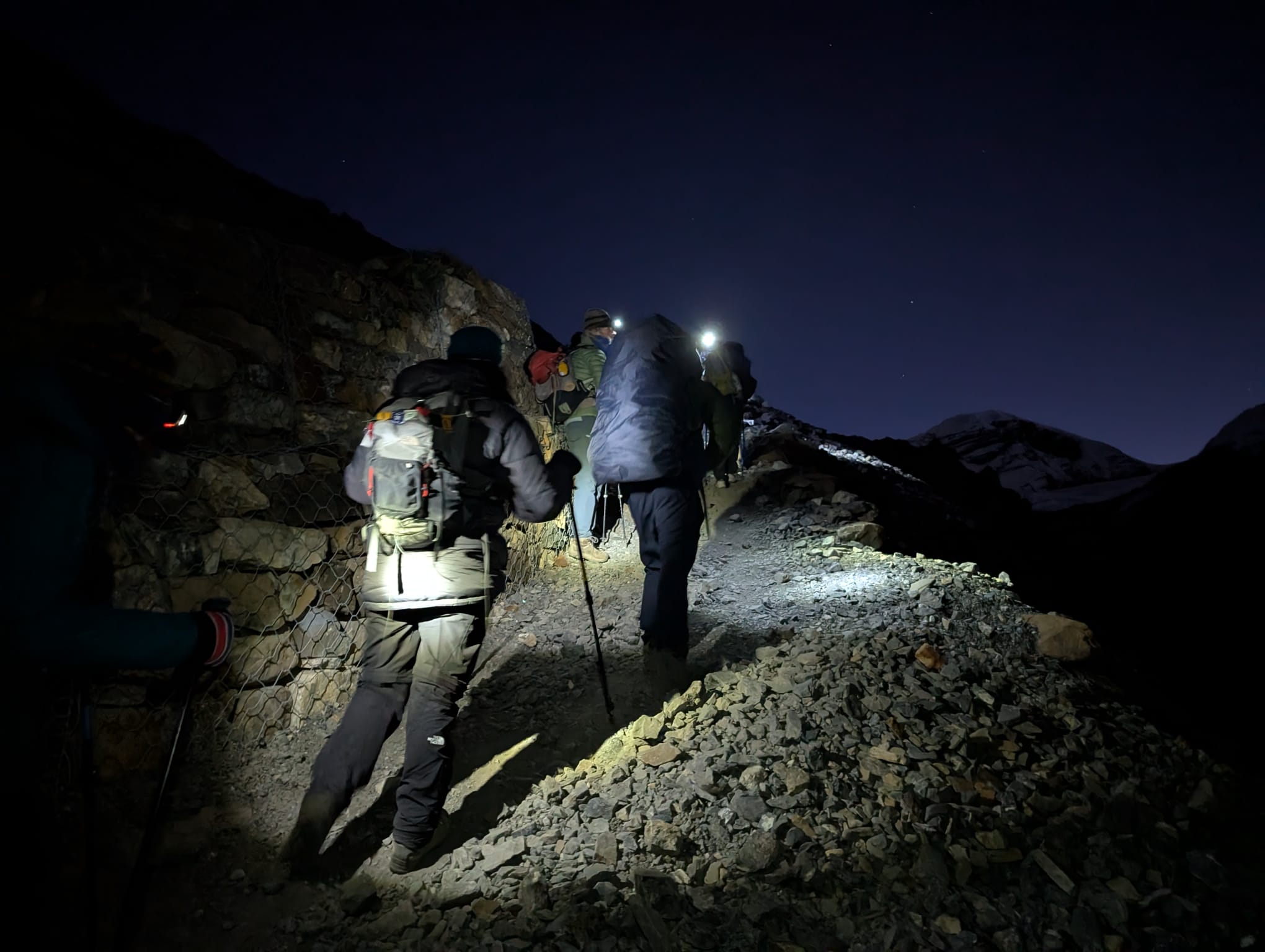
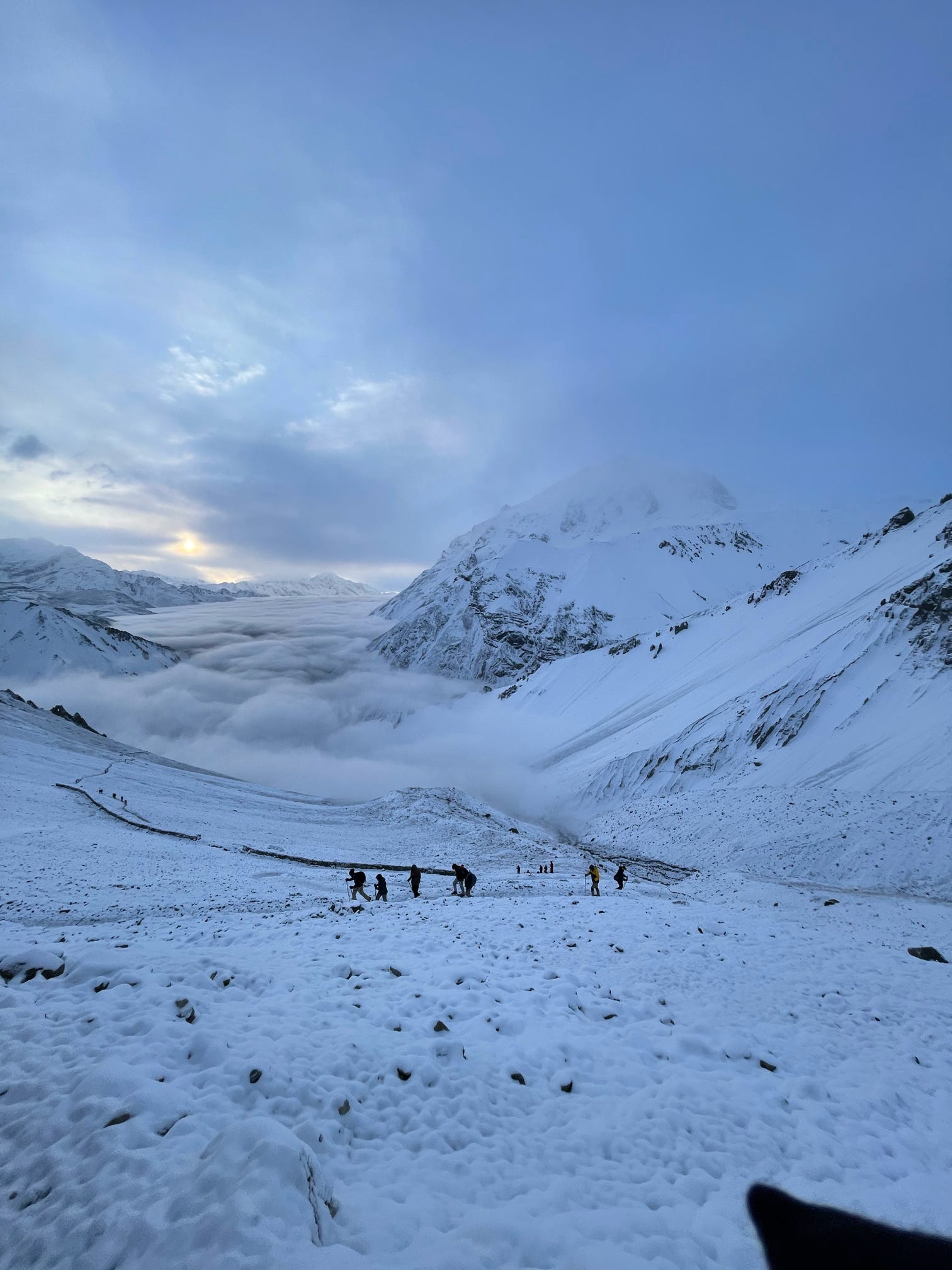
Thorong La sits at 5,416 meters and is the single feature that separates the Annapurna Circuit’s difficulty from Annapurna Base Camp’s, since Base Camp’s itinerary never requires a comparable pass crossing. The crossing day itself typically starts before dawn from Thorong Phedi at 4,525 meters, climbing roughly 900 meters before a long descent into Muktinath on the far side.
What makes this specific day harder than anything on Base Camp isn’t just the altitude, but the length of commitment it demands. Once trekkers start the climb from Thorong Phedi, turning back partway through isn’t a simple option the way it can be on a shorter, lower-elevation day, which is why guide judgment and weather timing matter more here than anywhere else on either route.
Top 5 Hardest Treks in Nepal, and Where These Two Rank
Neither the Annapurna Circuit nor Annapurna Base Camp ranks among Nepal’s five hardest treks, both sit in the moderate-to-challenging tier rather than the extreme end of the scale. Treks that do rank among the hardest typically combine remote, restricted-area logistics with multiple high passes rather than one.
A reasonable top-five list of Nepal’s hardest treks includes the Upper Dolpo Trek, the Kanchenjunga Circuit Trek, the Everest Three Passes Trek, the Dhaulagiri Circuit Trek, and the Manaslu Circuit. Each of these routes involves either multiple passes above 5,000 meters, extended remote sections without teahouse infrastructure, or both, which is a meaningfully higher bar than either Annapurna route asks trekkers to clear.
This context matters for expectation-setting: trekkers choosing between the Circuit and Base Camp are choosing between two genuinely challenging but broadly accessible treks, not deciding between easy and extreme options on Nepal’s full difficulty spectrum.
Is K2 Harder Than Annapurna? A Different Kind of Challenge
K2 and Annapurna I are technical mountaineering peaks, not trekking routes, and comparing them has nothing to do with choosing between the Annapurna Circuit and Annapurna Base Camp treks. K2 stands at 8,611 meters with a historical fatality rate commonly cited around 20 to 25 percent, while Annapurna I, at 8,091 meters, has historically carried an even higher fatality-to-summit ratio, often cited near 30 percent, though both figures have improved in recent years with better forecasting and equipment.
Which one is “harder” depends on the metric used. K2 is generally considered the more technically demanding climb overall, while Annapurna I has historically posted the higher death rate among all fourteen 8,000-meter peaks. Neither comparison has any bearing on the trekking routes covered in this guide, since neither the Circuit nor Base Camp approaches Annapurna I’s summit or involves any technical climbing whatsoever. Lhasso Adventure doesn’t run summit expeditions on either peak, and this entire guide concerns the trekking routes around the Annapurna massif, not mountaineering objectives on it.
What’s the Toughest Trek in the World?
There’s no single, universally agreed answer to which trek is the toughest in the world, since the answer depends on whether you weigh altitude, remoteness, technical terrain, or duration most heavily. Treks frequently mentioned in this conversation include Bhutan’s Snowman Trek, widely considered one of the hardest teahouse-adjacent treks anywhere due to its extreme length and multiple high passes, and Nepal’s own Upper Dolpo and Kanchenjunga Circuit routes.
Neither the Annapurna Circuit nor Annapurna Base Camp competes for a spot on that list, and that’s not a knock against either trek. Both are challenging, rewarding routes built for a far broader range of trekkers than the handful of extreme multi-week expeditions that actually contend for “world’s toughest.”
Permits and Guide Requirements for Both Treks
Both treks require the same two permits: the Annapurna Conservation Area Permit (ACAP) and a TIMS card, since both routes sit inside the same conservation area. Neither trek has a separate or additional permit requirement beyond these two documents.
Nepal’s current trekking regulations also require a licensed guide on both routes, ending independent trekking on either one. Lhasso Adventure handles the full ACAP and TIMS application process for every departure on both treks, so this requirement doesn’t add separate planning work depending on which route you choose.
Since neither the permit cost nor the guide requirement differs meaningfully between the two treks, this factor shouldn’t weigh heavily in deciding between them, unlike duration, altitude, and cost, which do.
Guides such as Bhim Tamang, who leads departures on both routes for Lhasso Adventure, bring the same licensed credentials and altitude training to either trek, which is part of why the guide experience itself doesn’t vary meaningfully between the two once you’ve chosen one.
Safety and Risk: How the Two Treks Compare
Both treks carry altitude-related risk as their primary safety concern rather than terrain hazards, since neither route requires technical climbing skill. Base Camp’s lower ceiling genuinely reduces this risk compared to the Circuit, since the body has less total elevation to adjust to and a shorter window above 3,000 meters overall.
The Circuit’s added risk comes almost entirely from Thorong La itself, where weather can shift quickly and the crossing day is long enough that turning back partway through isn’t always a simple option. Base Camp has no equivalent single high-stakes day, since its route never narrows down to one committing push over a mountain pass.
Both treks benefit equally from the same safety practices: proper acclimatization pacing, honest symptom reporting, and a guide who actively monitors conditions rather than following a fixed schedule regardless of how trekkers are feeling. Neither route’s risk profile changes the fundamentals of what keeps a Himalayan trek safe.
Physical Fitness: What Annapurna Circuit vs Annapurna Base Camp Trek Actually Demands
Both treks call for similar baseline fitness, cardiovascular endurance for consecutive days of 5 to 7 hour walking, rather than specialized mountaineering conditioning. Where they diverge is sustained demand: the Circuit’s 14 to 17 days ask more of overall stamina than Base Camp’s 12, simply by virtue of asking your body to keep performing for two to five additional days.
Base Camp’s stone-stepped terrain around Ghandruk and Chhomrong places real strain on knees and quadriceps despite its shorter overall length, making leg strength training just as relevant as cardio for this route specifically. The Circuit adds an altitude-specific fitness demand on top of this, since the body’s ability to perform at reduced oxygen above 4,000 meters matters more here than on Base Camp’s lower route.
Neither trek rewards rushing a training plan. Eight to twelve weeks of consistent cardio and loaded hiking before departure is a reasonable baseline for either route, with Circuit-bound trekkers benefiting from extra attention to pacing strategy given the longer sustained demand.
Best Season for Annapunr Circuit vs Annapurna Base Camp Trek
Autumn and spring are the strongest seasons for both the Annapurna Circuit and Annapurna Base Camp, with October and November offering the clearest, most stable conditions on either route. Base Camp’s lower elevation makes it slightly more forgiving outside these peak windows than the Circuit is.
Winter snow can close Thorong La on the Circuit for a day or more at a time, a risk Base Camp doesn’t share since its route never climbs high enough to encounter a true high-altitude pass closure. Monsoon affects both treks similarly in their lower sections, with reduced visibility and wetter trail conditions regardless of which route you choose.
Trekkers with a fixed travel window outside the ideal autumn and spring months may find Base Camp the more flexible option of the two, simply because its lower ceiling carries less season-dependent risk. For trekkers set on the Circuit specifically, the month-by-month breakdown of which weeks offer the most stable conditions at Thorong La is worth checking against your own travel dates before booking.
Which one is suitable for beginner Annapurna Circuit or Annapurna Base Camp Trek
Beginners can complete both treks, though Base Camp is generally the more approachable starting point for a first high-altitude trip. Its shorter duration and lower maximum altitude reduce the margin for error compared to the Circuit’s longer acclimatization demands.
The Circuit remains genuinely achievable for a well-prepared beginner, but it asks more of first-time trekkers: more consecutive days of walking, a higher altitude ceiling, and a single demanding crossing day that Base Camp’s itinerary doesn’t include. A beginner choosing the Circuit should lean more heavily on guide support and a properly paced itinerary than a Base Camp beginner might need to.
Neither trek requires prior mountaineering experience, since both follow established teahouse trails without technical climbing of any kind.
Age is less of a limiting factor on either route than many first-time trekkers assume, with both treks regularly completed by trekkers well into their sixties and seventies who pace themselves appropriately. What matters more than age or prior experience is a willingness to walk slowly, especially at altitude, rather than pushing to keep up with a faster group member.

What’s Included in Each Package
Both Lhasso Adventure packages follow the same inclusion structure: permits, licensed guide and porter services, teahouse accommodation, all trail meals, airport transfers, and hotel nights in Kathmandu and Pokhara before and after the trek. Neither package includes international flights, travel insurance, or personal gear rental, which both treks list as separate costs.
The main practical difference shows up in porter ratios and group logistics rather than inclusion categories themselves, since a shorter Base Camp departure moves the same support team through fewer total trail days. Trekkers comparing quotes between the two should confirm both are quoting against the same inclusion list before comparing price directly, since a quote missing permits or porter support isn’t genuinely comparable to one that includes them.
Combining the Annapurna Circuit and Annapurna Base Camp Trek : Is That Possible?
Trekking both routes on a single trip is possible but requires treating them as two separate, sequential treks rather than one combined itinerary, since they start from different trailheads and don’t share a connecting trail. Trekkers with enough time sometimes complete Base Camp first, then follow it with the Circuit on a separate departure during the same overall Nepal trip.
For trekkers wanting more variety without committing to two full treks, Annapurna via Poon Hill adds a sunrise viewpoint extension onto the Base Camp route rather than combining it with the Circuit, offering a middle option between the two without the full additional time commitment either standalone combination would require.
Trekkers who do complete both routes, typically on separate trips rather than the same visit, often report that doing Base Camp first works better as a sequence than the reverse. Base Camp’s shorter structure builds confidence and basic altitude experience that makes the Circuit’s longer demands feel less daunting on a second trip.
Annapurna Circuit vs Everest Base Camp
The Annapurna Circuit and Everest Base Camp are both major 14-day treks at their standard length, but they differ sharply in structure: the Circuit is a full loop with a 5,416-meter pass crossing, while Everest Base Camp is an out-and-back route reaching roughly 5,364 meters without any pass to cross. Getting to the Everest region also adds a Lukla flight into the logistics, a fixed-cost, weather-dependent step the Annapurna side doesn’t require.
Pricing reflects this difference, with Everest Base Camp starting at USD 1,815 per person against the Annapurna Circuit’s USD 1,273 on the matching 14-day departure, largely due to that domestic flight. Difficulty-wise, the two are closely matched overall, though EBC’s reliance on a single flight in and out adds a logistics risk the Circuit’s road-and-trail access doesn’t carry.
This is also where Annapurna Base Camp draws its own comparison to Everest Base Camp specifically: ABC’s 4,130-meter ceiling and 12-day structure make it a noticeably shorter, lower-altitude alternative to EBC, while still delivering a genuine high-altitude mountain amphitheater as its destination.
Annapurna Circuit vs Manaslu Circuit
The Annapurna Circuit and Manaslu Circuit share a similar structure, both are full loops crossing a high pass, but Manaslu’s corridor is considerably more remote and restricted. Manaslu’s Larkya La pass sits at an elevation comparable to Thorong La, yet the surrounding infrastructure is thinner, with fewer villages and a mandatory special permit beyond the standard conservation-area paperwork the Annapurna side requires.
Cost reflects this gap directly: Manaslu Circuit starts at USD 1,440 per person over 15 days, higher than the Annapurna Circuit’s USD 1,273 on its comparable 14-day departure, driven mainly by that restricted-area permit fee rather than any meaningful difference in trek length. Trekkers who’ve done both routes generally describe Manaslu as the quieter, more remote experience of the two, while the Annapurna Circuit offers denser teahouse infrastructure and a slightly gentler logistics picture overall.
Annapurna Circuit vs Tilicho Lake Trek
A standalone “Tilicho Lake trek” isn’t typically sold as its own separate product, since Tilicho Lake is usually trekked as a side extension built into an Annapurna Circuit itinerary rather than a destination reached independently. The Annapurna Circuit with Tilicho and Ice Lakes Trek is the version of this route that includes the detour, adding two to three days onto the core loop to reach the lake’s roughly 4,900-meter elevation.
Trekkers searching for a Tilicho Lake trek specifically are usually better served by booking this combined itinerary than looking for an entirely separate product, since the lake sits well off the standard circuit trail and isn’t efficiently reached any other way without substantial extra logistics.
What Trekkers Say on Reddit and Trekking Forums
Across trekking forums and community discussions, a consistent pattern shows up when trekkers compare the Annapurna Circuit and Annapurna Base Camp: most describe Base Camp as the more time-efficient choice for a shorter trip, while the Circuit draws praise specifically for its landscape variety and the sense of accomplishment tied to crossing Thorong La. Neither route draws significant complaints about safety or infrastructure in these discussions, which is consistent with both being well-established, heavily trekked corridors.
A recurring theme in these conversations is that trekkers rarely regret either choice outright, disappointment tends to come from mismatched expectations, such as choosing the Circuit without enough available time, rather than from either trek itself falling short.
Annapurna Circuit vs Annapurna Base Camp: Which Trek Is Right for You?
Choose Annapurna Base Camp if your available time is closer to two weeks, you want a dramatic high-altitude destination without a pass crossing, or you’re trekking at altitude for the first time and want a shorter margin for things to go right. Its 12-day structure and 4,130-meter ceiling make it the more time-efficient and slightly more forgiving of the two.
Choose the Annapurna Circuit if you have closer to three weeks available, want the variety of a full loop crossing from subtropical valley into high alpine desert, or specifically want the experience of crossing a genuine high-altitude pass. The extra days and altitude buy a fundamentally different kind of trip, not just a longer version of the same one.
Trekkers still undecided between the two often find that available time, rather than fitness or experience, ends up being the deciding factor once both routes are laid out side by side.
A simple way to settle it: if you had to pick only one factor to decide on, ask whether you’d rather have more days and more landscape variety, or a shorter trip with a single unforgettable destination. Everything else, cost, fitness, altitude, tends to follow from that one preference rather than driving the decision on its own.

Frequently Asked Questions for Annapurna Circuit vs Annapurna Base Camp Trek
If I only trust myself with one shot at a Himalayan trek, which should I pick?
If you’re unsure how your body handles altitude, Base Camp’s shorter, lower-altitude structure gives you a genuine high-altitude experience with less that can go wrong on a first attempt.
Does finishing Base Camp mean the Circuit will feel easy afterward?
Not necessarily. Base Camp builds general trekking fitness and some altitude experience, but the Circuit’s sustained climb above 4,000 meters and the Thorong La crossing are a different physical demand than anything on the Base Camp route.
Is one route significantly more scenic than the other?
They’re scenic in different ways rather than one being objectively better: Base Camp delivers a concentrated, dramatic mountain amphitheater, while the Circuit delivers broader landscape variety across an entire loop.
Which trek has better teahouse comfort along the way?
Both routes run through well-established teahouse infrastructure, though Base Camp’s shorter, more concentrated trail means slightly more consistent amenities, since fewer remote stretches separate one village from the next.
If cost is my main constraint, is Base Camp the obvious choice?
Usually yes on a pure per-trip basis, since Base Camp’s shorter duration brings the total price down considerably. Worth weighing that against the Circuit’s longer trip and full loop before deciding purely on price.
Can I decide which one to do after arriving in Nepal rather than before?
It’s possible but riskier, since both treks need permits arranged and fixed departure dates booked in advance for the best availability. Deciding before you fly gives you more flexibility on dates and group pricing than trying to book either trek last minute in Kathmandu.
Does altitude sickness medication change which trek I should pick?
Not significantly. Preventive medication can help on either route, but it doesn’t substitute for proper acclimatization pacing, so the choice between the two should still come down to time, altitude tolerance, and what kind of trip you want rather than medication alone.