Best Time to Trek the Annapurna Circuit: A Season-by-Season Guide
September 27, 2026 Lhasso Adventure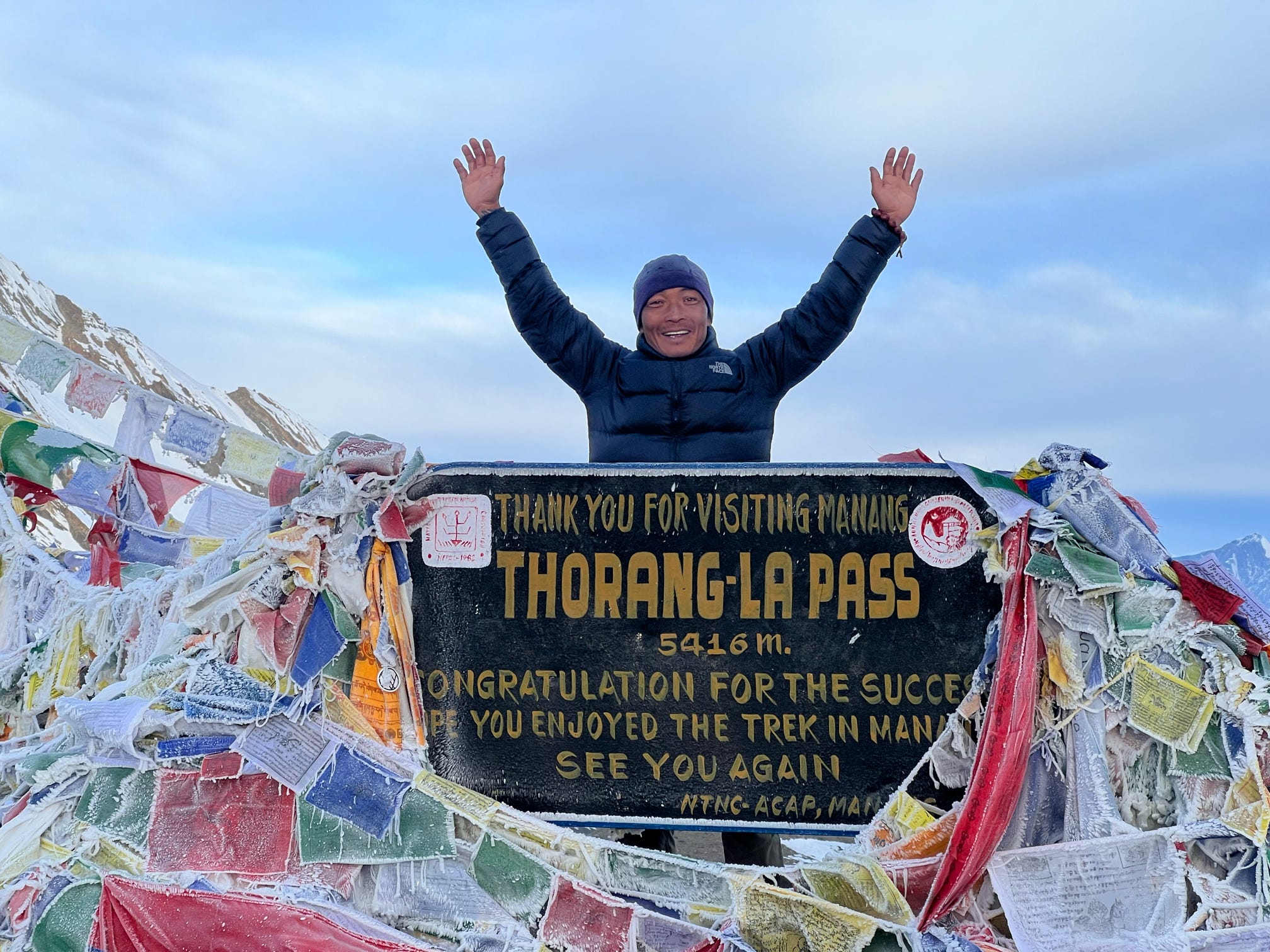
The best time to trek the Annapurna Circuit is during autumn, from September through November, when clear skies and stable trail conditions give you the highest chance of a smooth Thorong La crossing. Spring, from March through May, is a close second, trading a slightly higher chance of afternoon cloud for blooming rhododendron forests along the lower trail.
Winter and monsoon are trekkable too, just with real trade-offs: winter brings snow risk at the pass, and monsoon brings rain and reduced mountain visibility lower down. This guide breaks down season by season, month by month, so you can pick a window that fits both the trek and your own priorities.
Timing this trek well matters more than on most other routes in Nepal, since Thorong La’s elevation makes it far more weather-sensitive than a lower-altitude trail. Getting the season right doesn’t just improve your views, it directly affects your odds of a smooth, uneventful pass crossing.
Best Season for the Annapurna Circuit Trek
The best season for the Annapurna Circuit trek is autumn, followed closely by spring, with winter and monsoon each workable for trekkers willing to plan around their specific challenges. Each season changes the trek’s character more than most first-time trekkers expect.
Autumn (September to November) delivers the most consistent weather of the year, with clear skies, stable temperatures, and the lowest chance of the pass closing due to snow. This is also when Nepal’s major festivals, Dashain and Tihar, fall, adding cultural texture to an already popular trekking window.
Spring (March to May) brings warmer days and the season’s signature rhododendron blooms across the lower valley, though afternoon haze at lower elevations can occasionally soften mountain views. Trail conditions stay generally favorable, and Thorong La is typically clear by mid-March onward.
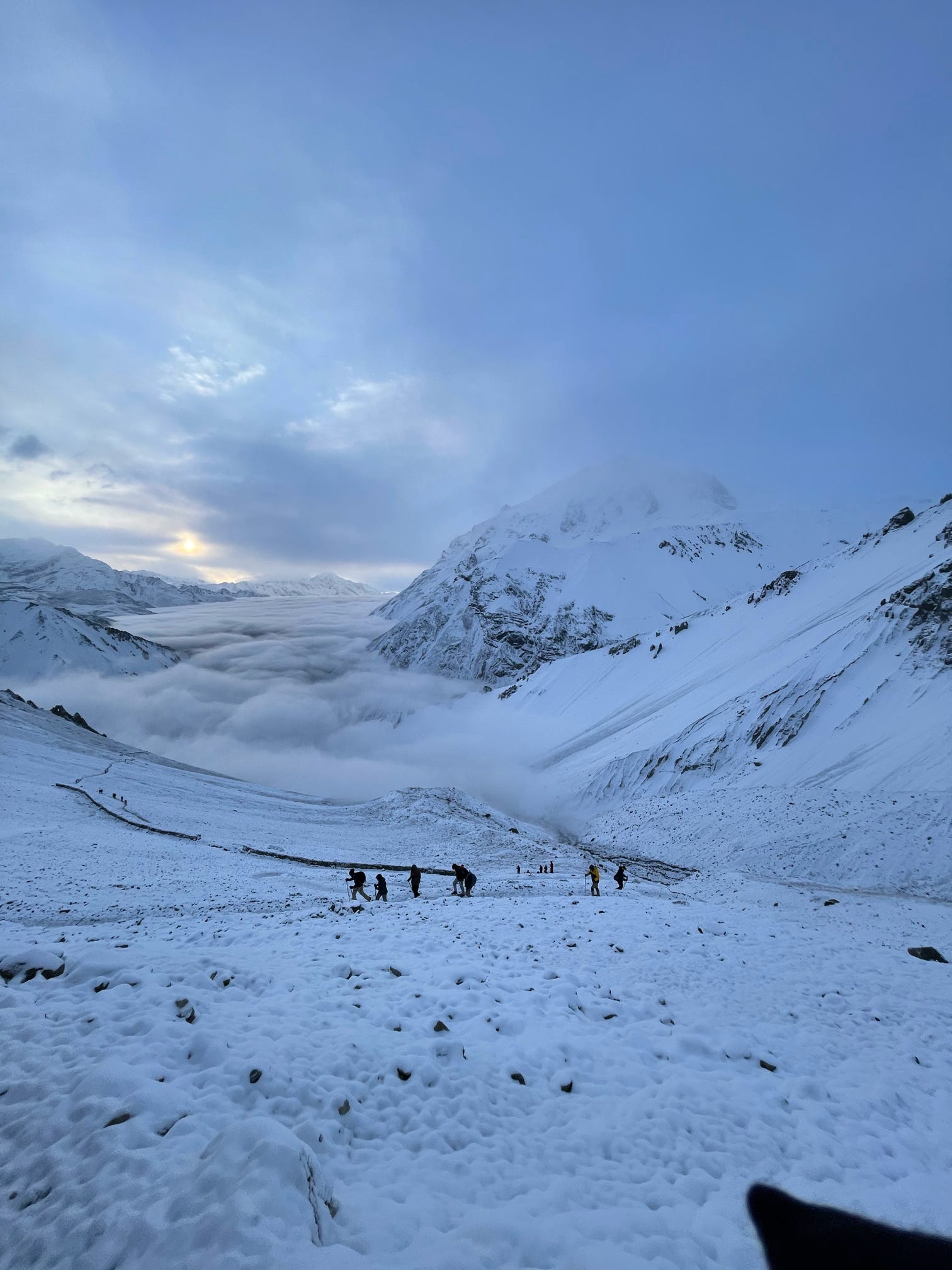
Winter (December to February) is quieter and colder, with genuine snow risk at Thorong La that can delay or occasionally block a crossing for a day or more. Trekkers who choose winter should build extra schedule flexibility around the pass day and pack for well-below-freezing nights.
Monsoon (June to August) sees the fewest trekkers, since rain, leeches at lower elevations, and clouded mountain views make it the least popular window. The upper Manang and Mustang sections, sitting in the Annapurna rain shadow, stay noticeably drier than the lower valley even during monsoon.
No season fully rules out the trek, which is part of why the Annapurna Circuit stays busy nearly year-round compared to more seasonally restricted routes elsewhere in Nepal. What changes most between seasons isn’t whether you can go, but how much planning flexibility you need to build in around weather.
Best Month for the Annapurna Circuit Trek
The single best month for the Annapurna Circuit trek is October, which combines autumn’s most stable weather with peak visibility at Thorong La before winter cold sets in. November runs a close second, with slightly cooler temperatures but similarly reliable conditions.
In spring, April is generally considered the strongest month, sitting between March’s still-cool mornings and May’s occasional lower-valley haze. March offers a quieter trail for those willing to trade a few degrees of warmth for smaller crowds.
May deserves a closer look than it often gets, since haze tends to affect photography more than it affects trail safety or trekking comfort. Trekkers less focused on capturing perfectly clear mountain shots often find May a genuinely pleasant, less crowded alternative to peak April dates.
September marks the transition out of monsoon and can be excellent once the rains clear, though early-month departures carry some residual risk of leftover wet trail conditions in the lower valley. December and February bookend the winter window with the most manageable cold, while January is the coldest month most trekkers choose to avoid entirely.
Annapurna Circuit Trek Month-by-Month Weather Breakdown
Temperatures on the Annapurna Circuit swing dramatically by month and by altitude, which is why a single “best time” answer only tells part of the story. The table below gives a general sense of daytime conditions at Manang (around 3,500 meters), the village most trekkers use as a reference point for the trek’s higher sections.
| Month | Daytime Conditions at Manang | Trail Notes |
| September | Mild, clearing through the month | Late-month departures avoid lingering monsoon moisture |
| October | Cool and clear | Peak stability and peak crowds together |
| November | Cold mornings, clear days | Slightly quieter than October with similar reliability |
| December | Cold, occasional snow | Thorong La crossing needs extra weather flexibility |
| January | Very cold, higher snow risk | Coldest month most trekkers avoid |
| February | Cold, gradually warming | Quiet trail, manageable with proper gear |
| March | Cool, generally stable | Rhododendrons begin blooming lower down |
| April | Mild, generally stable | Widely considered spring’s strongest month |
| May | Warmer, occasional haze | Haze affects photos more than safety |
| June | Warm, rain increasing | Early monsoon, wetter lower valley |
| July | Warm, wettest month | Heaviest rain and lowest visibility |
| August | Warm, rain tapering later in month | Upper Mustang side stays driest |
Reading this table alongside your own cold tolerance and crowd preference is generally more useful than chasing a single “best” month, since October and April both carry the trade-off of being the busiest weeks on the trail.
Is September a Good Month for the Annapurna Circuit?
September is a good month for the Annapurna Circuit, particularly from mid-month onward, once the tail end of monsoon clears and autumn’s stable weather begins settling in. Early September can still carry occasional rain and cloud cover, especially in the lower Marshyangdi Valley.
Trekkers departing in the second half of September typically get a preview of autumn’s clear skies without the peak-season crowds that build through October and November. Trail infrastructure is also fully open by this point, with every teahouse along the route back in full operation after the quieter monsoon months.
The main trade-off with September is unpredictability in the first half of the month, so a flexible start date or a short buffer built into your itinerary helps avoid the tail end of monsoon weather. Lhasso Adventure typically recommends late September departures over early ones for exactly this reason.
Rainfall data for the region generally shows a sharp drop-off in the second half of September compared to peak monsoon months, which is consistent with what most trekkers experience on the ground. A trekker departing September 20th onward is trekking in conditions much closer to early October than to August.

What to Pack for Each Season on the Annapurna Circuit
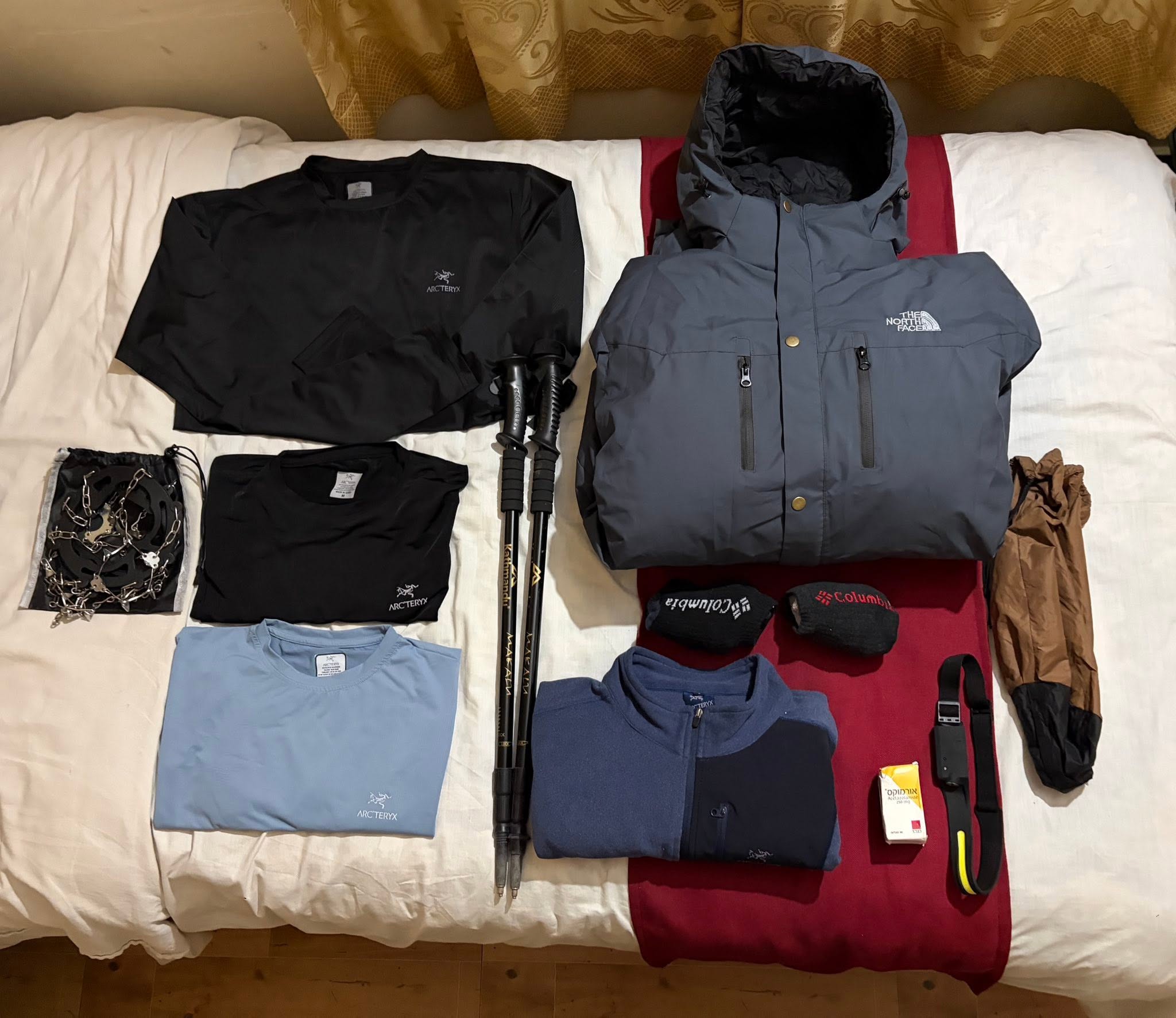
What you pack for the Annapurna Circuit changes meaningfully by season, even though the core gear list, layers, sturdy boots, a good sleeping bag, stays the same year-round. Autumn and spring require a solid mid-layer and a warm jacket for evenings and the pass crossing, but daytime walking gear can stay relatively light.
Winter departures need a genuinely cold-rated sleeping bag and insulated layers throughout, since nighttime temperatures at higher villages regularly drop well below freezing. Monsoon trekkers should prioritize waterproofing over warmth, with a quality rain shell and pack cover mattering more than extra insulation for most of the route below Manang.
Regardless of season, the biggest packing mistake most trekkers make is underestimating the temperature swing on crossing day itself, when a cold pre-dawn start can give way to strong sun by mid-morning. Layering that can be added and removed quickly matters more than any single piece of gear.
Best Time for Beginners to Trek the Annapurna Circuit
The best time for beginners to trek the Annapurna Circuit is autumn, since stable weather removes one major variable while you’re already managing altitude and distance for the first time. Predictable conditions at Thorong La matter more for a first-timer than for someone who has crossed a high pass before.
Spring is a solid second choice for beginners, offering similarly manageable conditions along with the added motivation of blooming trail scenery through the lower valley. Winter and monsoon departures are better suited to trekkers who already understand how their body handles altitude and cold, since both seasons add complications a beginner doesn’t need on a first attempt.
Even in the best season, the altitude gain above Manang and the long, cold push over Thorong La account for most of what makes this trek genuinely hard, regardless of when a beginner chooses to go. Picking the right month narrows the weather risk, but it doesn’t remove the physical challenge itself.
How Long Does the Annapurna Circuit Trek Take to Complete?
The Annapurna Circuit trek typically takes 12 to 18 days to complete, depending on your starting point, pace, and whether you add extensions along the way. This timeline stays broadly consistent across seasons, though winter departures sometimes need an extra buffer day built in around Thorong La in case of a weather delay.
A guided trek generally runs toward the fuller end of this range, since a properly paced itinerary includes acclimatization days that a rushed independent attempt might skip. Lhasso Adventure’s standard departures are built around this full timeline rather than a compressed version, regardless of which season a trekker chooses, largely because the gradual altitude gain from Manang up to Thorong La is what actually dictates how many days a safe itinerary needs, not the calendar.
Annapurna Circuit Trek Map, Route, and Distance
The Annapurna Circuit trek map traces a loop around the Annapurna massif, starting near Besisahar, climbing through Chame and Manang, crossing Thorong La at 5,416 meters, and descending through Muktinath toward Jomsom or Pokhara. Total distance runs roughly 160 to 230 kilometers depending on road use and any side trips taken.
Season changes how parts of this route look and feel more than it changes the map itself. The Manang side stays green and forested well into autumn, while the Mustang side beyond Thorong La sits in a rain shadow and looks arid and desert-like for most of the year regardless of season.
Trekkers planning their own route study often ask about a downloadable map or PDF version of the trail for offline reference. Lhasso Adventure can provide a route map and elevation overview directly to anyone booking a departure, which is generally more useful than a generic downloadable file since it reflects the exact itinerary you’ll be following.
Distance also isn’t evenly spread across the route, which matters when planning around season and daylight hours. Lower valley days between Besisahar and Chame cover more ground on gentler terrain, while the days approaching Manang and Thorong La cover less distance but demand considerably more time and energy per kilometer, especially with shorter daylight windows in winter.
Crowds, Permit Availability, and Booking Windows by Season
Trail crowds on the Annapurna Circuit follow the same pattern as weather, peaking in October and April and thinning out considerably during winter and monsoon. Teahouses in popular stops like Manang and Muktinath can fill up on the busiest autumn dates, which matters more for independent trekkers than for those on a pre-booked guided itinerary with rooms arranged in advance.
Permits themselves aren’t seasonally limited or capped, so availability isn’t a concern at any time of year the way accommodation occasionally can be during peak weeks. What does move with the season is how far ahead it makes sense to book: autumn departures fill fastest, so reserving three to four months out gives the widest choice of dates, while winter and monsoon trips can often be arranged with much shorter notice.
Trekkers who value solitude over reliable weather sometimes deliberately target the quieter shoulder weeks just before or after peak season, trading a slightly higher weather risk for noticeably emptier trails and teahouses that feel more personal than crowded.
Adding Tilicho Lake: Best Timing and Itinerary Impact
Adding Tilicho Lake to your Annapurna Circuit itinerary works best in autumn or spring, since the side trip climbs above 4,900 meters and benefits from the same stable weather that makes those seasons ideal for the main route. Tilicho Lake sits higher and further off the main trail than the more commonly added Ice Lake detour near Manang, so it demands a bit more from both timing and fitness.
The detour typically adds two to three extra days to a standard itinerary, best absorbed into an already generous acclimatization schedule rather than bolted onto a tight one. Trekkers considering Tilicho Lake in winter should be especially cautious, since snow and wind exposure at that elevation are more pronounced than anywhere else on the standard circuit.
Autumn remains the single most reliable window for this specific detour, since the extended time spent at extreme altitude makes stable weather even more valuable than it is on the main route. Trekkers set on adding Tilicho Lake outside autumn or spring should build in extra schedule flexibility rather than treating the detour’s timing as fixed.
For trekkers who want a high-altitude lake detour without Tilicho’s extra distance and elevation demands, the Ice Lake side trip above Manang offers a shorter alternative that fits more easily into a standard-length itinerary regardless of season.
Fitness Level Required, and Does Season Change It?
The fitness level required for the Annapurna Circuit stays broadly consistent across seasons, centered on cardiovascular endurance for sustained multi-hour walking days rather than technical skill. What does change by season is how much that baseline fitness gets tested by additional cold, wind, or altitude-related fatigue.
Winter departures place slightly more demand on cold-weather stamina, since maintaining body heat over long walking days adds a layer of physical strain beyond the walking itself. Monsoon trekking adds its own fatigue factor through slippery, energy-draining terrain in the lower valley sections.
None of these seasonal differences change the basic training approach, which centers on building cardiovascular endurance well before departure regardless of when you go. Winter and monsoon trekkers simply layer cold-weather or wet-weather conditioning on top of the same baseline stamina needed for consecutive 5 to 8 hour walking days that every season demands.
Do You Need a Guide, and Does the Season Matter?
A guide isn’t legally required on the standard Annapurna Circuit route, but the case for one gets stronger the further you move away from the ideal autumn and spring windows. Winter and shoulder-season departures benefit most from a guide’s judgment, since weather at Thorong La changes faster and less predictably outside peak season.
Guides like Norbu Tamang, who has led Lhasso Adventure departures across every season on this route, plan crossing days around real-time conditions rather than a fixed schedule, which matters far more in December than it does in October. That kind of seasonal judgment is difficult to replicate independently, especially outside the trek’s most stable months.
This becomes especially relevant on shorter-window trips, where a trekker with limited vacation days has less flexibility to simply wait out a weather delay. A guide who can read conditions accurately and adjust the plan on short notice protects that fixed timeline far better than an independent trekker checking forecasts alone.
Booking a fixed departure date also naturally aligns your trek with a season that already suits your priorities, whether that’s autumn’s reliability, spring’s scenery, or a quieter winter trail for those who don’t mind the cold.
Is the Annapurna Circuit Trek Dangerous? Understanding the Real Risk
The Annapurna Circuit trek carries real risk, primarily from altitude sickness and sudden weather changes at Thorong La, but it isn’t the extreme undertaking some online sources suggest. A commonly cited danger statistic online actually refers to summit attempts on Annapurna I itself, a technical mountaineering objective entirely separate from the trekking route around its base, and shouldn’t be confused with the circuit trek’s real risk profile.
The circuit trek has an overall completion rate estimated at 98 to 100 percent among prepared trekkers, with successful crossings recorded from trekkers in their mid-teens through their seventies. The clearest historical reminder of what can go wrong is the October 2014 Thorong La snowstorm, when a sudden, unforecast weather system caught a large number of trekkers on the pass with limited warning and led to a major multi-day rescue effort.
That event reshaped how seriously Lhasso Adventure treats weather monitoring and crossing-day decisions, building in real-time condition checks before committing to a pass crossing rather than following a fixed schedule regardless of conditions. Choosing the right season, trekking with proper acclimatization, and going with a guide who actively monitors conditions addresses nearly all of the trek’s real risk.
Beyond guide judgment, a few practical habits meaningfully lower risk regardless of season: carrying a basic pulse oximeter to track oxygen saturation, reporting symptoms honestly rather than pushing through them, and treating a mandatory rest day as non-negotiable rather than optional. The Himalayan Rescue Association clinic in Manang also runs free daily altitude awareness sessions that every trekker passing through is encouraged to attend.
Choosing a Guided Departure Timed to the Right Season
Choosing when to trek the Annapurna Circuit and choosing who to trek it with are really the same decision, since a guided departure is built entirely around getting the timing right. A fixed group date already reflects a season that’s been chosen for stable conditions, rather than leaving that call to an individual trekker piecing together their own schedule.
Lhasso Adventure runs its core Annapurna Circuit departures with this in mind, scheduling around autumn and spring by default while still supporting off-season requests for trekkers who specifically want a quieter winter trail. Matching your travel dates to a departure that’s already built around the right season removes one of the biggest planning variables from the trip entirely.
If your available travel window sits outside the peak autumn and spring months, it’s worth checking directly what a realistic itinerary and safety plan looks like for that specific timing before booking.
How Annapurna Circuit Timing Compares to Other Nepal Treks
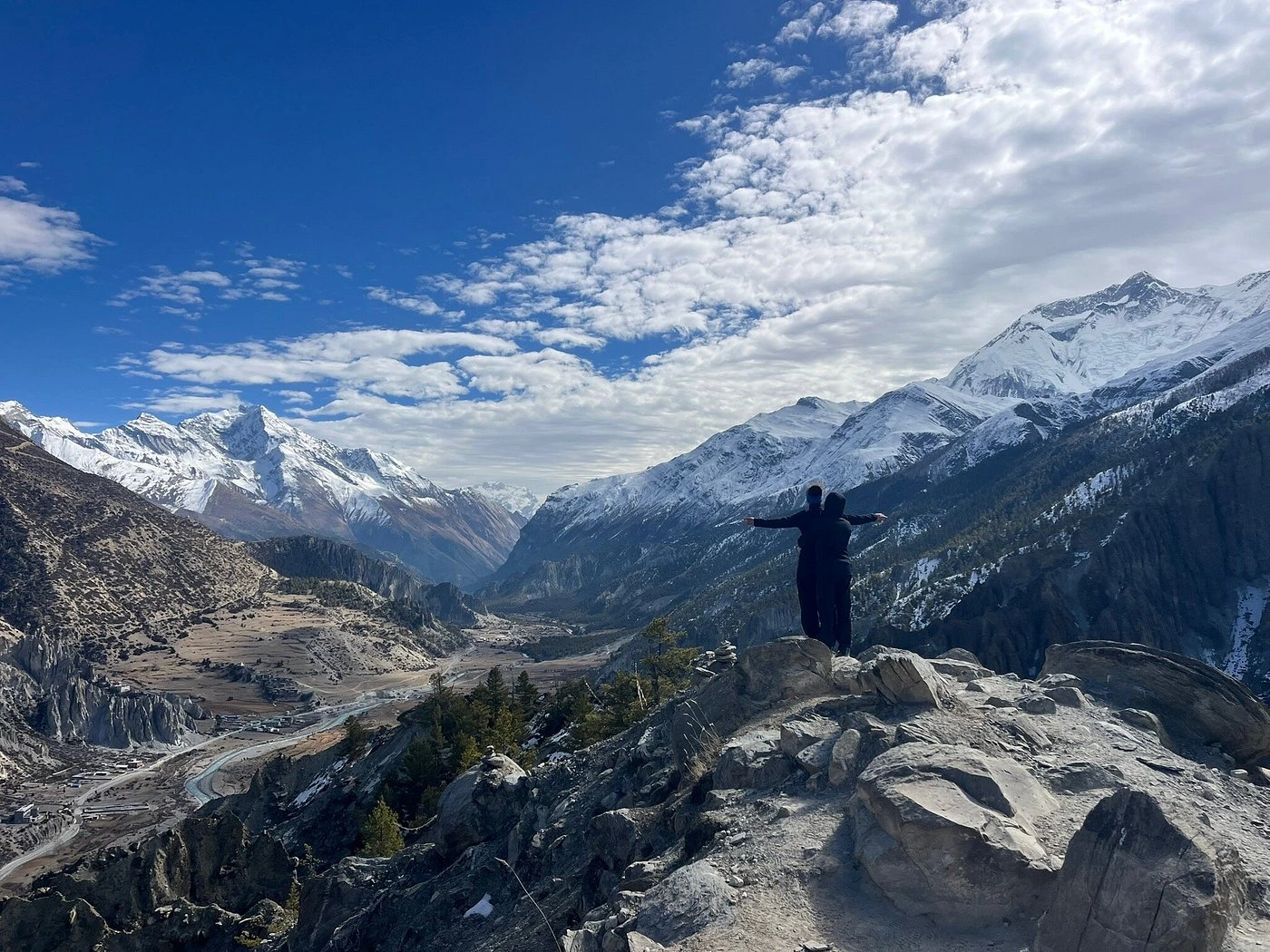
Timing advice for the Annapurna Circuit largely mirrors the broader pattern across Nepal’s major trekking routes, since autumn and spring dominate as the two strongest windows nationwide. What differs is how much a specific route’s elevation and pass structure amplifies or softens seasonal risk.
A route like Everest Base Camp shares nearly identical seasonal logic, with autumn and spring favored for the same reasons: stable weather and manageable cold at high elevation. Longer, more remote routes such as Manaslu Circuit narrow the ideal window further, since restricted-area logistics and higher passes leave even less margin for winter or monsoon attempts than the Annapurna Circuit does.
Trekkers planning multiple routes across different seasons often find the Annapurna Circuit the most forgiving of Nepal’s major treks when it comes to timing flexibility, given its lower-elevation entry points and well-established teahouse infrastructure across every season.
Is the Annapurna Circuit Still Worth It, Regardless of Season?
The Annapurna Circuit is worth trekking in nearly any season, though what you get out of the experience shifts depending on when you go. Autumn and spring trekkers get the classic, widely photographed version of the route, while winter trekkers trade some comfort for a noticeably quieter trail and a more solitary crossing of Thorong La.
Monsoon trekkers see the fewest fellow travelers and the greenest lower valley of any season, even though mountain views above the clouds become far less reliable. None of these trade-offs make one season objectively better than another, just better suited to different priorities.
What stays constant across every season is the trek’s core appeal: a genuine high-altitude pass crossing, dramatic landscape change from subtropical valley to alpine desert, and village culture that doesn’t disappear just because the calendar says winter or monsoon.
The right question isn’t really whether the Annapurna Circuit is worth it in a given season, but whether you’re willing to trek that season on its own terms rather than expecting an autumn experience in January or a spring bloom in July. Trekkers who match their expectations to their chosen season consistently come away satisfied, regardless of which window they picked.
Best Season for Annapurna Circuit Photography
Autumn produces the clearest, most consistently photogenic conditions on the Annapurna Circuit, with crisp air and minimal haze giving the sharpest mountain views of any season. October and November mornings in particular tend to offer the cleanest visibility before any afternoon cloud builds.
Spring brings a different kind of photographic reward, with rhododendron blooms adding color to the lower valley that autumn simply doesn’t have. The trade-off is a slightly softer sky, especially by May, when rising temperatures and haze can mute the crispness of distant peaks.
Winter offers its own draw for photographers willing to brave the cold: snow-dusted villages and near-empty trails make for striking, uncluttered shots that busier seasons rarely allow. Monsoon is the hardest season for photography, since cloud cover frequently obscures the peaks that make this trek’s imagery distinctive in the first place.
Frequently Asked Questions For Best Time To Trek Annapurna Circuit
I can only travel during monsoon season. Should I skip the Annapurna Circuit entirely?
Not necessarily. The upper Manang and Mustang sections sit in a rain shadow and stay relatively dry even during monsoon, so a monsoon departure is workable if you’re prepared for wetter conditions in the lower valley.
Does trekking in shoulder season actually save money?
Often, yes. Late March, early June, and late November tend to see lighter demand on transport and lodging than peak autumn weeks, though permit and package pricing itself doesn’t change with the season.
How far in advance should I book an autumn departure?
Autumn is the most popular season on this route, so booking three to four months ahead gives you the best chance at your preferred dates and group size before peak-season departures fill up.
Can weather ruin a trip even in the best season?
It can happen, though it’s uncommon in autumn and spring. This is exactly why a guided departure with active weather monitoring around the Thorong La crossing matters even during the most reliable months of the year.
If I’m flexible on dates, what single factor should decide my timing?
Your tolerance for cold versus crowds is usually the deciding factor once you rule out monsoon. Autumn and spring trade a busier trail for reliability, while winter trades comfort for solitude.
Is there a “secret” quiet window within the popular seasons?
Yes, the first two weeks of September and the last two weeks of November sit just outside peak autumn demand while still offering mostly stable weather, making them worth considering for trekkers who want autumn’s reliability without its busiest crowds.
Does the season affect how early I need to start walking each day?
It does. Winter and shoulder-season days are shorter, so itineraries often start earlier to reach each stop before the coldest, windiest part of the afternoon, while summer’s longer daylight allows slightly more flexible start times.
Is it true that no season is ever “wrong” for this trek?
Almost. The only genuinely risky choice is trekking without acclimatization flexibility in winter, since a snow-closed pass with no buffer days can turn a minor weather delay into a missed crossing entirely.
Do teahouses close or reduce service in any particular season?
Some smaller teahouses reduce their offerings or close briefly during the quietest monsoon weeks, though the main route between Besisahar and Muktinath stays operational year-round.