How Far Is the Everest Base Camp Trek?
August 13, 2026 Lhasso Adventure
The Everest Base Camp trek covers roughly 130 kilometers round trip from Lukla. That includes the walk up to Base Camp and Kala Patthar, then back down to Lukla again. Most trekkers cover this distance over 12 to 14 days.
That number sounds simple on its own. But distance alone doesn’t explain how the trek actually feels. Altitude changes everything.
A short five-kilometer day near Base Camp can feel harder than a longer day lower down. This guide breaks the distance down stage by stage, so the numbers actually mean something useful.
Everest Base Camp Trek: Total Distance at a Glance
The round trip totals around 130 kilometers. That’s roughly 65 kilometers each way, though the ascent and descent don’t split evenly in practice.
Daily distances range from eight to seventeen kilometers, depending on the stage. Early days near Lukla cover shorter distances.
Later stages, especially near Base Camp, sometimes cover more ground but take longer due to thinner air. This is exactly why daily walking hours and terrain difficulty increase noticeably past Dingboche, even when the kilometers on a given day don’t look especially long on paper.
Distance alone rarely tells the full story on this trek. Altitude changes how far a kilometer actually feels.
A flat stretch at 4,500 meters can feel harder than a steeper one at 3,000 meters. Keep that in mind while reading the numbers below.
Think of the trek in three rough blocks. The first block, Lukla to Namche, covers gentler ground and shorter distances. The middle block, Namche to Dingboche, adds altitude but keeps daily distances moderate.
The final block, Dingboche to Base Camp, combines the longest walking day with the thinnest air. Each block feels different, even when the kilometers look similar on a map.
This three-block way of thinking helps more than a single total number ever could. It shows where effort actually concentrates. It also explains why two trekkers can walk the same 130 kilometers and come away with very different memories of which day felt hardest.
One more useful way to picture it: imagine the trek as three separate one-week trips stacked together. Week one covers gentle ground and a first taste of altitude.
Week two brings real elevation and the trek’s hardest single day. Any extra days beyond that cover the return, moving faster than the climb up did.
Total Distance: Lukla to Base Camp and Back
The full route covers about 130 kilometers round trip. This number stays fairly consistent across most standard itineraries, since the trail itself doesn’t change much between operators.
One way, from Lukla to Base Camp, covers roughly 65 kilometers. The return trip covers the same ground, though it usually takes fewer days.
Trekkers move faster on the way down. There’s no need for the same slow, careful pacing that acclimatization requires on the way up.
This total doesn’t include side trips. Detours to places like Khumjung or Chhukung Ri add extra distance. Trekkers planning one of these side trips should expect a few extra kilometers on top of the standard total.
The 130 kilometer figure also assumes a standard route. Some itineraries add an extra acclimatization hike.
Others skip a stretch by taking a jeep partway, though this isn’t common on the standard Base Camp trek itself. Most trekkers walk the full distance on foot, start to finish, aside from the flights connecting Kathmandu and Lukla.
It helps to remember that this distance isn’t flat. Total elevation gain matters just as much as horizontal distance.
The trail climbs from 2,860 meters at Lukla to 5,545 meters at Kala Patthar. That’s nearly 2,700 meters of net elevation gain, spread unevenly across the full 65 kilometer ascent.
To put that gain in perspective, it’s roughly three times the height of many well-known mountains climbed as single-day hikes elsewhere in the world. Except here, it’s spread across more than a week, with rest days built in specifically to manage it. That spread is what makes the gain manageable rather than overwhelming.
Daily Distance Breakdown by Stage
Daily distances vary quite a bit across the trek. Some days cover as little as eight kilometers.
Others stretch past fifteen. Breaking this down stage by stage shows exactly where the longer and shorter days fall.
The walk from Lukla to Phakding covers about eight kilometers. It’s a gentle first day, meant to ease trekkers into the rhythm of the trail.
From Phakding to Namche Bazaar, the distance grows to around eleven kilometers, with a steep climb near the end. Between Namche and Tengboche, trekkers cover roughly ten kilometers, crossing forested terrain and a few suspension bridges along the way.
The stretch from Dingboche to Lobuche runs about twelve kilometers. From Lobuche to Base Camp, then on to Gorak Shep, the distance climbs to nearly seventeen kilometers total, the longest single day of the standard itinerary. This is also the hardest day, since altitude and distance combine at their peak here.
The return journey covers the same ground in reverse, but faster. Trekkers often combine two ascent days into one descent day. Gorak Shep to Pheriche, for instance, might take a full day going up but only half a day coming back down.
This is normal. Descending uses less oxygen than climbing, and acclimatization isn’t a concern on the way back.
Rest days don’t add distance at all, or very little. The Namche rest day usually includes a short hike, maybe three or four kilometers round trip.
The Dingboche rest day works the same way. Neither counts as a full walking day in the total distance, but both still involve some movement.
The final stretch, Gorak Shep back down through Pheriche and toward Namche, often gets covered faster than any single ascent day. Trekkers sometimes cover what took two separate days going up in a single day coming down.
This isn’t rushing. It’s simply easier without the altitude and pacing concerns that shaped the climb.
Why Distance Alone Doesn’t Predict Difficulty
Kilometers matter less than most trekkers expect. Altitude changes how far a given distance actually feels, sometimes dramatically. A five-kilometer walk near Base Camp can feel harder than a twelve-kilometer walk near Lukla.
This comes down to oxygen. The air above 5,000 meters holds roughly half the oxygen found at sea level.
Every step costs more energy up there, even on flat ground. A trekker who breezes through eight kilometers on day one might feel genuinely challenged by five kilometers on day nine.
Terrain adds another layer. Stone staircases near Namche work different muscles than the flat trail near Phakding.
Glacial moraine past Lobuche slows pace regardless of fitness level. None of this shows up in a simple kilometer count, which is exactly why how demanding the Everest Base Camp trek actually feels day to day depends on more than distance alone.
Weather plays a role too. Wind on an exposed ridge can turn an easy five kilometers into a genuine slog.
Snow or ice on the trail slows everyone down, regardless of how fit they are. A sunny, calm day makes the same distance feel almost effortless by comparison.
Mental state matters as well, even though it’s harder to measure. A trekker feeling strong and rested covers distance more easily than one who slept poorly the night before. This is one reason guides watch mood and energy just as closely as the map.
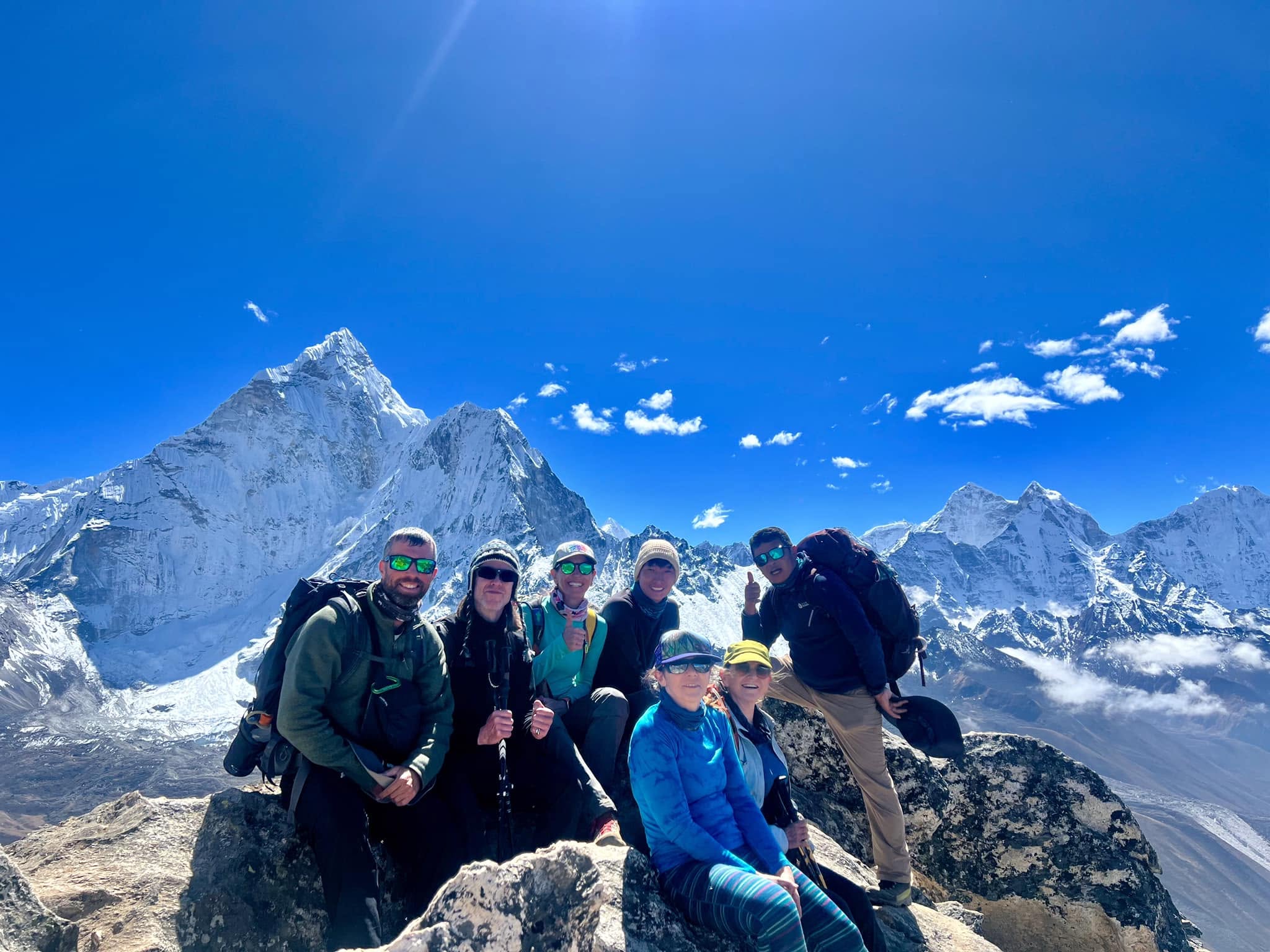
Distance is fixed. How a trekker experiences it isn’t.
How Long Each Daily Distance Actually Takes
Walking time matters more than raw distance for planning purposes. Most days take between three and eight hours, depending on the stage and how the body is handling altitude that day.
Early days move quickly. Lukla to Phakding takes around three hours.
As the trail climbs, pace slows considerably. The push from Lobuche to Gorak Shep and Base Camp, despite covering the most kilometers in a single day, takes about six hours, sometimes more depending on snow or wind conditions.
This slowdown is expected, not a sign of struggling. Guides deliberately set a slower pace above 4,000 meters.
Moving more slowly uses less oxygen per minute than pushing hard and stopping often to catch your breath. Trekkers who accept this slower rhythm early tend to handle the later, harder days better than those who fight it.
Time of day affects pace too. Mornings tend to move faster, since the air is calmer and trekkers are fresher.
Afternoons slow down, partly from fatigue and partly from wind picking up on exposed sections. This is part of why most days start early, often before 7am, and why guides push to reach the next teahouse before early afternoon whenever possible.
Breaks add time beyond pure walking hours. A short tea break, a quick photo stop, a pause to adjust a boot or layer, all of this adds up across a long day.
Trekkers shouldn’t expect to walk continuously for six hours straight. The actual pace includes plenty of natural pauses built into the rhythm of the day.
Comparing Trek Distance to Everyday Reference Points
Numbers like “130 kilometers” can feel abstract without something to compare them to. A few everyday reference points make the distance easier to picture.
130 kilometers is roughly the driving distance between two mid-sized cities in many countries, a trip that takes under two hours by car. On foot, spread across 12 to 14 days, that same distance becomes a completely different kind of challenge. It’s also close to five marathons back to back, though spread out with rest days and without the running.
This comparison isn’t meant to minimize the trek. It’s meant to show why the daily pace matters so much. Covering five marathons’ worth of distance in two weeks, at altitude, is a different task entirely than running one marathon at sea level in a single day.
Here’s another way to picture it. Walking 130 kilometers at sea level, on flat ground, might take a fit hiker four or five days total. This trek stretches the same distance across 12 to 14 days instead.
That extra time isn’t wasted. It’s what makes the altitude gain survivable.
One more comparison helps too. A typical half-marathon covers about 21 kilometers.
The trek’s longest single day, from Lobuche to Base Camp and Gorak Shep, covers nearly that same distance. Except it happens above 5,000 meters, on rocky, uneven ground, with roughly half the oxygen available at sea level.
How Distance Changes With a Helicopter Return
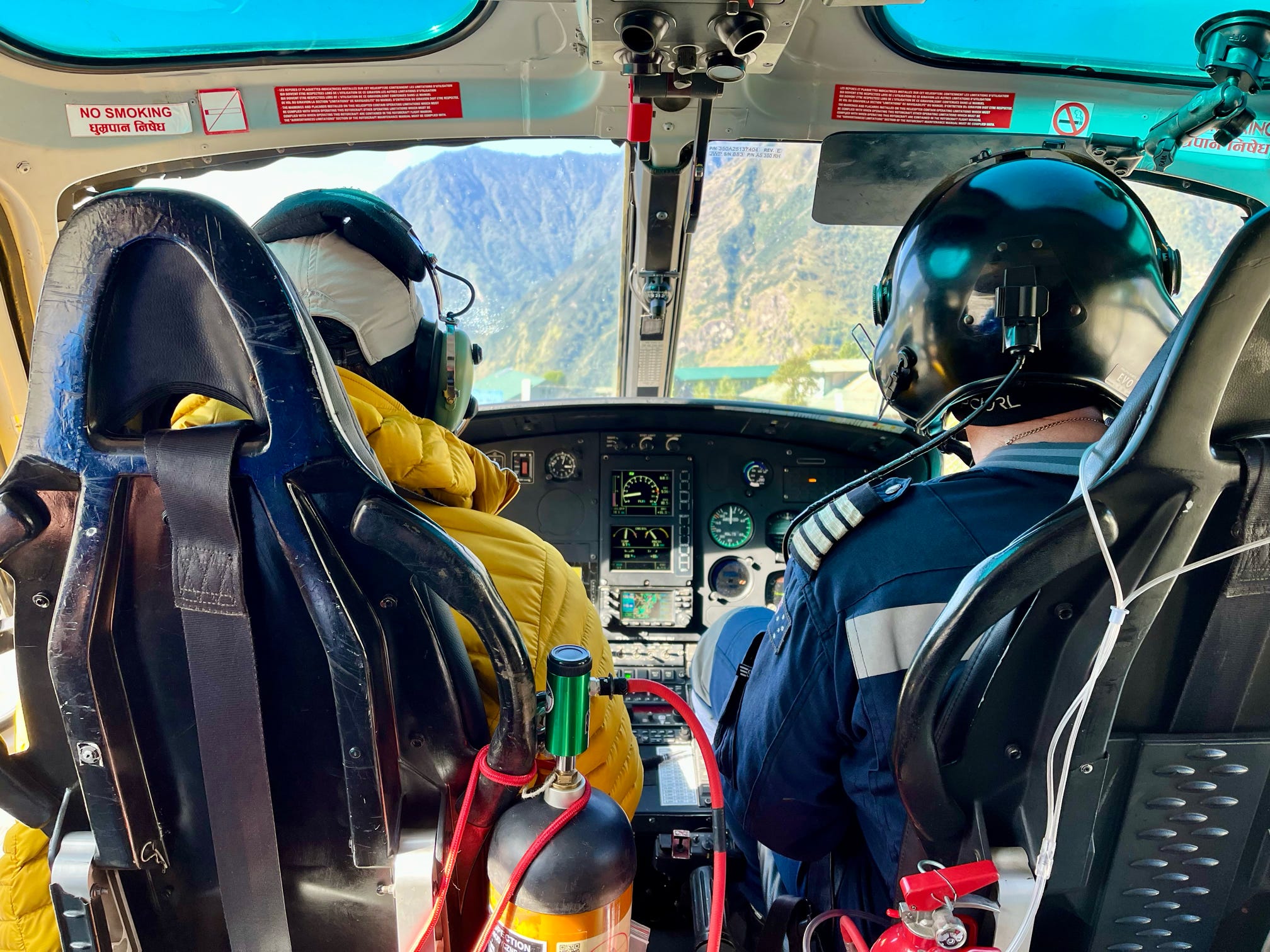
Choosing a helicopter return shortens the total distance covered on foot considerably. Instead of walking the full return leg, trekkers fly directly from near Base Camp back toward Kathmandu.
This cuts out roughly 65 kilometers of walking on the descent, replacing several days of trail with a single short flight. The ascent distance stays exactly the same, since acclimatization needs don’t change regardless of how the return happens. Only the walking distance on the way back gets reduced.
Trekkers choosing this option still experience the same total altitude gain and the same daily distances on the way up. The difference shows up only on the return, which matters mainly for trekkers with limited time or those wanting to reduce strain after reaching Base Camp.
The flight itself covers the same ground in a fraction of the time. What takes three or four days on foot takes about 40 minutes by helicopter.
This isn’t just faster. It also offers a genuinely different view of the terrain, seen from above rather than from the trail itself.
Cost is the main trade-off here. A helicopter return adds real expense compared to walking the full route both ways.
For trekkers weighing this option, it comes down to a simple question: is saving three or four days of walking worth the extra cost? There’s no universally right answer, only a personal one.
Distance Compared to Other Himalayan Treks
Placing this trek’s distance next to other Himalayan routes helps put the numbers in context. Not every trek in the region covers similar ground.
Shorter treks, like Ghorepani Poon Hill, cover closer to 45 kilometers round trip, a fraction of the EBC total. Longer routes, like the Everest Three Passes trek, can stretch past 150 kilometers, adding several high passes on top of the standard Base Camp distance. The standard EBC route sits somewhere in the middle, longer than a short scenic trek but shorter than the most demanding extended routes in the same region.
This middle position matches the trek’s overall difficulty level too. It’s substantial enough to require real preparation, but not so long that it demands the extreme fitness and time commitment of the longest regional routes.
The Annapurna Circuit, for comparison, covers roughly 160 to 230 kilometers depending on the exact route chosen and how many road sections get walked versus skipped. That’s noticeably longer than the standard EBC trek. The Manaslu Circuit sits somewhere between the two, typically covering around 150 kilometers over a similar two-week timeframe.
None of these comparisons make one trek objectively better than another. They simply help place the EBC trek’s distance in a wider context. A trekker choosing between routes should weigh distance alongside altitude, remoteness, and personal goals, not distance alone.
What Trekkers Actually Notice About the Distance
Ask trekkers who’ve completed this route what surprised them about distance, and the answer rarely involves the total kilometer count. It’s usually something more specific.
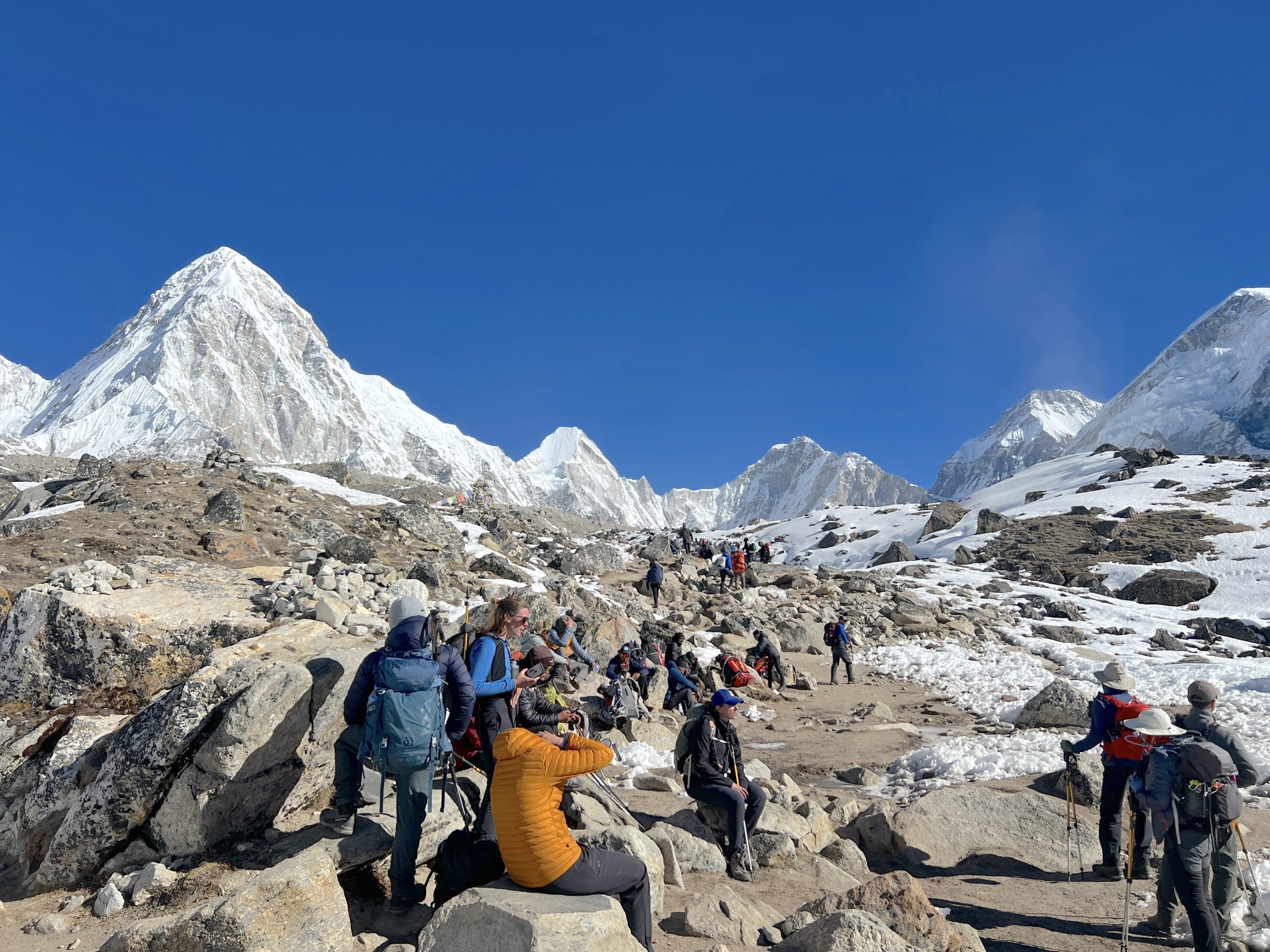
Many mention how slowly the kilometers seem to pass once altitude sets in, compared to how quickly early days near Lukla go by. Others mention how the same distance feels completely different depending on time of day, weather, or how well they slept the night before. A few mention forgetting about distance entirely somewhere around week two, once the rhythm of walking becomes routine rather than something to measure and track.
This shift, from counting kilometers to simply walking, tends to happen naturally. It’s one of the quieter, less discussed parts of the trek that most first-timers don’t expect going in.
Some trekkers mention a different surprise. They expect the last few kilometers to Base Camp to feel triumphant, almost cinematic.
Instead, many describe it as quiet, even anticlimactic in the moment, since exhaustion and thin air leave less room for big emotional reactions than they expected. The real emotional weight often hits later, once they’re sitting down, resting, and it actually sinks in.
A few trekkers also mention how distance feels different depending on direction. The climb up drags.
The walk back down, even covering similar ground, feels quicker and easier almost immediately. Lower oxygen demand and no need to pace for altitude both play a part in that shift.
How Distance Should Shape Your Training
Understanding total distance helps with training too. It’s not just trivia. It shapes how a trekker should actually prepare in the months before departure.
Training for 130 kilometers doesn’t mean walking that exact distance beforehand. It means building the ability to walk five to eight hours a day, repeatedly, without full recovery in between. A single long training hike helps less than several shorter ones done consistently across many weeks.
Weekend hikes of twelve to fifteen kilometers, done with a loaded daypack, mirror the trek’s daily demands reasonably well. Doing this on back-to-back days, rather than just once, builds the specific kind of stamina this trek actually requires. One long hike a month doesn’t prepare a body the same way that regular, moderate hikes do.
Distance training should also include some uphill and downhill work, not just flat ground. Stone steps, hills, or even a stair machine at the gym all help. The trek’s terrain rarely stays flat for long, so training on flat ground alone leaves a gap that shows up quickly on the actual trail.
Trekkers who train with this specific distance and terrain pattern in mind tend to find the trek’s daily distances far more manageable than those who train generally, without tailoring their preparation to what the route actually demands.
Recovery matters as much as the training itself. Doing a hard hike every single day, without any rest, tends to build fatigue rather than fitness.
Spacing training hikes across the week, with easier days in between, mirrors the trek’s own rhythm of effort followed by rest. This pattern, more than sheer volume of training, tends to produce the best results before departure.
What Happens If You Can’t Cover a Day’s Planned Distance
Sometimes a planned distance doesn’t get covered as expected. Altitude symptoms, weather, or simple fatigue can slow a day down more than planned. Understanding what happens in this situation removes some of the pressure trekkers sometimes feel about keeping pace.
Guides build flexibility into most itineraries specifically for this reason. A day that’s supposed to cover twelve kilometers can stretch into two shorter days if needed, especially around the trek’s higher, harder stages.
This isn’t a failure. It’s exactly the kind of adjustment experienced guides expect to make on any given trip.
Group departures sometimes split temporarily if one trekker needs a slower pace. A guide or assistant guide stays with the slower trekker while the rest of the group continues, then everyone reconnects at the next teahouse. This kind of flexible pacing matters more than sticking rigidly to a printed daily distance.
Trekkers shouldn’t feel pressure to match a printed itinerary exactly, especially once altitude becomes a factor. The goal isn’t covering a specific number of kilometers on schedule. It’s reaching Base Camp safely, at whatever pace the body actually needs on a given day.
So, How Far Is the Everest Base Camp Trek Really?
The honest answer: about 130 kilometers round trip, covered over 12 to 14 days. That number matters less than how it’s distributed, though. Altitude, not distance, shapes most of the trek’s real difficulty.
Daily distances range from eight to seventeen kilometers. The longest day, the final push to Base Camp and Gorak Shep, also happens to be the hardest, thanks to thinner air near the trek’s highest point at 5,545 meters near Kala Patthar. Shorter days lower down feel easier for exactly the same reason.
Trekkers planning around distance alone often misjudge the trek. Planning around distance and altitude together gives a far more accurate sense of what each day will actually demand.
The simplest way to think about it: 130 kilometers isn’t a huge number by itself. Plenty of people walk that much in a normal month without noticing.
What makes this trek different is where those kilometers happen. Above 3,000 meters, above 4,000 meters, eventually above 5,000 meters, the same distance asks more of the body with every step higher.
Keep that in mind while planning, training, and packing. Distance is just one part of the picture. Altitude is the part that actually shapes the experience.
Frequently Asked Questions for How Far Is the Everest Base Camp Trek?
What is the total distance of the Everest Base Camp trek?
Roughly 130 kilometers round trip from Lukla, covering the walk to Base Camp and Kala Patthar and back.
What’s the longest day on the trek?
The push from Lobuche to Base Camp and on to Gorak Shep, covering nearly seventeen kilometers, is the longest single day of the EBC Trek standard itinerary.
Does a helicopter return reduce the total distance walked?
Yes. It cuts out roughly 65 kilometers of walking on the descent, replacing it with a single short flight back toward Kathmandu.
Is 130 kilometers a lot to walk in two weeks?
It’s a meaningful distance, but spread across 12 to 14 days with rest built in, it’s manageable for most fit, well-prepared trekkers.
Why does a short distance sometimes feel harder than a longer one?
Altitude reduces available oxygen, making even short distances feel more demanding the higher the trail climbs.
How does this trek’s distance compare to other treks in Nepal?
It’s longer than shorter routes like Ghorepani Poon Hill, but shorter than extended routes like the Everest Three Passes trek.
Do side trips add extra distance to the standard route?
Yes. Detours to places like Khumjung or Chhukung Ri add a few extra kilometers beyond the standard total.