How Hard Is the Everest Base Camp Trek? A Realistic Difficulty Breakdown
July 28, 2026 Lhasso Adventure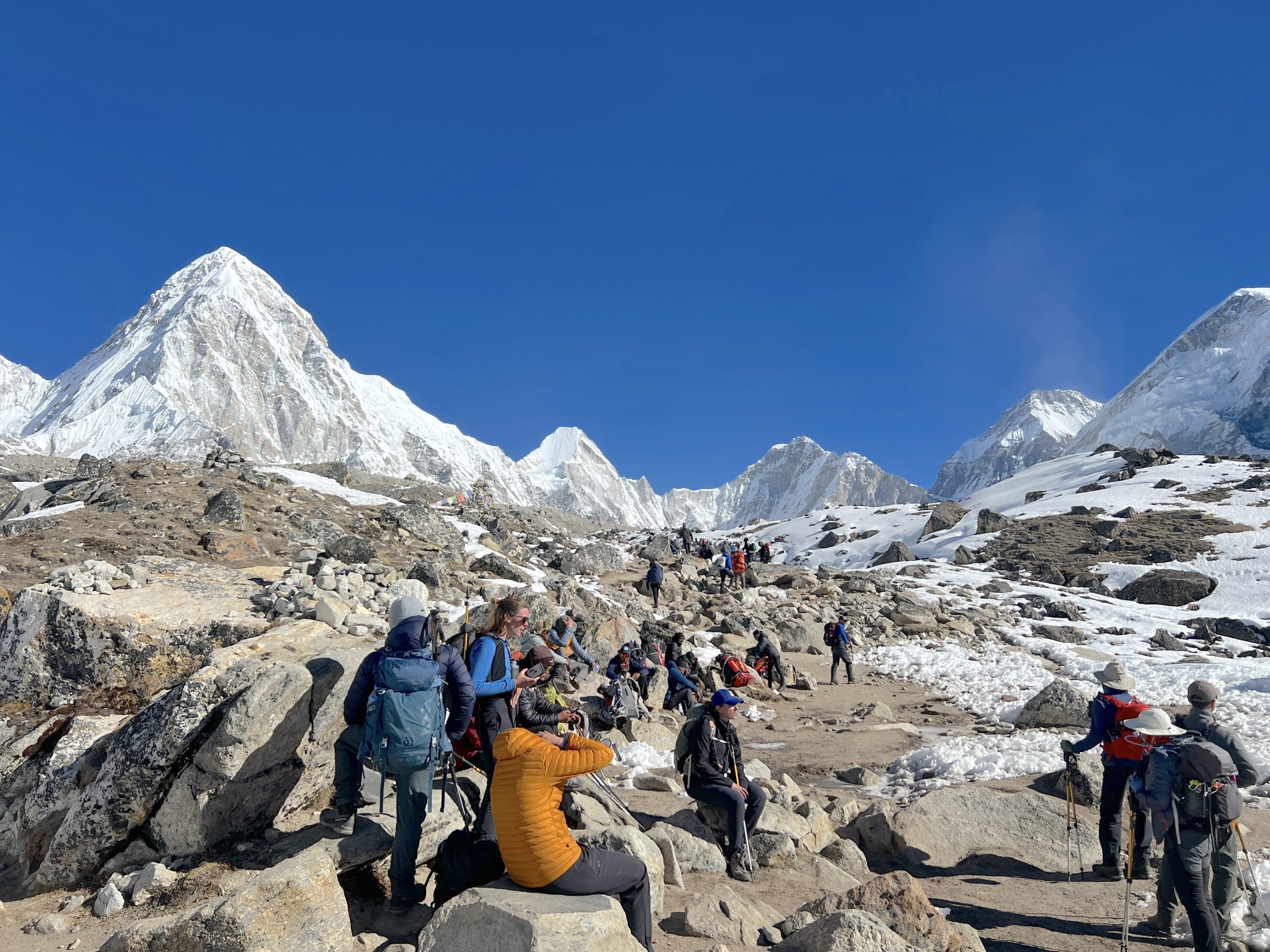
The Everest Base Camp trek is challenging, but not technical. There’s no climbing involved anywhere on the route. Most healthy adults who put in a few months of training complete it without serious trouble, and the actual strain comes from altitude, long walking days, and cold rather than anything requiring a rope.
That answer is fine as a headline, but it doesn’t mean much on its own. A trekker who runs three times a week will feel this trail completely differently than someone whose main exercise is walking the dog, and both can still reach Kala Patthar with the right preparation. What follows is a section-by-section look at where the difficulty actually sits, so the decision to book comes from information rather than guesswork.
How Hard Is the Everest Base Camp Trek?
Technically easy, physically demanding, altitude-dependent above everything else. That’s the short version. No climbing gear is needed anywhere, yet the trail still asks a lot of the body across nearly two weeks.
Most days run five to eight hours across rocky trail, suspension bridges, and stone staircases cut straight into the hillside. Altitude is the real test. The route climbs from Lukla’s 2,860 meters to a high point near 5,545 meters at Kala Patthar, where oxygen sits at roughly half of what it is at sea level. Mental stamina matters almost as much as leg strength once teahouses turn basic and phone signal disappears past Tengboche.
Every itinerary follows the same underlying curve here, whether it’s a private departure or a fixed group date, which is why the day-by-day altitude and distance progression on the standard Everest Base Camp itinerary is built around gradual elevation gain instead of the fastest route to the top. Trekkers who look at that progression before booking tend to show up with expectations that match reality.
None of the individual pieces are especially hard by themselves. A five to eight hour walking day is nothing unusual at sea level. Stone staircases exist on plenty of moderate trails elsewhere. The difficulty comes from all of it happening at once, at altitude, for days on end, which is why a trail that feels reasonable near Lukla starts to feel like real work by Dingboche.
Why the Trek Is Considered Physically Demanding
The “challenging” label comes mostly from altitude, not from technical terrain. Every section of trail is walkable without specialized gear. Three separate stresses build on top of each other as the days pass, and each one is manageable on its own.
Above 5,000 meters, reduced oxygen turns small actions into noticeably harder work. Tying a bootlace, zipping a jacket, both leave trekkers short of breath in a way that surprises even people who consider themselves fit. Fatigue from consecutive long days doesn’t reset overnight either. It accumulates, so soreness builds gradually rather than clearing with sleep. Add in the cold, especially after dark in places like Lobuche and Gorak Shep, and energy drains faster than most trekkers expect for reasons that have nothing to do with the walking itself.
There’s a compounding effect that rarely gets mentioned before departure. Poor sleep at altitude, caused by lower oxygen rather than an uncomfortable mattress, means trekkers often start each day a little more depleted than the last, even after a full night in bed. This is part of why experienced guides pay attention to appetite and sleep almost as closely as walking pace when they’re gauging how someone is actually coping. Appetite tends to dip for the same reason, often without the trekker noticing, and skipping meals at altitude backfires quickly since the body needs more calories in cold, thin air, not fewer.
The Altitude Factor: Why Crossing 5,000 Meters Changes Everything
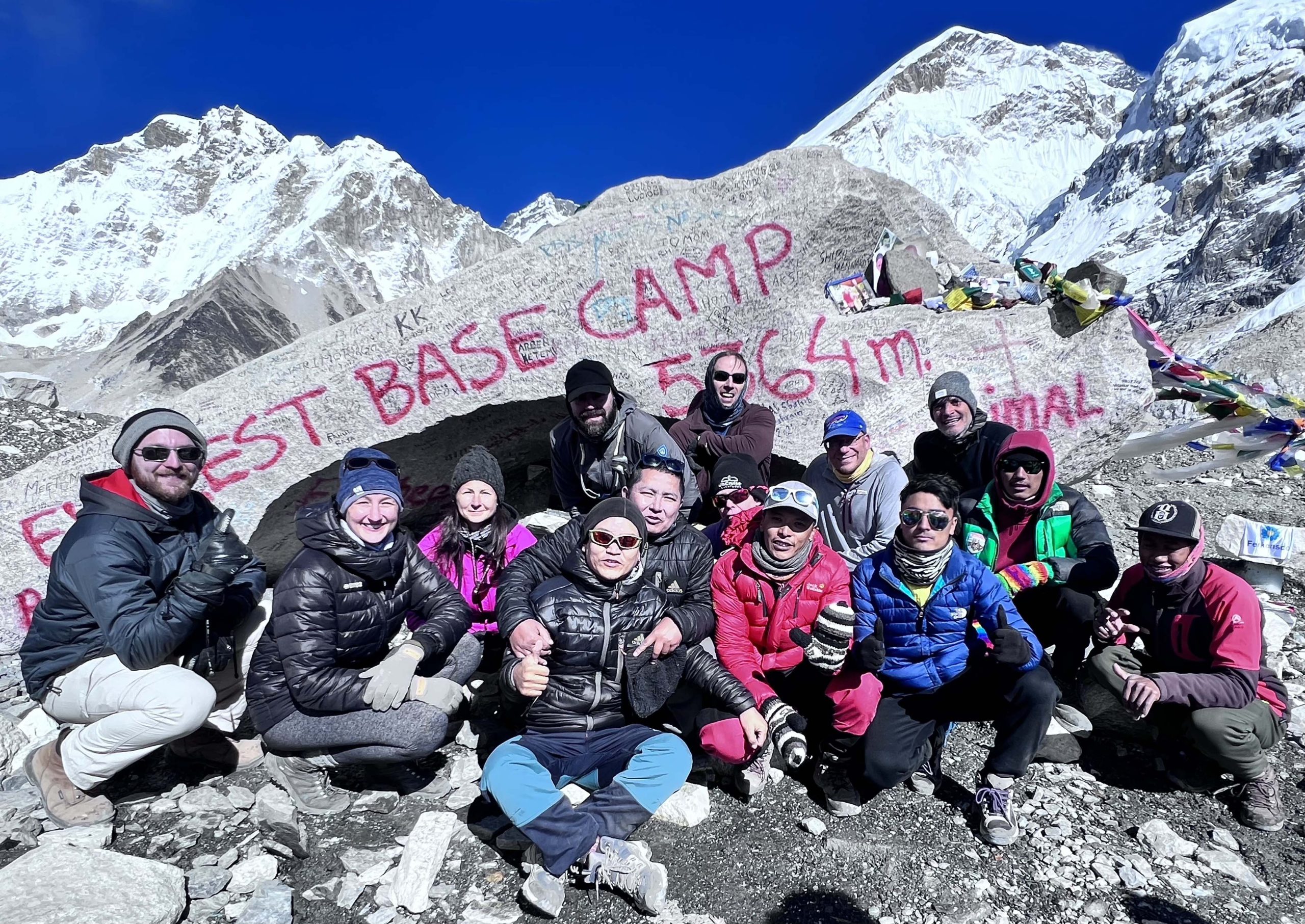
Altitude is the single biggest difficulty factor here, bigger than distance or daily walking hours. Base Camp sits at 5,364 meters. Kala Patthar, the trek’s highest point, reaches 5,545 meters.
Air pressure drops as you climb, so each breath delivers less oxygen the higher you go. Above 4,000 meters, a slower pace and the occasional mild headache are ordinary signs of adjustment, not warnings on their own. Above 5,000 meters, even strong trekkers slow to a deliberate walk, since moving faster at that height costs more oxygen than the body can supply on demand.
Acute Mountain Sickness sits behind most of this, and it doesn’t care much about fitness level. A marathon runner is just as susceptible as a first-time trekker. Symptoms usually start above 3,000 meters: headache, nausea, disrupted sleep, a general offness. The standard response is to stop climbing, rest, drink water, and descend if things get worse, not push through with painkillers. That’s exactly why the rest days sit where they do, giving trekkers time near Namche Bazaar to explore acclimatization hikes and nearby viewpoints before the trail pushes into thinner air, a stop that consistently separates a smooth adjustment from a rushed one.
Guides watching a group above 3,000 meters generally look for a pattern rather than one symptom in isolation. A headache that eases with rest and water is unremarkable. A headache paired with lost appetite and broken sleep gets taken more seriously.
Daily Walking Distance and Hours on the Trail
Most days involve five to eight hours of walking, covering eight to seventeen kilometers depending on the stage of the trek. The full round trip from Lukla adds up to around 130 kilometers.
Early days ease you in. Lukla to Phakding is about eight kilometers, roughly three hours, a soft start before the terrain steepens. Later on, the push from Lobuche toward Base Camp and back to Gorak Shep covers close to seventeen kilometers over about six hours, and it’s the altitude that makes it hard, not the distance. Daily hours vary enough that planning around distance alone tends to misjudge how a day will actually feel.
Kilometers at altitude behave nothing like kilometers at sea level. A flat five-kilometer stretch near Dingboche, above 4,400 meters, can feel worse than a steeper eight-kilometer day lower down, purely because there’s less oxygen for the same effort. Pace naturally slows as the trek goes on, and that’s expected rather than a sign of struggling. Guides typically set something closer to a relaxed stroll past Dingboche, since a slower, steady rhythm burns less oxygen per minute than a faster walk broken up by frequent stops to catch your breath. Trekkers who fight that slower pace, usually out of habit from lower-altitude hiking, tend to tire faster than the ones who accept it early.
Terrain Difficulty: Bridges, Stone Steps, and Glacial Moraine
The terrain isn’t technically hard, but it’s uneven and rocky, and a few sections are exposed enough to unsettle anyone uneasy with heights. No ropes or climbing gear are needed anywhere on the standard route.
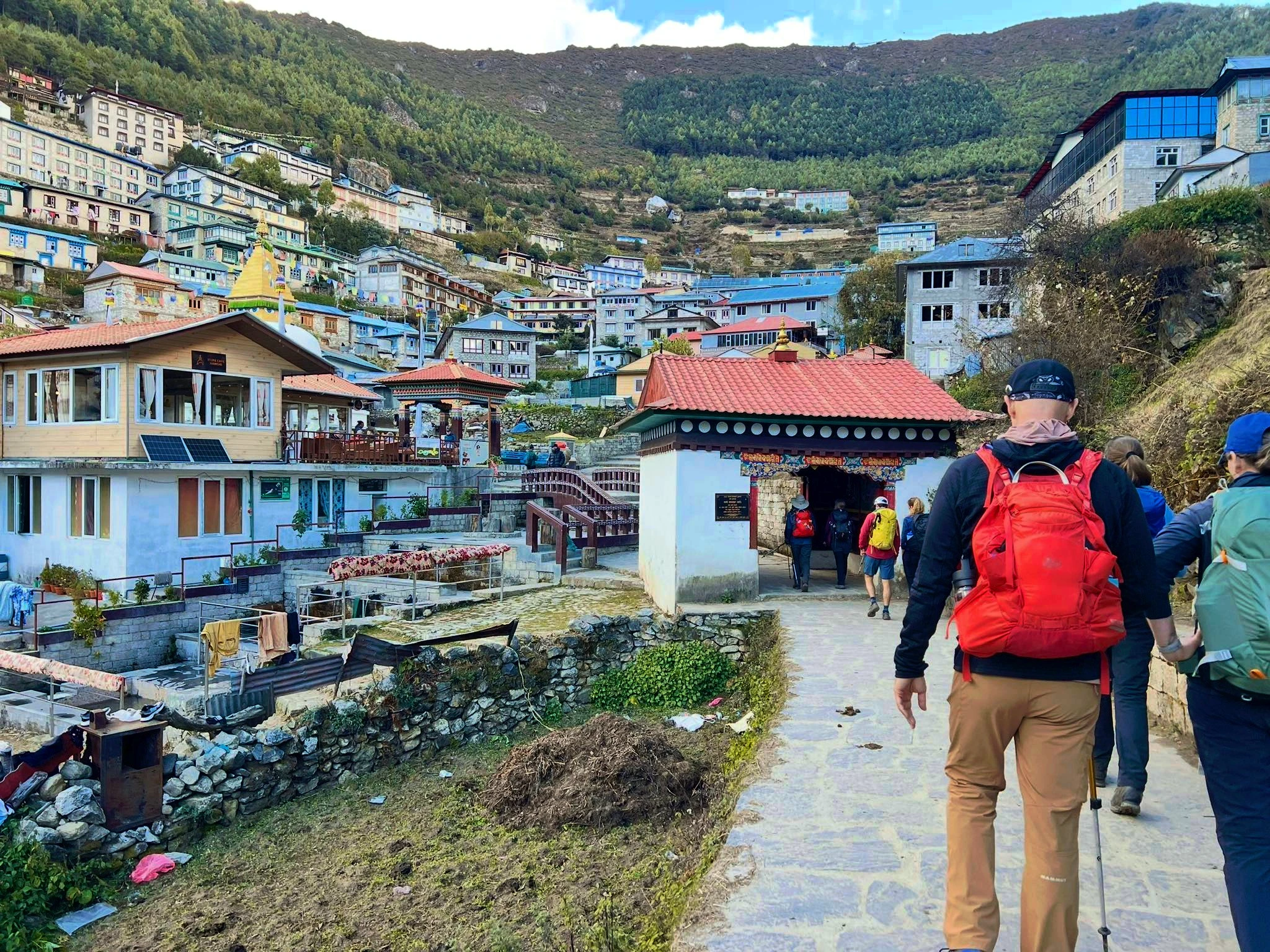
The suspension bridges are one of the trek’s signature features. There are five or six of them, clustered mostly around the river gorges near Namche Bazaar. The most memorable is a double-tiered crossing that sways gently underfoot while spanning a deep canyon. The bridge itself is reinforced with steel cable and completely solid, but the sway alone is enough to make some trekkers grip the railing the whole way across.
Higher up, past Lobuche, the ground changes to loose glacial moraine deposited by the Khumbu Glacier, where uneven footing forces a slower pace whether you want one or not. Stone staircases near Namche and Tengboche add their own kind of strain, working the quads and calves in a way flat trails never do. Trail width shifts too. Sections near Namche stay wide and well-worn, but stretches past Lobuche narrow considerably, sometimes running beside drop-offs where a careless step matters more.
None of this calls for a harness or a rope, and trekking poles do most of the heavy lifting when it comes to managing the loose sections. A pair used consistently, not just pulled out for the steep bits, takes real pressure off the knees on the descents and gives an extra point of contact on the moraine near Base Camp, where a wobble on loose rock is more common than most first-timers expect.
Fitness Level Required for This Trek
Solid cardiovascular fitness and leg strength are genuinely required. Elite athletic conditioning is not. Regular hikers, runners, and gym-goers who follow a structured eight to twelve week training block typically manage the trek without major struggle.
Cardio matters more than raw strength here, since the real demand is sustaining moderate effort for five to eight hours at altitude, not lifting anything heavy or sprinting. Leg strength, particularly in the quads and calves, shapes how the steep, stepped sections near Namche and Tengboche feel by day four or five. Core stability plays a quieter role, helping with balance on uneven moraine and a loaded daypack, something most trekkers underestimate until they’re actually doing it.
A useful test beforehand: if you can comfortably hike fifteen to twenty kilometers over hilly terrain with a loaded daypack on back-to-back weekend days, that’s usually enough baseline fitness for the physical side of things. Altitude is a separate variable that fitness alone can’t fully control, which is why pacing matters as much as gym conditioning in the weeks before departure. Trekkers sometimes assume technical mountaineering fitness translates directly here, but it doesn’t quite. This looks more like a multi-day hiking trip than a climbing expedition. Someone training for a long trail race is often better prepared than someone training purely for short, intense climbing sessions.
Swimming and cycling build cardio too, but they don’t load the legs the same way weight-bearing hikes do, so trekkers who train mainly on a bike sometimes arrive with good lungs and underprepared knees. Stairs, real stairs in a building, not a machine, are one of the closer substitutes to what the trail actually demands if hills aren’t available nearby.
The Mental and Emotional Side of High-Altitude Trekking
The mental demands run just as deep as the physical ones, and they tend to catch trekkers off guard more than the walking does. Long days, basic accommodation, and constant cold test patience in a way that’s different from pushing through one hard climb.
Teahouse rooms above 4,000 meters stay simple: often unheated, shared bathrooms, thin walls that do little once the sun drops. Trekkers used to daily comforts sometimes find that accumulated discomfort, not any single brutal day, ends up being the hardest part of the whole trip. Reliable phone signal fades almost completely past Tengboche too, which means going days without a real way to check in back home.
What helps most is arriving with realistic expectations rather than building them mid-trek. Trekkers who already know that day nine will probably feel worse than day two tend to get through those stretches more easily than the ones expecting every day to feel like a postcard. Small routines help more than people expect: writing a few lines each evening, talking with other trekkers over dal bhat, setting a modest goal like reaching the next teahouse for tea. Trekking with even one or two other people rather than entirely solo tends to soften the mental load, since shared discomfort is easier to carry than the solitary kind.
There’s also a quieter shift that happens somewhere around the second week, one that’s harder to describe than to feel. The scenery stops being scenery and starts being the whole world for a while, since there’s no email, no errands, nothing pulling attention away from the next step and the next cup of tea. Some trekkers find that unsettling at first. Most end up saying it’s the part they miss once they’re back home.
How Season and Weather Change the Difficulty
The season changes how hard this trek feels, sometimes more than fitness does. Spring and autumn offer the most forgiving mix of temperature, trail condition, and mountain visibility across the calendar.
Daytime temperatures in the lower villages during those windows usually sit between fifteen and twenty degrees Celsius, dropping toward minus ten or colder near Base Camp after dark. Winter adds a harder layer: icy trail sections, a few closed teahouses, and nights cold enough to demand serious gear rather than standard layering. Monsoon brings a different problem, persistent cloud cover, muddy trails, and leech-prone lower sections, even though the air itself stays milder.
Anyone weighing how much a given month shifts these numbers will find the month-by-month temperature and trail condition comparison for the Everest region worth reading before locking in a departure window, since a two-month shift in timing can change how the same trail feels underfoot. Crowds add another layer that’s easy to overlook. Peak weeks in the busiest months push more trekkers onto narrow trail sections and into small teahouse dining rooms, which slows the overall pace and cuts into the flexibility to rest exactly when you need to. The quieter shoulder weeks within those same seasons often strike a better balance: stable weather without quite as much foot traffic.
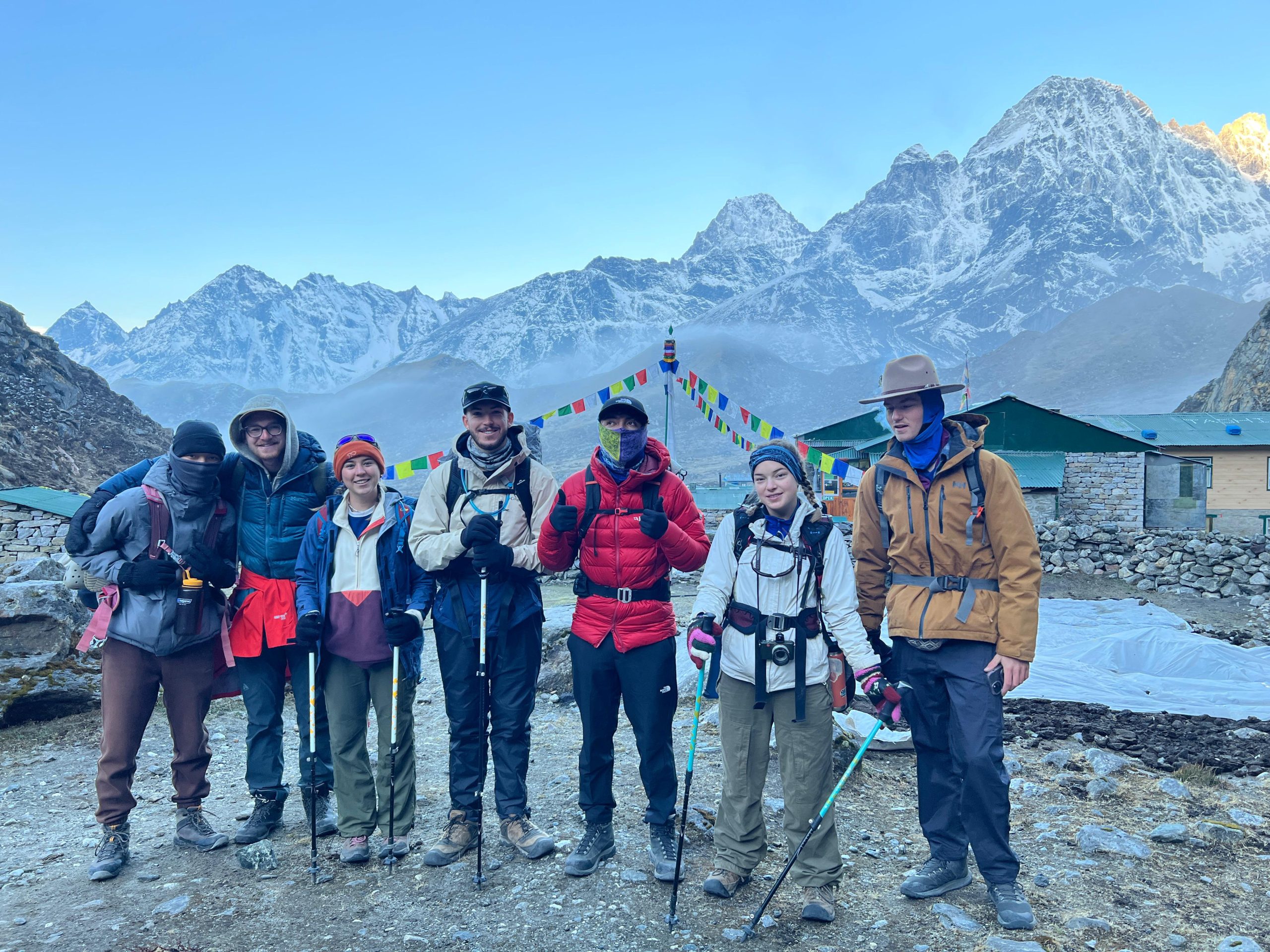
Accommodation Comfort and Daily Life on the Trail
Accommodation ranges from genuinely comfortable lodges lower down to fairly rustic teahouses once altitude climbs, and that steady drop in comfort adds its own layer to the trek’s difficulty. Comfort and altitude move in opposite directions almost the entire way up.
Below 3,500 meters, Namche Bazaar and similar hubs offer attached bathrooms, hot showers, and dependable charging, closer to a basic guesthouse than anything resembling a wilderness camp. Between 3,500 and 4,500 meters, rooms turn into simple plywood boxes, shared and usually unheated bathrooms, and charging a phone costs a small fee since power comes from solar or a generator rather than a stable grid. Above 4,500 meters, in places like Gorak Shep, indoor temperatures regularly sit below freezing overnight, which makes a proper four-season sleeping bag essential rather than a nice extra.
Meals thin out in a similar pattern. Namche’s menus stretch to pizza, momos, even a bakery. By Lobuche and Gorak Shep, options narrow mostly to noodles, soup, and the dal bhat that fuels most of the Khumbu. It isn’t a hardship exactly, more an adjustment, but trekkers expecting variety all the way to base camp are usually surprised by how repetitive the final days’ menus get.
Blankets are usually provided, but they’re often thin, and most experienced trekkers bring their own sleeping bag liner as a backup rather than relying on the teahouse alone for warmth. A headlamp matters more than it sounds like it should, since shared bathrooms are sometimes a short walk from the room and corridors go dark once the generator switches off for the night.
Comparing Everest Base Camp to Other Himalayan Treks
Everest Base Camp sits firmly in the “challenging” category. Harder than moderate treks in the Annapurna region, but less demanding than routes that cross multiple high passes above 5,000 meters. Placing it correctly against other options helps set expectations before booking.
Shorter treks elsewhere in Nepal rarely climb past 3,200 meters, which keeps altitude-related difficulty largely out of the picture for those routes. Longer Everest region itineraries that add high passes push into genuinely strenuous territory, multiple crossings above 5,000 meters, considerably more remote terrain than the standard Base Camp route asks for. Base Camp itself lands squarely in between: no technical passes to navigate, but sustained high-altitude exposure across nearly two weeks, longer than most moderate treks demand.
Trip length itself is easy to underweight next to altitude and terrain, but it deserves a mention. Twelve to fourteen days of sustained physical output is a much longer window than a three or four day moderate hike, and that duration changes how recovery, fatigue, and motivation behave across the whole trip. Trekkers used to shorter multi-day trips sometimes find the sheer length of the EBC route as demanding, in its own way, as the altitude itself.
A trekker who’s done the Ghorepani Poon Hill route, for comparison, has typically dealt with steep stone steps and a few long days, but rarely more than four or five nights away from lower elevation. Everest Base Camp asks for that same leg strength stretched over roughly three times the duration, with the added variable of thin air layered on top somewhere around week two.
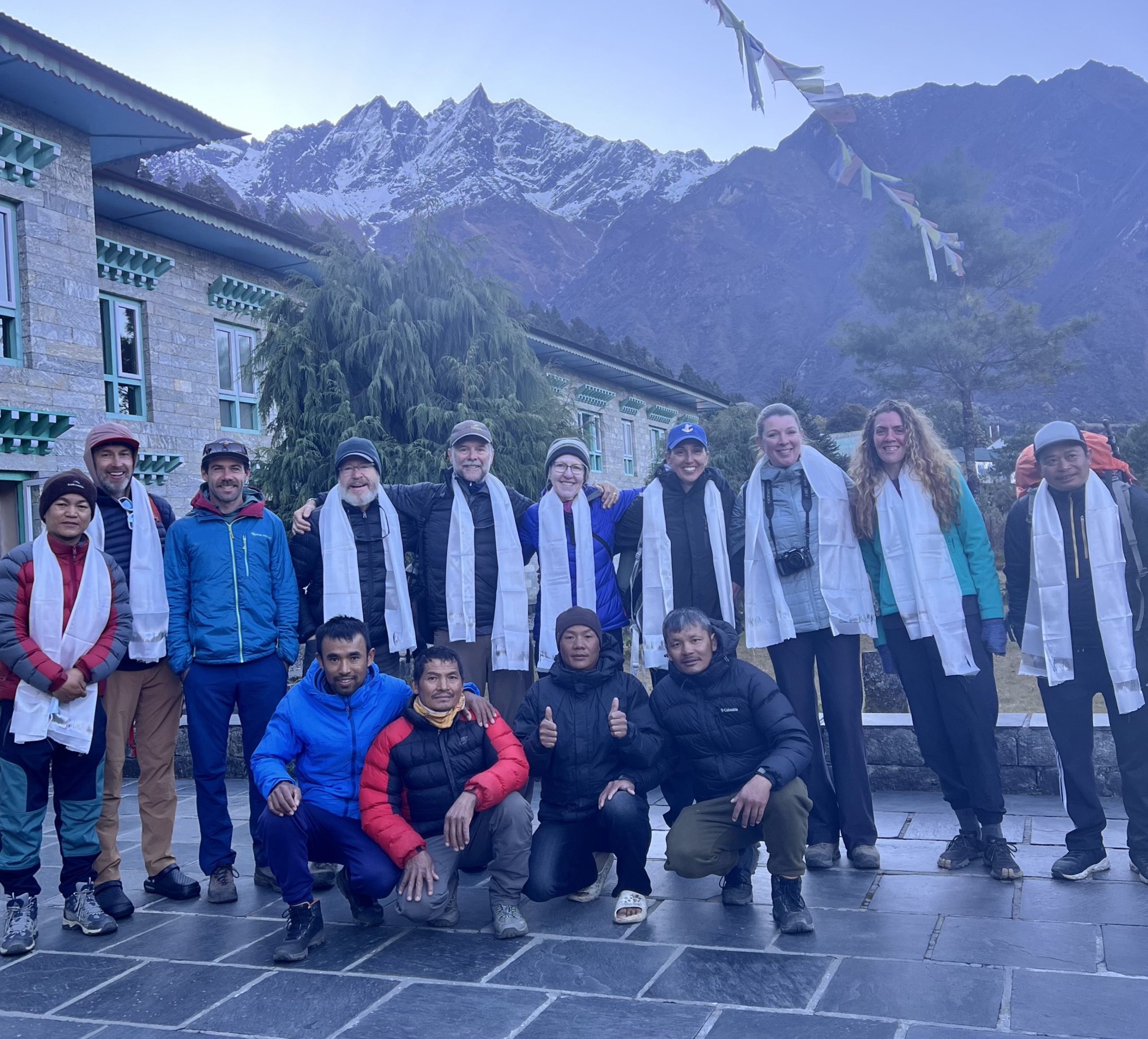
Acclimatization: The Most Underestimated Difficulty Factor
Proper acclimatization separates trekkers who finish comfortably from those who struggle or turn back, more than any other single factor on this route. Standard itineraries build in two dedicated rest days for exactly this reason, one near Namche Bazaar and another at Dingboche.
The idea behind these rest days is “climb high, sleep low”: trekkers hike up during the day, then return to sleep at a lower elevation, which gives the body a gentler overnight adjustment than sleeping at the higher point would. Skipping or rushing these rest stops to save a day is consistently the top reason trekkers develop symptoms serious enough to need descent or evacuation partway through. Shorter itineraries exist and are physically walkable, but they raise the risk meaningfully compared with a standard twelve to fourteen day schedule that spaces the climb out properly.
Hydration plays a supporting role that’s easy to overlook next to the bigger conversation about rest days. Dry mountain air pulls moisture from the body faster than most people notice, and mild dehydration can mimic or worsen early altitude symptoms, which muddies the picture of what’s actually causing a headache on a given afternoon. Drinking three to four liters a day, spread out rather than gulped in a few sittings, is one of the simplest habits that actually supports acclimatization. Trekkers who use their rest day actively, a short walk instead of lying in a teahouse bed all day, generally adjust better than the ones who treat it as pure downtime.
Who Should Reconsider This Trek
This trek isn’t right for everyone, and saying so plainly serves trekkers better than blanket reassurance would. Certain health conditions and expectations genuinely warrant a second look before booking.
Uncontrolled cardiovascular or respiratory conditions carry real added risk once altitude enters the picture, and a doctor’s clearance beforehand matters more than optimism does. Anyone expecting hotel-level comfort the whole way will likely find the higher teahouses jarring no matter how physically ready they are. Trekkers unwilling to slow down above 4,000 meters tend to struggle with altitude more than their fitness level would predict, since rushing is exactly the behavior thin air punishes hardest.
None of this means the trek is reserved for elite hikers. It means honest self-assessment, paired with a doctor’s input for anyone with existing health concerns, counts for more than a fitness score ever will. Travelers on a genuinely tight schedule deserve a mention too. Squeezing the standard twelve to fourteen day route into something much shorter to fit a fixed vacation window removes the acclimatization buffer that makes the trek manageable in the first place, and that trade-off usually isn’t worth the time saved. Building travel dates around the trek, rather than forcing the trek around fixed dates, tends to work out safer and more enjoyable. Anyone recovering from a recent illness, injury, or surgery should also build in extra recovery time, since exertion plus altitude asks a lot from a body that hasn’t returned to its normal baseline.
How Guide Quality and Itinerary Planning Reduce Real Difficulty
A well-run itinerary and an experienced guide meaningfully reduce the trek’s practical difficulty, even though neither one changes the altitude itself. Pacing, daily monitoring, and catching symptoms early are what actually keep small problems from turning into serious ones.
Daily oxygen saturation checks above 3,000 meters, using a simple pulse oximeter, catch warning signs well before symptoms become obvious to the trekker experiencing them. Porters carrying the bulk of the gear, kept within fair weight limits under most responsible operators’ welfare policies, keep daypacks light enough that trekkers save their energy for the actual walking rather than the carrying. Built-in buffer days absorb Lukla flight delays without forcing a compressed schedule later, which is exactly the kind of rushed itinerary that pushes altitude sickness risk higher than it needs to be.
The difference between operators often comes down to guide qualifications and safety planning standards that vary more than most first-time trekkers expect, and that variation shapes the day-to-day difficulty of the trek far more than any brochure lets on. Communication style matters here too. A guide who explains why a rest day exists, rather than just announcing it, tends to get better cooperation from a group once altitude starts testing everyone’s patience. That kind of ongoing, plain explanation, more than any single piece of safety gear, is often what keeps a group calm through the harder stretches.
A guide who’s walked the route dozens of times develops a feel for it that no checklist quite captures, knowing which teahouse in Dingboche tends to run out of hot water first, or which stretch past Thukla gets icy an hour before anywhere else. That kind of accumulated, specific knowledge is difficult to fake and even harder to teach quickly.

Training Timeline to Prepare Your Body
Physical prep should start roughly eight to twelve weeks out, built around cardio and leg strength rather than short bursts of intensity right before the trip. Consistency across those weeks matters more than any single standout workout.
A workable week looks something like this: three to four cardio sessions, stair climbing, hill walking, or running, to build real aerobic capacity over time. Two strength sessions for legs and core, since squats, lunges, and step-ups translate almost directly to the stepped terrain around Namche and Tengboche. One longer weekend hike, twelve to fifteen kilometers over varied ground with a loaded daypack, that actually mirrors the trek’s daily demands instead of a generic fitness standard.
Training at altitude beforehand isn’t realistic for most people preparing from lower elevations, and it isn’t necessary either. Building genuine cardio endurance through unglamorous, repeated weekly training is the single most useful thing anyone can do in the months before departure. Breaking in trekking boots deserves its own mention within that window, since it’s one of the most common oversights among first-timers. New boots straight off the shelf on the trail almost guarantee blisters within the first few days, right when a comfortable start matters most for morale. Wearing the same boots on every training hike beforehand, ideally with the same socks planned for the trek, removes that risk almost entirely.
Weighted training hikes are worth mentioning specifically, since a daypack loaded to roughly the weight you’ll actually carry, water, camera, extra layers, changes how a hike feels more than people expect. Ten kilograms on flat ground barely registers. The same ten kilograms on a descent after six hours of walking is a different story, and it’s better to learn that on a local trail than partway down from Tengboche.
So, How Hard Is the Everest Base Camp Trek, Really?
The honest answer sits in the middle. Hard enough to demand real preparation, achievable for most reasonably fit adults who respect the acclimatization schedule and pace themselves with some patience. Not a trek to underestimate, but not reserved for elite mountaineers either.
The technical bar sits low: no ropes, no climbing skills, no mountaineering experience needed anywhere on the route. The physical and altitude bar sits considerably higher: breathlessness, cold nights, days that test patience as much as stamina. What separates a difficult-but-manageable trek from a genuinely miserable one usually comes down to preparation, pacing, and the quality of the itinerary behind it.
There’s no clean one-to-ten score that means the same thing to every trekker reading this. What can be said with some confidence is that thousands of ordinary, moderately fit people complete this trek without major incident, and the ones who struggle most are usually the ones who underestimated altitude rather than the ones who lacked leg strength. Respect the thin air, pace accordingly, and most of the rest of the difficulty tends to sort itself out. Trekkers weighing whether this route fits their goals will find the complete day-by-day Everest Base Camp itinerary, cost breakdown, and permit details lay out exactly where the effort concentrates, altitude by altitude, well before any departure date needs locking in.
Frequently Asked Questions for How Hard Is the Everest Base Camp Trek?
Is the Everest Base Camp trek harder than climbing a mountain?
No. There’s no technical climbing, ropes, or mountaineering skill involved anywhere on the standard route. The difficulty comes from altitude and sustained walking, not from climbing technique.
Can a beginner with no trekking experience complete the Everest Base Camp trek?
Yes, with proper preparation. Beginners who commit to eight to twelve weeks of cardio and leg-strength training, and who follow the acclimatization schedule closely, regularly complete the trek successfully.
What is the hardest day of the Everest Base Camp trek?
Most trekkers find the day from Lobuche to Base Camp and Gorak Shep, or the early-morning climb to Kala Patthar, the hardest, mainly because of thin air above 5,000 meters rather than distance or terrain.
Do I need prior high-altitude experience?
No prior high-altitude experience is required, though anyone who has struggled with altitude sickness before should talk to a doctor beforehand.
How much does age affect difficulty on this trek?
Age alone is a weak predictor of success. Cardiovascular fitness, pacing discipline, and how closely someone follows acclimatization guidance matter far more than age on its own.
Is altitude sickness common on the Everest Base Camp trek?
Mild symptoms like headache or reduced appetite are common above 3,000 meters and generally count as normal signs of adjustment. Severe symptoms are less common but require immediate descent and should never be ignored.
Can I make the trek easier by hiring a porter?
Yes, hiring a personal porter to carry the main bag reduces physical strain significantly, since trekkers then carry only a light daypack with water, snacks, and layers during the day.