How high is the Everest Base Camp trek?
August 9, 2026 Lhasso Adventure
Everest Base Camp sits at 5,364 meters. Kala Patthar, the trek’s highest point, reaches 5,545 meters. Trekkers start at 2,860 meters in Lukla and climb nearly 2,700 meters over roughly two weeks.
That’s the short version. But altitude numbers alone don’t explain what actually happens to the body at these heights. This guide breaks down elevation stage by stage, and explains why these specific numbers matter so much for how the trek actually feels.
Altitude isn’t just a backdrop to this trek. It’s the main character. Nearly every other factor, pace, breathlessness, sleep quality, appetite, traces back to how high the trail climbs on a given day.
Everest Base Camp Trek Altitude at a Glance
The trek climbs from 2,860 meters at Lukla to 5,545 meters at Kala Patthar. Base Camp itself sits slightly lower, at 5,364 meters. Both points sit well above what most people ever experience.
For comparison, most commercial flights cruise around 10,000 meters, well above breathable air without pressurization. Base Camp sits at roughly half that height, but still high enough that oxygen levels drop to about half of sea level. This is exactly why daily walking hours and terrain difficulty increase noticeably past Dingboche, as altitude becomes the dominant factor shaping each day.
Altitude gain isn’t steady across the trek. Some stages climb quickly. Others hold altitude steady for a day or two, giving the body time to adjust before climbing further.
Trekkers sometimes picture altitude gain as a single steep ramp. In reality it looks more like a staircase, climbing in bursts with flatter stretches in between. Those flatter stretches, the rest days especially, do just as much work as the climbing itself.
Altitude Stage by Stage
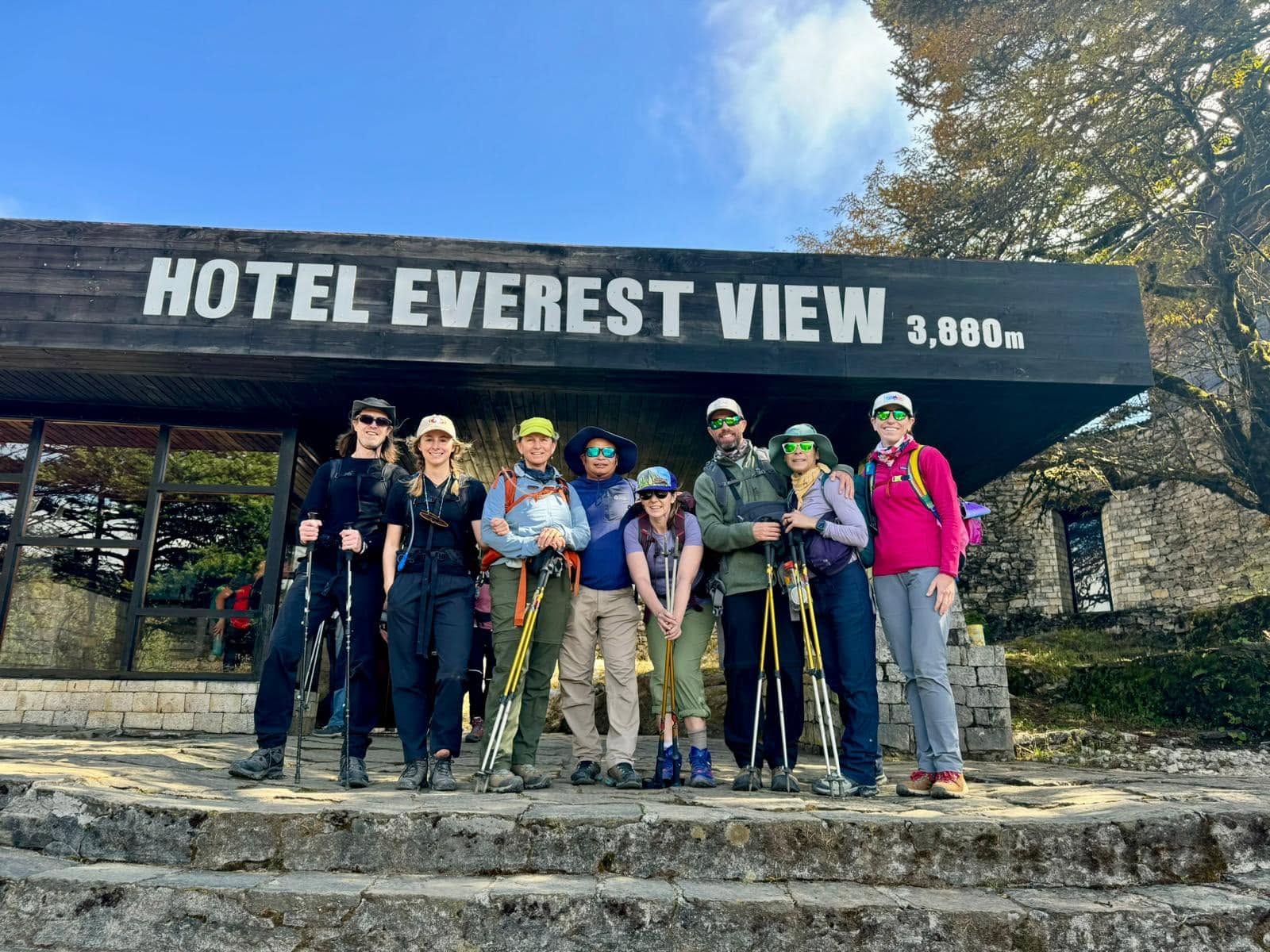
Lukla sits at 2,860 meters, the trek’s starting point after the flight from Kathmandu. Namche Bazaar, three days later, reaches 3,440 meters. This first stretch introduces trekkers to altitude gradually.
From Namche, the trail climbs to Tengboche at 3,860 meters, then Dingboche at 4,410 meters. Each stage adds a few hundred meters. The pace stays deliberate here, since altitude sickness risk starts increasing noticeably above 3,000 meters.
Beyond Dingboche, the climb steepens. Lobuche sits at 4,940 meters. Gorak Shep, the final overnight stop, reaches 5,164 meters, just before the push to Base Camp and Kala Patthar themselves.
Notice how the gaps between stages shrink the higher the trail climbs. Lower down, villages sit hundreds of meters apart. Higher up, the gaps narrow, since the body needs more time to adjust for each additional stretch of altitude gained.
This narrowing pattern isn’t accidental. It reflects exactly how acclimatization guidelines work, recommending smaller gains in sleeping elevation the higher a trekker climbs. The itinerary’s pacing follows this logic closely, even if it isn’t obvious just from reading a list of village names and heights.
Elevation figures can vary slightly between different maps and sources, sometimes by ten or twenty meters. This isn’t cause for concern. GPS accuracy, measurement methods, and even where exactly within a village a reading gets taken all introduce small, harmless variation into these numbers.
Why 5,000 Meters Changes Everything
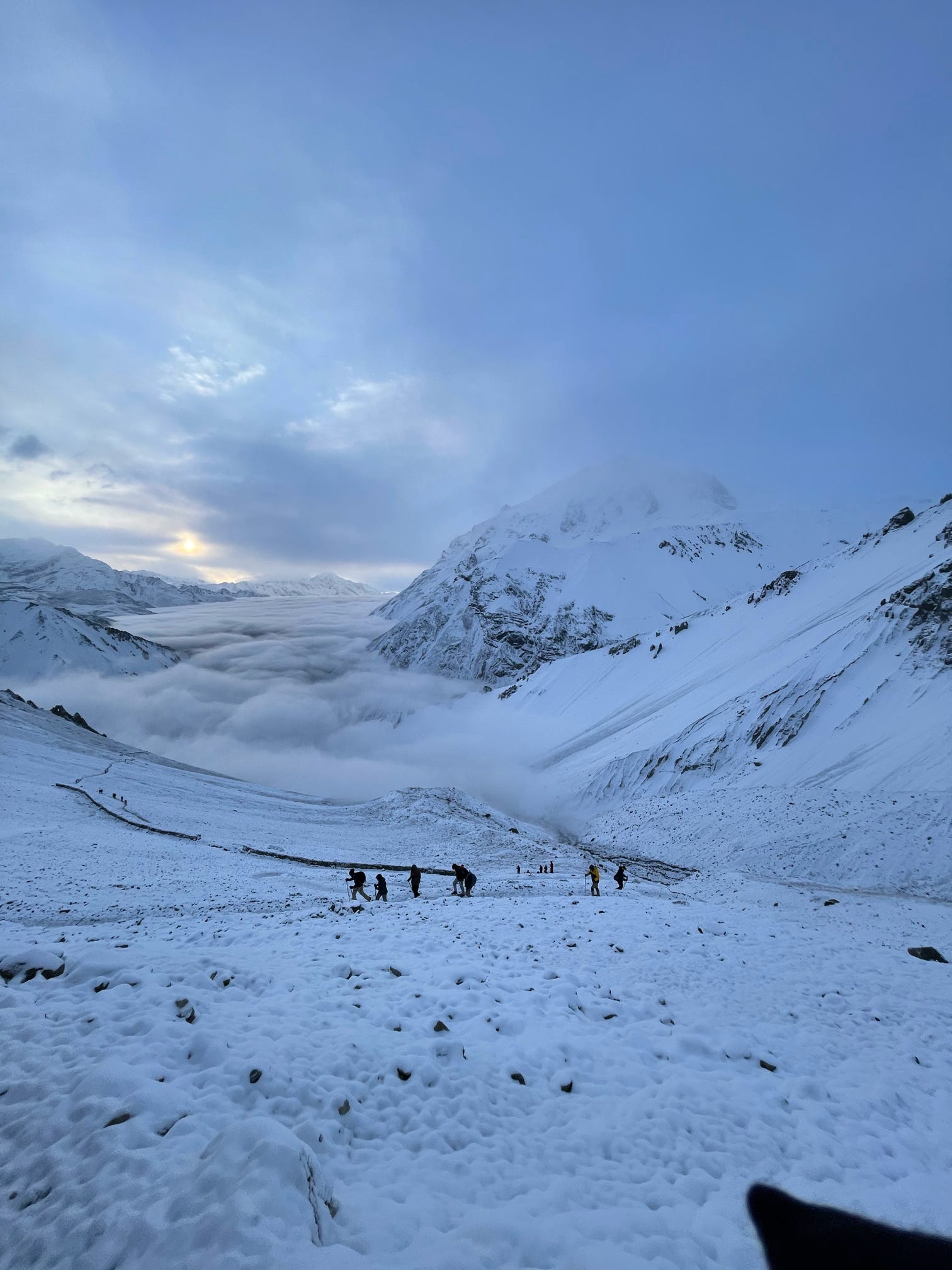
Air pressure drops steadily with elevation. Above 5,000 meters, oxygen availability falls to roughly half of sea level. Every breath delivers noticeably less oxygen to muscles and brain.
This isn’t a gradual, barely noticeable shift. Trekkers typically feel the difference clearly once they cross this threshold. Simple actions, tying a bootlace, zipping a jacket, suddenly require real effort.
Pace slows accordingly, and this is expected rather than a sign of weakness. Guides deliberately set a slower rhythm above 5,000 meters. Moving carefully uses less oxygen than pushing hard and stopping to catch your breath repeatedly.
This threshold isn’t a strict line where things suddenly change overnight. It’s more of a tipping point, where the cumulative effect of thinner air becomes impossible to ignore. Most trekkers describe the shift as gradual but unmistakable once they’re past it.
Cold intensifies at this altitude too, compounding the effect of reduced oxygen. Simple tasks take longer, partly from breathlessness and partly from stiff, cold fingers. Layered clothing and patience both matter more here than at any earlier stage of the trek.
Base Camp Versus Kala Patthar: Which Is Actually Higher
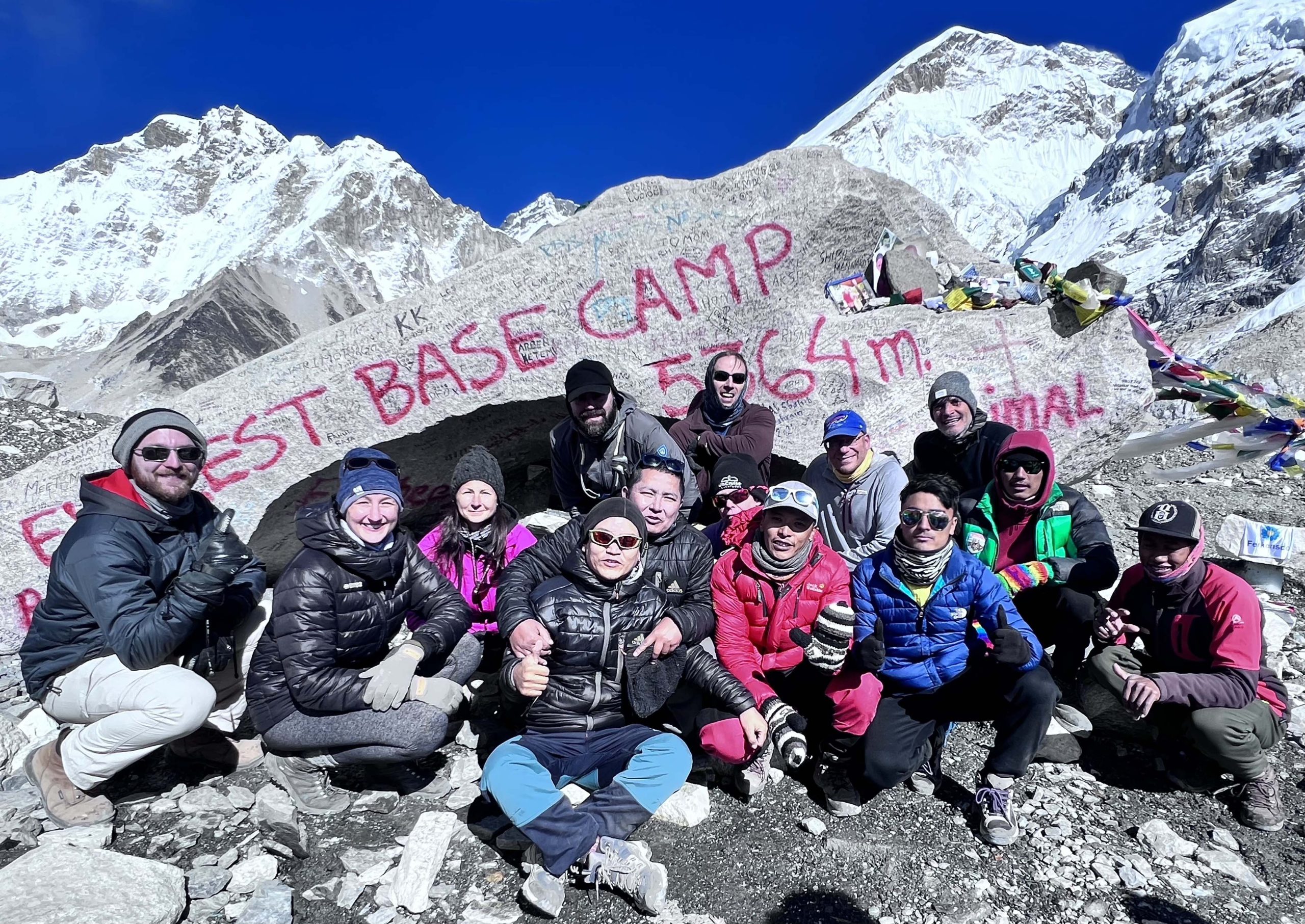
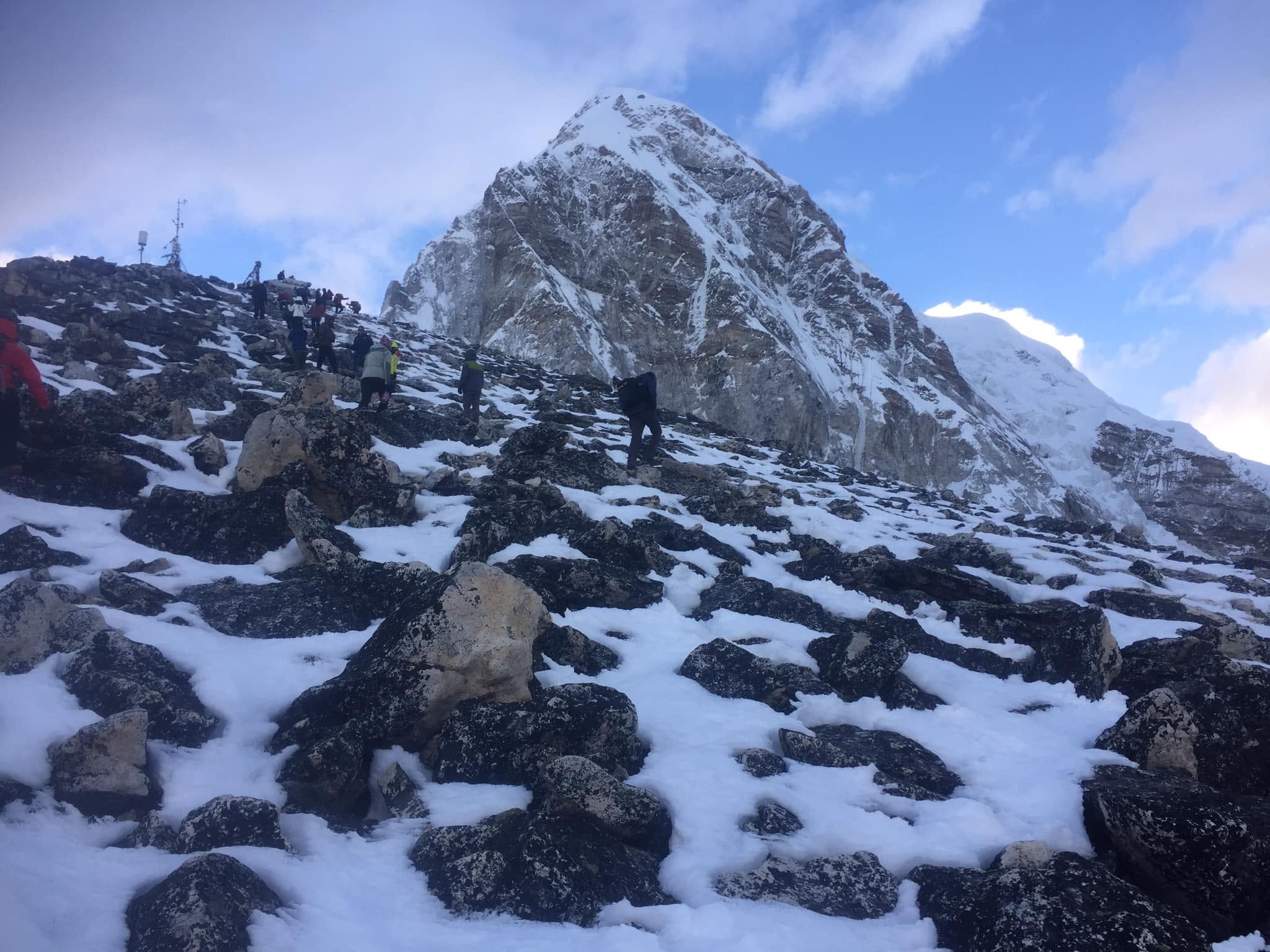
Kala Patthar, at 5,545 meters, is actually higher than Base Camp itself, which sits at 5,364 meters. This surprises some trekkers who assume Base Camp is the trek’s true high point. It isn’t.
Base Camp sits at the foot of the Khumbu Icefall, the starting point for actual Everest summit attempts. Kala Patthar is a separate viewpoint, climbed specifically for its unobstructed view of Everest’s summit, which isn’t visible from Base Camp itself.
Most standard itineraries visit both. Trekkers typically reach Base Camp first, then climb Kala Patthar the following morning for sunrise views. This order matters, since Kala Patthar’s early start works best after acclimatizing one more night at Gorak Shep.
The 181 meter gap between the two points might sound small. At this altitude, it’s genuinely noticeable. Every extra meter above 5,000 meters costs more effort than the same gain would at a lower elevation.
This is part of why the Kala Patthar climb, though short in distance, often ranks among the hardest single stretches of the entire trek. It comes late in the itinerary, after days of accumulated fatigue, at the trek’s single highest point.
 |
 |
How Altitude Sickness Risk Changes With Elevation
Acute Mountain Sickness risk increases noticeably above 3,000 meters. It isn’t rare, and it isn’t a sign of poor fitness. Even strong athletes develop symptoms at these elevations.
Above 4,000 meters, mild symptoms become genuinely common. A slight headache, reduced appetite, or disturbed sleep are considered normal signs of adjustment. These usually ease with rest and proper pacing.
Above 5,000 meters, the risk profile shifts further. Severe symptoms, though less common, require immediate descent if they appear. This is why the trek’s highest point near 5,545 meters at Kala Patthar gets approached only after two dedicated acclimatization days lower down the route.
Risk doesn’t rise in a straight line either. It tends to accelerate past certain thresholds rather than increasing evenly with each meter gained. This is part of why the trek’s final stages, above Dingboche especially, carry more weight in an itinerary’s overall safety planning than the earlier, lower stages do.
Guides watch this shifting risk closely, adjusting pace and rest based on how a group is actually responding rather than sticking rigidly to a printed schedule. This flexibility matters more the higher the trail climbs, since the margin for error naturally narrows above 5,000 meters.
Age, prior altitude experience, and general health all influence individual risk somewhat, but none of them reliably predict who will struggle and who won’t. This unpredictability is exactly why daily monitoring matters more than trying to guess risk in advance based on personal characteristics alone.
Acclimatization: How the Trek Manages This Altitude Gain
Two rest days sit at specific points in the standard itinerary, at Namche Bazaar and Dingboche. Both follow the same principle: climb higher during the day, then sleep lower that night. This pattern helps the body adjust gradually.
Skipping these rest days to save time is one of the most common mistakes among first-time trekkers. It doesn’t just make the trek harder. It meaningfully raises the risk of altitude sickness severe enough to require descent.
The math behind this pacing isn’t arbitrary. Medical guidance generally recommends limiting sleeping elevation gain to 300 to 500 meters per night above 3,000 meters. The standard itinerary tracks this guidance fairly closely.
Hydration supports this process too, often overlooked next to the bigger conversation about rest days. Dry mountain air pulls moisture from the body faster than most trekkers notice. Drinking three to four liters daily helps the body manage the physical stress of altitude gain more effectively.
None of this guarantees a symptom-free trek. It simply gives the body the best possible conditions to adjust gradually, rather than forcing an adjustment the body isn’t ready for yet.
Comparing This Altitude to Other Well-Known Heights
Numbers like 5,545 meters can feel abstract without something familiar to compare them to. A few reference points help put this height in perspective.
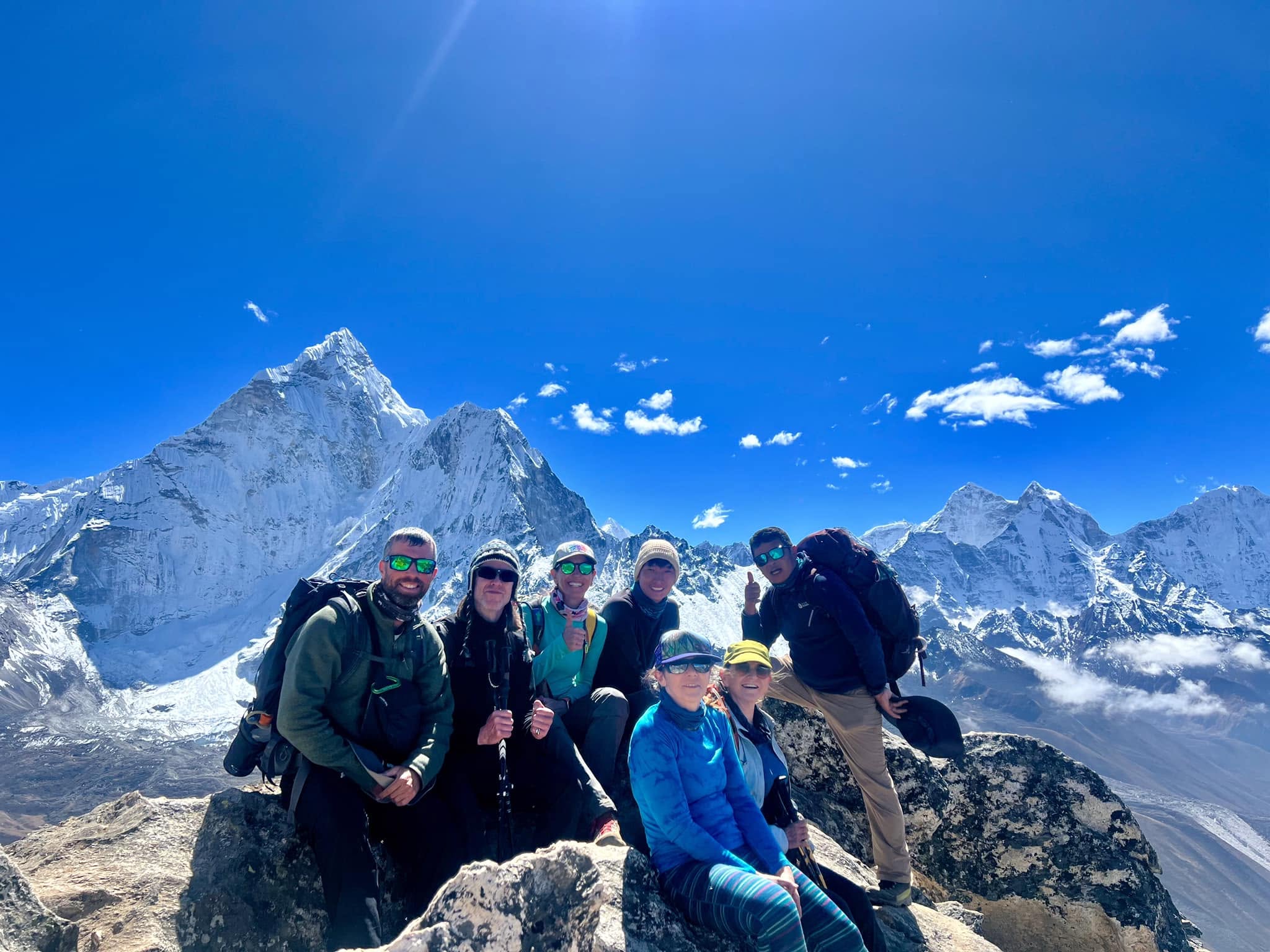
Mount Kilimanjaro’s summit sits at 5,895 meters, just slightly higher than Kala Patthar. Denali, North America’s tallest peak, reaches 6,190 meters. Everest Base Camp and Kala Patthar sit close to these famous summits, without requiring any technical climbing to reach.
This comparison matters for one specific reason. Trekkers sometimes underestimate this trek because it involves walking rather than climbing. The altitude reached, though, rivals some of the world’s most recognized mountain summits.
Aconcagua, the tallest peak outside Asia, reaches 6,961 meters, still not dramatically higher than where this trek tops out. That gap becomes smaller once you consider that Aconcagua requires technical climbing skill, while reaching Kala Patthar requires only walking and patience. The elevation itself doesn’t care how a person arrives there.
This is worth remembering when a well-meaning friend or family member downplays this trek as “just walking.” The altitude reached genuinely competes with serious mountaineering destinations, even without a single technical climbing move required anywhere on the route.
Local high-altitude cities offer another useful comparison. La Paz, Bolivia, sits at roughly 3,600 meters, already high enough to cause altitude symptoms in unacclimatized visitors. Base Camp sits nearly 1,800 meters higher still, well past where La Paz’s airport alone challenges many first-time visitors.
What Trekkers Actually Feel at Each Altitude Band
Below 3,000 meters, most trekkers notice little difference from normal hiking. Breathing feels regular. Energy levels stay close to what’s expected at lower elevations.
Between 3,000 and 4,500 meters, breathlessness on inclines becomes noticeable, even for fit trekkers. Sleep sometimes feels lighter or more disrupted than usual. These changes are considered normal adjustment, not cause for alarm on their own.
Above 4,500 meters, the effects become harder to ignore. Even flat walking feels more effortful. Appetite often decreases, and a slower, more deliberate pace becomes the norm for almost everyone on the trail.
These three bands aren’t rigid boundaries. Individual response varies quite a bit, and some trekkers notice effects earlier or later than these general ranges suggest. Genetics, hydration, sleep quality, and simple luck all play a role that no altitude chart can fully predict.
Understanding these rough bands still helps, though. It gives trekkers a general sense of what to expect at each stage, rather than being caught off guard by symptoms that are, for the most part, a normal and expected part of climbing this high.
How Altitude Affects Sleep, Appetite, and Energy
Sleep quality drops at altitude, and this has nothing to do with uncomfortable beds. Reduced oxygen disrupts normal sleep patterns, leading to lighter, more fragmented rest even in a perfectly comfortable teahouse room.
This matters more than it might seem. Poor sleep compounds fatigue day after day, even when a trekker feels rested each morning. This is part of why guides watch appetite and energy levels as closely as walking pace.
Appetite often decreases too, sometimes without a trekker fully noticing. Skipping meals at altitude backfires quickly, since the body needs more calories in cold, thin air, not fewer.
Energy levels follow a similar pattern, dipping gradually as the trek climbs higher. This isn’t the same as exhaustion from overexertion. It’s a specific, altitude-linked kind of fatigue that rest alone doesn’t fully resolve.
Guides recognize this distinction and generally don’t push a group harder just because energy feels low. Slowing the pace, rather than forcing through fatigue, remains the standard and sensible response at these elevations.
Training and Preparing for This Specific Altitude Range
Training at altitude beforehand isn’t realistic for most trekkers preparing from lower elevations. It also isn’t necessary. Cardiovascular fitness built at sea level still transfers well to this trek, when paired with proper acclimatization on the trail itself.
What matters more is understanding that fitness and altitude tolerance are separate things. A very fit trekker can still develop altitude sickness. An average trekker who paces carefully often does better than expected.
This distinction is worth remembering while training. Build genuine cardiovascular endurance in the months before departure. Then trust the itinerary’s acclimatization schedule to handle the altitude itself.
Some trekkers try altitude simulation, using specialized masks or tents that mimic reduced oxygen. These tools have some value for serious mountaineers, but they’re rarely necessary for a trek like this one. Genuine acclimatization on the actual trail does more than any artificial substitute back home.
The most useful preparation combines two things: solid cardiovascular fitness built through consistent training, and a genuine commitment to following the itinerary’s pacing once on the trail. Neither one alone covers everything altitude demands.
Mental preparation deserves a mention here too. Understanding in advance that breathlessness, mild headaches, and reduced appetite are normal parts of the process helps trekkers respond calmly rather than anxiously when these expected sensations actually show up on the trail.
How This Trek’s Altitude Compares to Everest’s Summit
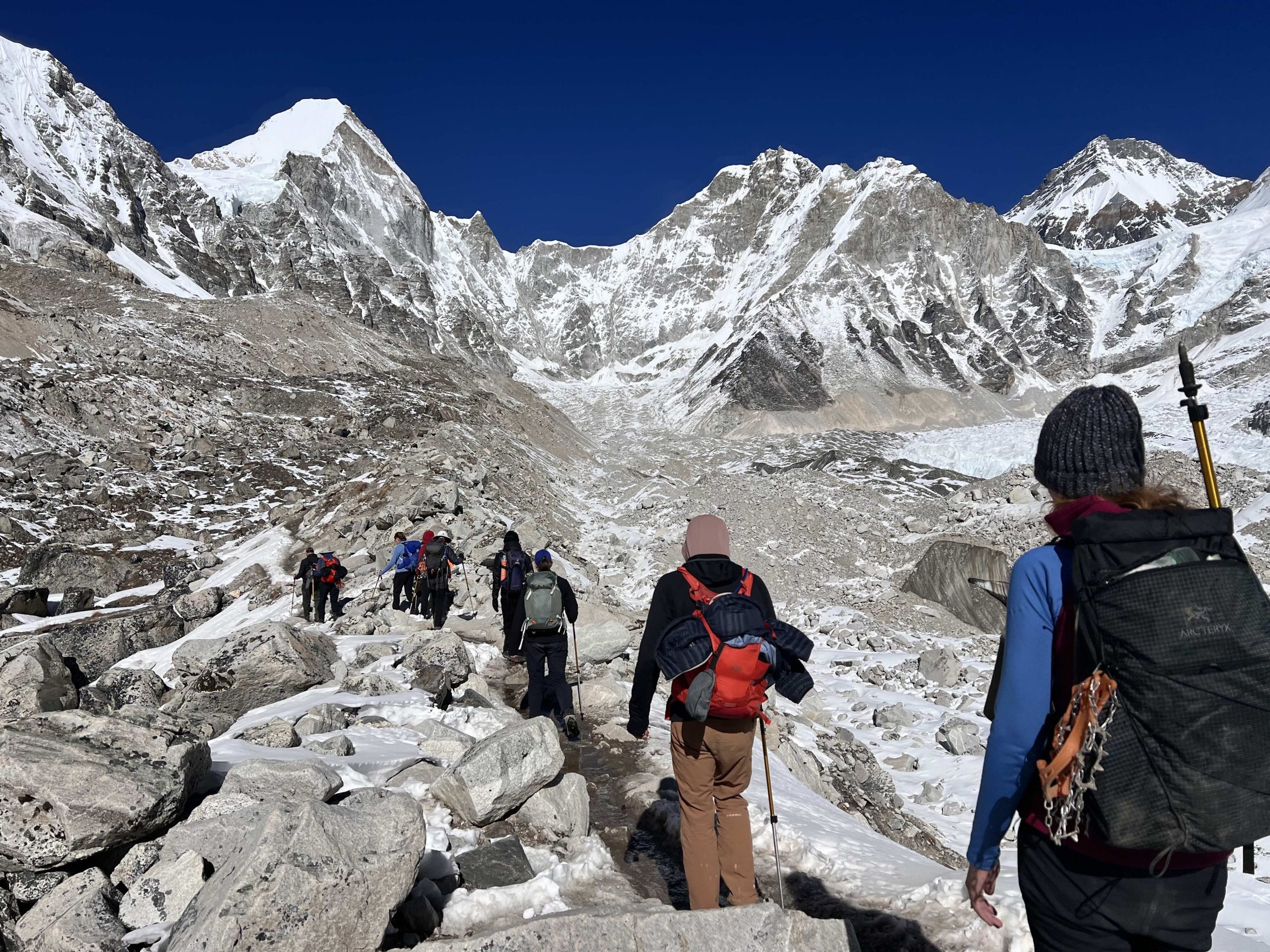
Everest’s summit reaches 8,849 meters, considerably higher than anything reached on this trek. Understanding this gap matters, since trekkers sometimes assume they’ve gotten closer to the summit than they actually have.
Base Camp sits over 3,000 meters below the summit itself. That’s a massive gap, roughly equivalent to climbing an entire additional mountain on top of what this trek already covers. Reaching Base Camp is a genuine achievement, but it’s a different challenge entirely from summiting Everest.
This distinction matters for setting expectations. This trek offers close-up views of Everest and the surrounding peaks, along with a real sense of scale near the mountain. It doesn’t involve any of the technical climbing, oxygen equipment, or extreme risk that summiting Everest itself requires.
Some trekkers arrive with a vague sense that reaching Base Camp puts them “almost at the top.” It’s worth correcting this gently, since the remaining distance to the summit involves an entirely different category of mountaineering, requiring specialized training, supplemental oxygen, and weeks of additional acclimatization on the mountain itself.
How Guides Track Altitude and Oxygen in Real Time
Guides don’t rely on elevation numbers alone to judge how a group is coping with altitude. They combine several tools and observations, updated daily, to build a clearer picture than any single measurement could provide.
A pulse oximeter measures blood oxygen saturation, a simple clip-on device used each morning and evening above 3,000 meters. Readings naturally drop as altitude increases, but a sudden or unusually steep drop signals something worth watching closely. This single number, tracked daily, often reveals problems before obvious symptoms appear.
Guides also watch appetite, sleep quality, and general mood, since these often shift before oxygen readings show anything unusual. A trekker who’s quieter than usual, or picking at food without much interest, gets noticed. This combination of hard data and simple observation catches far more than either approach alone.
Some trekkers find it reassuring to track their own oximeter readings across the trek, watching how the numbers shift day to day. This isn’t necessary, since guides handle the monitoring, but it does give curious trekkers a concrete, personal way to understand their own acclimatization progress.

How Altitude Affects Views and Photography
Higher altitude doesn’t just affect the body. It changes what trekkers actually see and how well cameras capture it. Understanding this helps set realistic expectations for photography throughout the trek.
Thinner air at altitude scatters less light, producing noticeably sharper, more vivid mountain views the higher the trail climbs. This is part of why photos from Kala Patthar often look more dramatic than photos taken lower down on the same trip. Reduced atmospheric haze plays a real role here, not just the dramatic subject matter itself.
Cold temperatures at altitude drain camera batteries faster than usual, an easily overlooked practical detail. Keeping batteries in an inner jacket pocket, close to body heat, helps preserve charge for the trek’s most photogenic, highest-altitude moments.
Phone cameras suffer from cold more than dedicated cameras typically do, sometimes shutting down entirely in extreme cold until warmed back up. Carrying a spare battery, or simply keeping a phone tucked inside a jacket between shots, prevents missing the exact moment a trekker climbed this high specifically to capture.
Does Prior Altitude Experience Help on Return Trips
Trekkers who’ve completed this route before sometimes wonder if their body remembers the altitude, making a second attempt easier. The honest answer is more nuanced than a simple yes or no.
The body doesn’t retain long-term altitude adaptation the way it retains fitness gains from training. Acclimatization fades within a few weeks of returning to lower elevation. A trekker returning a year later starts from roughly the same baseline as their first attempt, physiologically speaking.
What does carry over is experience and confidence. Knowing what altitude symptoms feel like, understanding personal warning signs, and trusting the pacing process all genuinely help on a return trip. This kind of familiarity, rather than any lingering physical adaptation, is what makes repeat trekkers often feel more comfortable the second time around.
This is genuinely good news for first-timers feeling anxious about altitude. Nobody has a permanent disadvantage simply from lacking experience. Following the same acclimatization schedule, staying honest about symptoms, and trusting the process gives a first-time trekker essentially the same physiological starting point as anyone else on the trail.
So, How High Does This Trek Actually Go?
The honest summary: Base Camp sits at 5,364 meters, and Kala Patthar reaches 5,545 meters, the trek’s true high point. Both altitudes sit in territory that rivals well-known mountain summits elsewhere in the world.
Getting there safely depends less on fitness and more on pacing. Two rest days, careful daily pacing, and honest symptom reporting matter more than raw physical strength at these elevations.
Trekkers planning around this altitude, rather than distance alone, tend to have a far more accurate sense of what the trek actually demands. The numbers matter, but understanding what they mean for the body matters more.
5,364 meters and 5,545 meters aren’t just statistics to memorize before departure. They’re the reason for nearly every other detail in this guide, the pacing, the rest days, the cold nights, the breathlessness. Understanding the altitude is understanding the trek itself.
Frequently Asked Questions How high is the Everest Base Camp trek?
What is the highest point on the Everest Base Camp trek?
Kala Patthar, at 5,545 meters, is the trek’s highest point, slightly higher than Base Camp itself at 5,364 meters.
How high is Everest Base Camp compared to Everest’s summit?
Base Camp sits at 5,364 meters, while Everest’s summit reaches 8,849 meters, over 3,000 meters higher than Base Camp.
Is altitude sickness common at these heights?
Mild symptoms are common above 3,000 meters and considered normal adjustment. Severe symptoms are less common but require immediate descent.
How does this altitude compare to Kilimanjaro?
Kilimanjaro’s summit reaches 5,895 meters, just slightly higher than Kala Patthar’s 5,545 meters.
Do I need prior high-altitude experience for this trek?
No prior experience is required, though anyone who has struggled with altitude before should discuss the trek with a doctor beforehand.
Why is Kala Patthar higher than Base Camp?
Base Camp sits at the foot of the Khumbu Icefall, while Kala Patthar is a separate viewpoint climbed specifically for its higher vantage point and clear Everest views.
How much altitude is gained each day on average?
Gain varies by stage, but guidance generally limits sleeping elevation gain to 300 to 500 meters per night above 3,000 meters.