Everest Base Camp Trek Weather
August 25, 2026 Lhasso Adventure
Everest Base Camp trek weather ranges from mild, sunny days around 15°C in the lower Khumbu to well below freezing overnight once the trail climbs past 4,000 meters. Daytime temperatures at Base Camp itself typically sit between -5°C and 5°C, while nighttime lows regularly drop to -15°C or colder, even during the warmer trekking seasons.
Weather on this trek isn’t a single number so much as a daily swing. Mornings start cold and still, midday warms quickly under direct sun, and temperatures fall sharply again the moment the sun drops behind the surrounding peaks. Understanding that pattern matters more for packing and pacing than any single average figure ever could.
Everest Base Camp Weather Overview
The Khumbu region runs through four distinct weather patterns across the year, and only two of them line up well with a comfortable, low-risk trekking window. Spring and autumn offer the most stable conditions, while winter brings serious cold and monsoon season brings heavy rain and poor visibility.
Spring, running roughly March through May, brings warming temperatures, blooming rhododendron forests at lower elevations, and generally clear morning skies before afternoon cloud tends to build later in the day. Autumn, running September through November, follows the monsoon’s departure and typically delivers the clearest, most stable mountain visibility of the entire year, which is why it consistently draws the largest number of trekkers.
Winter, December through February, brings the coldest temperatures and the quietest trails, with nighttime lows at higher elevations dropping well below -20°C in exposed sections near Gorak Shep and Base Camp itself. Trekking during winter is entirely possible for well-prepared, experienced trekkers, though it demands considerably heavier gear and a higher tolerance for genuinely harsh overnight cold.
Monsoon season, June through August, brings heavy rainfall, leech-prone lower trails, and frequent cloud cover that can obscure mountain views for days at a stretch. Trails also become muddier and slower to walk during this period, particularly on the forested sections below Namche Bazaar where rainfall collects most heavily.
Elevation shapes weather at least as much as season does. A day that feels mild and pleasant in Namche Bazaar at 3,440 meters can turn sharply cold within a few hours of climbing toward Dingboche or Lobuche, regardless of which month the calendar shows, which is why packing needs to account for the full elevation range rather than the season alone.
Everest Base Camp Temperature by Month
Seeing the full year laid out side by side makes it easier to compare Everest Base Camp temperature by month rather than relying on general season labels alone. The figures below reflect typical conditions at Base Camp elevation, 5,364 meters, and run noticeably milder at lower stops like Namche or Phakding.
| Month | Daytime Temp (°C) | Nighttime Temp (°C) | Conditions |
|---|---|---|---|
| January | -5 to -10 | -15 to -20 | Cold, clear, quiet trails |
| February | -5 to -10 | -15 to -20 | Cold, clear, quiet trails |
| March | 0 to -5 | -10 to -15 | Warming, occasional snow |
| April | 5 to 0 | -5 to -10 | Mild days, cold nights |
| May | 5 to 10 | -5 to 0 | Warmest spring temperatures |
| June | 5 to 10 | -2 to 2 | Monsoon onset, cloud increasing |
| July | 5 to 10 | 0 to 3 | Rain, low visibility |
| August | 5 to 10 | 0 to 3 | Rain, low visibility |
| September | 0 to 5 | -5 to -2 | Clearing skies, cooling |
| October | -2 to 3 | -10 to -5 | Peak clarity, cold nights |
| November | -5 to 0 | -15 to -10 | Colder, still very clear |
| December | -5 to -10 | -15 to -20 | Cold, clear, quiet trails |
These figures represent Base Camp itself at 5,364 meters. Villages lower on the route, particularly Namche Bazaar at 3,440 meters, typically run 8 to 12 degrees warmer during the day than the numbers shown here, which is worth remembering when packing for the trip as a whole rather than for Base Camp alone.
When Is the Best Time to Trek to EBC?
Spring and autumn stand out as the two windows offering the most reliable Everest Base Camp trek weather, largely because both sit between the extremes of winter cold and monsoon rain. Neither season is objectively better than the other; they simply offer different trade-offs worth weighing against personal priorities.
Spring brings warming temperatures and lower-elevation forests in bloom, which makes the earlier days of the trek particularly scenic before the trail climbs into starker, rockier terrain above Namche. Afternoon cloud buildup is more common in spring than autumn, occasionally softening mountain views later in the day, though mornings still tend to open clear.
Autumn tends to deliver the clearest sustained mountain visibility of the year, following directly after the monsoon clears the air of dust and haze. Nights run colder in autumn than in spring, particularly by late October and into November, though daytime conditions remain comfortable for walking throughout most of the season.
Trekkers weighing the month-by-month temperature and trail condition patterns across the Everest region in more depth often find that the choice between spring and autumn comes down to personal priorities: warmer nights and flowering trails favor spring, while sharper mountain views and drier trail conditions favor autumn.
Neither window guarantees perfect weather on every single day, and both still carry some chance of an unexpected storm or cloud system passing through. Building a couple of buffer days into any itinerary, regardless of which season is chosen, remains sound practice for exactly this reason.
When Is the Best Time to Visit EBC in Autumn?
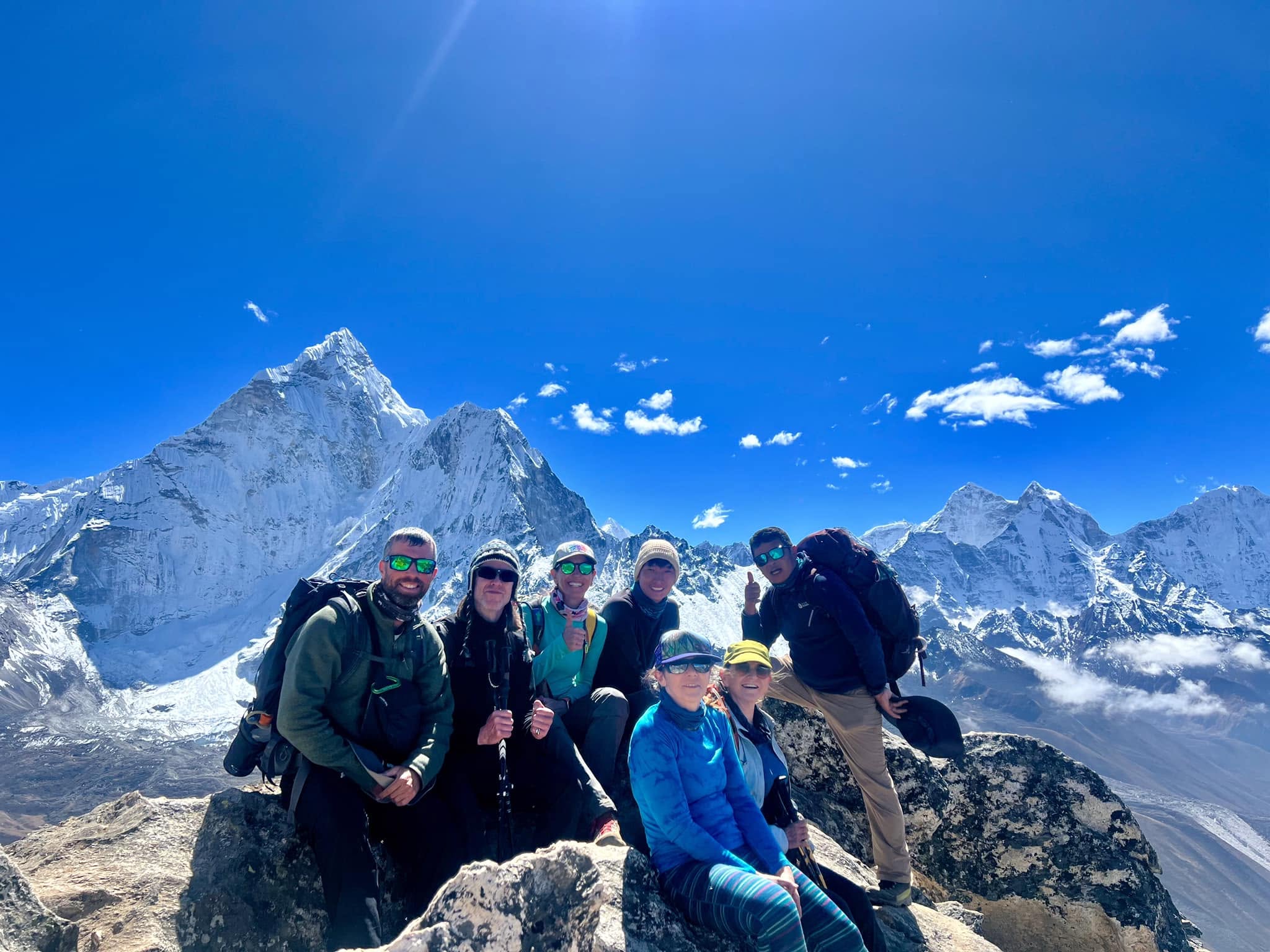
Late September through November makes up the full autumn trekking window, though the sweet spot within that range sits in October and the first half of November. Early autumn can still carry lingering monsoon cloud, while late November begins sliding toward winter’s harsher cold and shorter daylight hours.
October consistently ranks as one of the two most popular months to trek in the entire Khumbu, combining daytime temperatures that remain comfortable for walking with visibility that’s often described as the clearest of the year. Trail conditions are generally dry, and teahouses run at full operation with the widest range of food and accommodation options available anywhere in the region.
November extends the same clear-sky pattern into noticeably colder territory, particularly at night. Trekkers heading out in November should expect nighttime temperatures at higher elevations to drop 5 to 10 degrees colder than an equivalent October night, even though daytime walking conditions remain pleasant under typically cloudless skies.
Booking within this window also means aligning with the region’s Everest Base Camp Marathon and various local autumn festivals, both of which draw additional visitors and can affect teahouse availability at the most popular stops. Reserving lodges slightly ahead of a fixed autumn departure date helps avoid any last-minute scramble for a bed at busier villages like Namche and Dingboche.
Trekkers who prioritize quieter trails over peak conditions sometimes deliberately choose the tail end of November, accepting somewhat colder nights in exchange for noticeably thinner crowds at every stop along the route.
What Month Is Best for the Everest Base Camp Trek?
October and April consistently rank as the two single best months for a first-time Everest Base Camp trek, sitting at the peak of the autumn and spring windows respectively. Both combine stable weather with comfortable daytime walking temperatures and reasonably predictable Lukla flight conditions, which matters as much as the trekking days themselves.
October edges ahead for trekkers who prioritize mountain visibility above all else, offering the clearest post-monsoon skies of the year alongside dry trail conditions throughout the Khumbu. April appeals more to trekkers drawn to blooming rhododendron forests lower on the trail and slightly milder overnight temperatures than October delivers at comparable elevations.
Trekkers with more flexibility might consider September or early December as slightly quieter alternatives, trading a small amount of weather reliability for noticeably thinner crowds on the trail and easier teahouse bookings at popular stops. Both months still fall within a reasonably safe weather window, just closer to the edges of it than the peak months.
Whichever month a trekker chooses, pairing it with the difficulty and altitude demands that shape the overall trek experience helps set realistic expectations, since even the single best-weather month on the calendar doesn’t reduce the physical effort altitude gain requires along the way.
There’s no genuinely bad month for an experienced, well-equipped trekker willing to adapt gear and pace to conditions, though first-timers benefit most from sticking to the reliability of October or April rather than gambling on a shoulder month.

Everest Base Camp Temperature in April
April sits toward the warmer end of the spring trekking window, with daytime temperatures at Base Camp generally ranging from 0°C to 5°C and nighttime lows between -5°C and -10°C. Lower down the trail, around Namche Bazaar, daytime temperatures often reach a comfortable 10°C to 15°C, making the early days of the trek feel noticeably milder than the final push toward Base Camp.
This is one of the more forgiving months on the calendar in terms of raw temperature, though it comes with its own trade-off. Afternoon cloud cover builds more frequently in April than in the cooler autumn months, occasionally obscuring peak views later in the day even when mornings start out clear and crisp.
Rhododendron forests reach full bloom during April at the lower elevations around Phakding and below Namche, adding a splash of color to a trail that turns increasingly stark and rocky higher up. This seasonal detail is unique to spring trekking and doesn’t appear during the autumn window at all, making April a particular favorite among trekkers drawn to the region’s flora as much as its mountain views.
Packing for April still means preparing for below-freezing nights at higher camps, even though daytime conditions feel notably milder than the shoulder months on either side of it. Layering remains essential regardless of how comfortable a given afternoon might feel at lower elevation, since the temperature swing between midday sun and post-sunset cold can exceed 15 degrees on a single day.
Everest Base Camp Temperature in May
May typically brings the warmest temperatures of the entire spring trekking season, with daytime highs at Base Camp reaching 5°C to 10°C and nighttime lows staying closer to -5°C to 0°C, noticeably milder than earlier spring months and among the gentlest overnight temperatures found anywhere on the calendar at that elevation.
This warming trend comes with a catch worth planning around. Late May increasingly overlaps with the early edge of monsoon season, particularly toward the end of the month, bringing a higher chance of afternoon cloud buildup and occasional rain showers at lower elevations along the trail.
Trekkers heading out in early to mid-May generally still enjoy the season’s more stable conditions, while those pushing toward the final week should expect a somewhat higher chance of weather-related Lukla flight delays compared with April or the earlier weeks of May itself, since cloud buildup can affect the short mountain airstrip more than lower-elevation trail sections.
Snowmelt at higher elevations is typically well underway by May, which can make certain sections of trail muddier underfoot than the firmer, more frozen ground trekkers encounter earlier in spring. Waterproof boots remain a sensible packing choice throughout the month regardless of the warmer daytime air temperature, particularly for stretches near stream crossings and glacial runoff closer to Base Camp.
Everest Base Camp Trek Weather in September
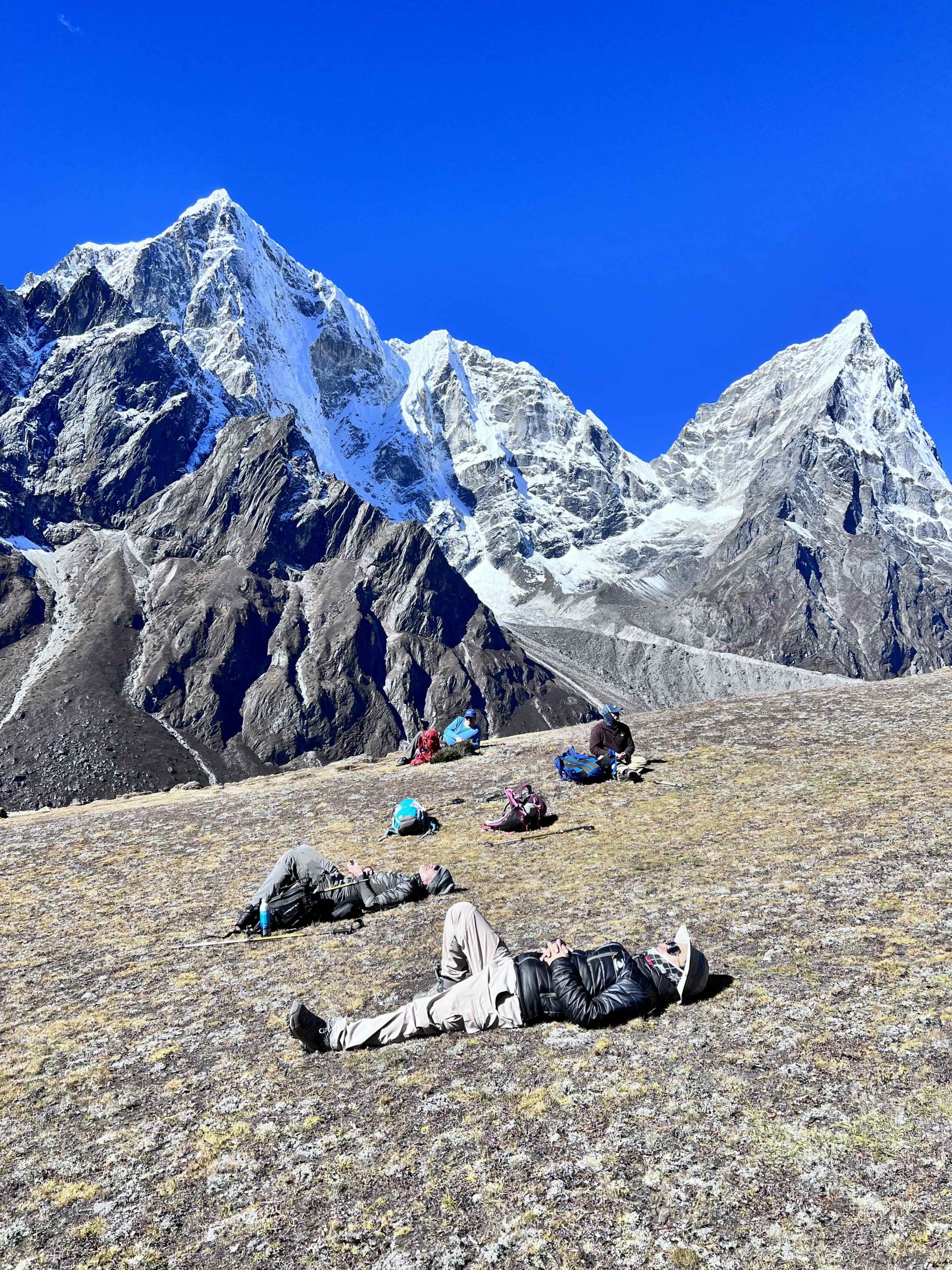
September brings a gradual shift from the monsoon season to the clearer and more stable autumn weather in the Everest region. The beginning of the month can still be wet and cloudy, but conditions usually improve as September progresses, with clearer skies, better mountain views, and more pleasant trekking days.
Rain is still possible, especially during early September, so trekkers should be prepared for occasional showers and wet trails. Lower parts of the route, such as Lukla, Phakding, and Namche Bazaar, are generally warmer, while the higher sections become colder as you continue toward Everest Base Camp.
The weather can also change noticeably throughout the day. A clear morning may turn cloudy by the afternoon, sometimes hiding the mountain views, so starting your walk early often gives you a better chance of enjoying clear views of the Himalayas.
Temperatures during the day are usually comfortable enough for trekking, particularly when the sun is out. However, mornings and nights become much colder above Dingboche, and temperatures around Lobuche, Gorak Shep, and Everest Base Camp can drop below freezing.
By late September, the weather generally becomes more reliable as the main autumn trekking season begins. The combination of greener landscapes after the monsoon, improving visibility, and comfortable daytime temperatures makes September a good time to trek to Everest Base Camp.
Everest Base Camp Temperature in October
October delivers some of the most stable and predictable Everest Base Camp trek weather of the entire year, with daytime temperatures at Base Camp ranging from -2°C to 3°C and nighttime lows between -10°C and -5°C, cold but rarely extreme by the standards of high-altitude trekking.
Skies during October tend to stay reliably clear, following directly after the monsoon’s departure clears dust and haze from the air. This combination of stable temperatures and consistently clear visibility is a major reason October remains the single most popular month to trek in the entire region, drawing more visitors than any other point on the calendar.
Early October can occasionally still carry a trailing edge of monsoon moisture, particularly in the first week or so, while conditions typically settle into a firmly dry, clear pattern by mid-month onward. Trekkers with flexible dates often find the back half of October slightly more reliable than the very start of it, especially for Lukla flight consistency.
Nighttime cold becomes noticeably more pronounced than earlier autumn months once the trail climbs past Dingboche, making a quality down jacket and a sleeping bag rated for sub-zero temperatures genuinely necessary rather than optional gear for the month. Daytime layers can be lighter than expected given the clear sun, but a warm layer should always stay within easy reach once the afternoon shadow crosses a valley.
Everest Base Camp Temperature in November
November brings a sharper drop in temperature than October, with daytime highs at Base Camp typically falling between -5°C and 0°C and nighttime lows regularly reaching -15°C to -10°C at the highest camps along the route, a meaningful step down from the earlier autumn weeks.
Despite the colder numbers, November often maintains the same clear-sky pattern that makes October so popular, meaning trekkers willing to handle the extra cold are frequently rewarded with equally sharp mountain visibility and noticeably thinner crowds on the trail than during October’s busier weeks.
Early November remains closer to October’s milder conditions, while late November begins edging toward the harsher cold typically associated with winter trekking. Trekkers sensitive to cold generally fare better booking earlier in the month rather than pushing toward its final week, when daylight hours also begin shortening more noticeably.
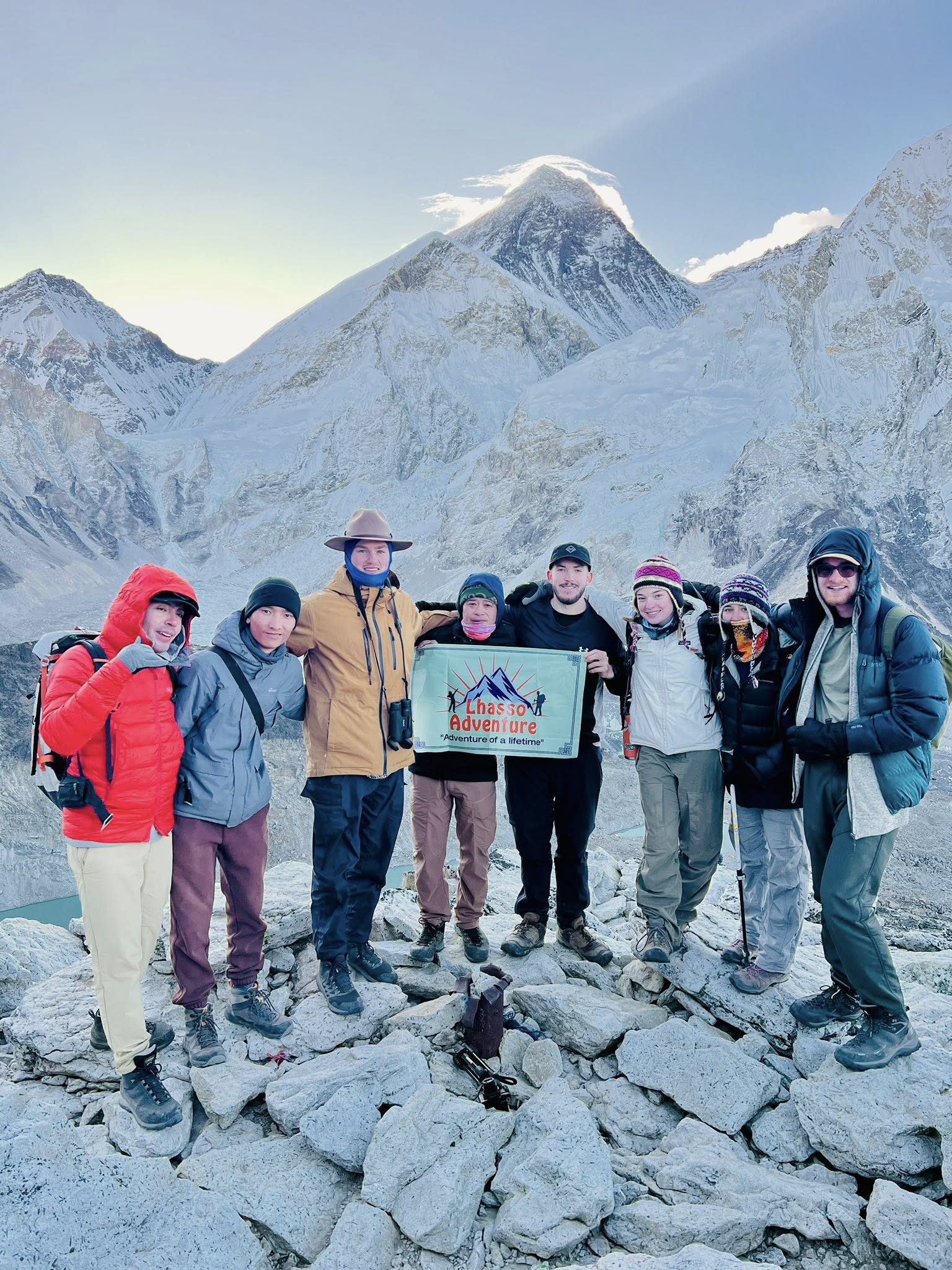
Wind chill plays a larger role in November than it does earlier in autumn, particularly at exposed points like Kala Patthar and the final stretch into Base Camp itself, where actual felt temperature can run considerably colder than the raw air temperature alone suggests. A windproof outer shell becomes as important as insulation itself during this stretch of the season.
Checking the Weather Forecast Before and During Your Everest Base Camp Trek
A reliable 10-day forecast becomes genuinely useful once a trekking date narrows down, though mountain weather forecasting in the Khumbu carries more uncertainty than forecasts for lower-elevation destinations tend to. Conditions can shift meaningfully within the same forecast window, particularly regarding Lukla flight visibility, which depends on very localized cloud behavior rather than broader regional patterns.
Checking a forecast roughly one to two weeks before departure gives a reasonable general sense of the pattern to expect, while checking again just a few days out offers a more reliable read on Lukla flight conditions specifically, since that short runway is especially sensitive to localized cloud and wind that standard forecasts don’t always capture accurately.
Once on the trail, most teahouses display a rough daily weather outlook based on guide experience and radio contact with other lodges further along the route, since consistent internet-based forecasting becomes unreliable beyond Namche Bazaar. Guides also read visible cloud patterns and wind direction each morning as a practical, low-tech supplement to any digital forecast, often proving more accurate than an app at this altitude.
Trekkers shouldn’t treat any single forecast, digital or otherwise, as a guarantee for a date more than a few days out. Building flexible buffer days into an itinerary remains a more reliable strategy for managing Khumbu weather than relying on forecast accuracy alone, particularly for the Lukla flight on either end of the trip, where even a single unexpected cloud bank can ground flights for a day or more.
How Weather Shapes Trek Difficulty and Pacing
Weather adds a layer of difficulty to this trek that sits alongside altitude rather than replacing it. Cold temperatures alone don’t make a day harder in the way that altitude does, but the combination of the two together demands more from a trekker than either factor would on its own, particularly on exposed, wind-battered stretches of trail.
Wind chill at exposed points like Kala Patthar and the final approach to Base Camp itself can turn an otherwise moderate temperature into something considerably harsher underfoot, particularly during the early morning hours guides often choose for the Kala Patthar sunrise climb specifically to catch clearer visibility before afternoon cloud builds.
Understanding the physical and altitude demands that shape overall trek difficulty alongside expected weather conditions gives a more complete picture than either factor considered alone, since a cold, windy day at altitude asks more of the body than a similarly cold day at a lower, oxygen-richer elevation would.
Weather also affects pacing indirectly through its effect on trail conditions. Snow or rain can slow walking pace on certain stretches, particularly the rockier terrain above Lobuche, which is one more reason built-in buffer days matter as much for weather as they do for Lukla flight delays.
Cold itself can also slow decision-making and physical dexterity in subtle ways, from stiffer fingers fumbling with a jacket zip to a general reluctance to stop and rest when a pause is genuinely needed. Guides watch for this pattern closely, since pushing through discomfort rather than pausing to layer up properly often leads to a harder day than the weather alone would otherwise cause.
Packing for Everest Base Camp Trek Weather
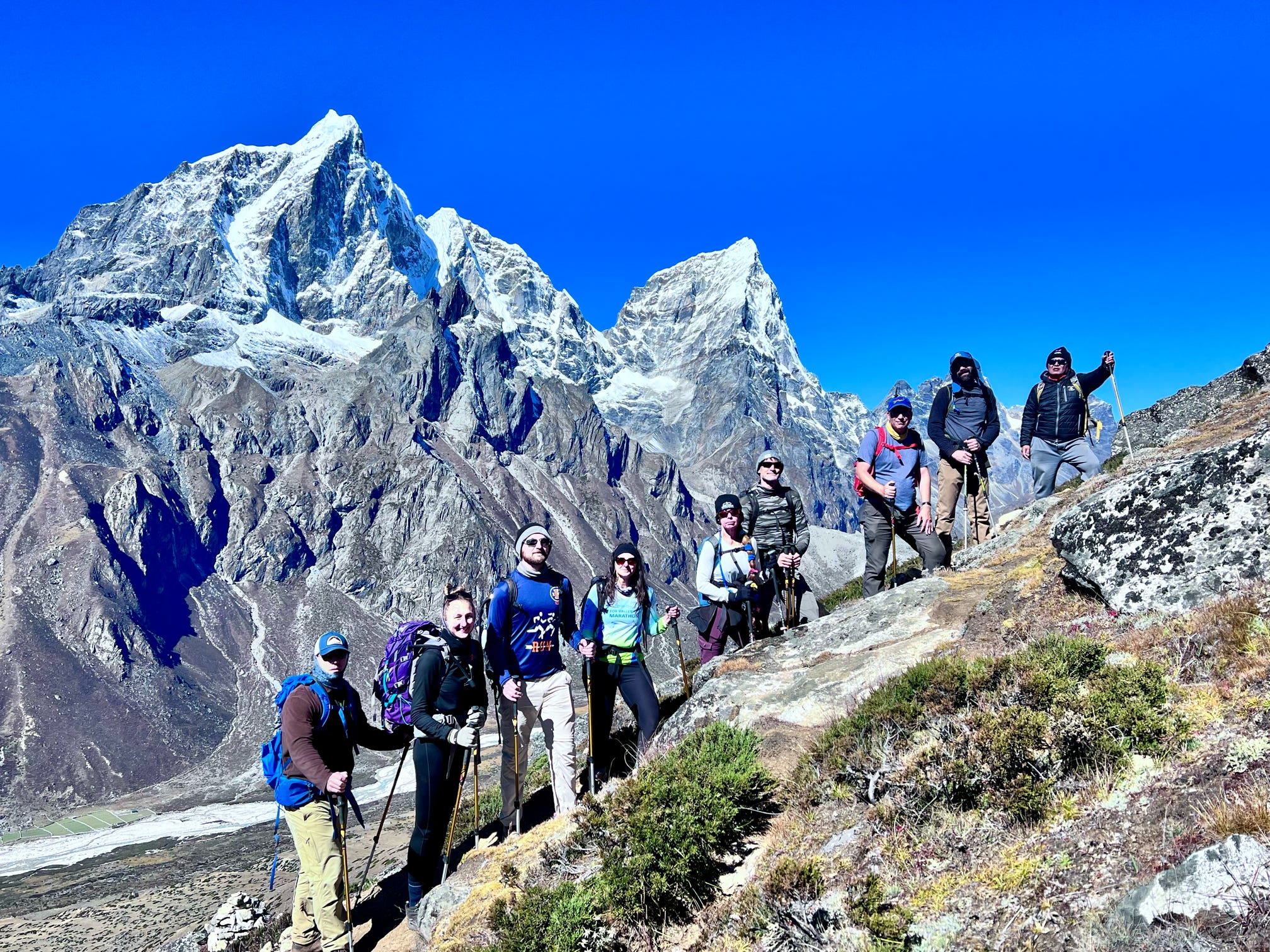
Layering remains the single most important packing principle for this trek, given how sharply temperature swings between direct sun and shade, and between daytime activity and nighttime rest at a teahouse. A single heavy jacket rarely performs as well as several thinner layers worn together, since layers can be added or removed as conditions shift throughout the day.
A quality down jacket rated for temperatures well below freezing is essential for the higher camps, alongside a sleeping bag rated to at least -15°C or colder for autumn and winter departures. Base layers that wick moisture matter just as much as outer insulation, since sweat combined with cold air is a faster route to discomfort than cold air alone, particularly once the body cools down after a day of walking.
Trekkers wanting the full breakdown of exactly what gear performs best across the trek’s shifting temperature and terrain will find it useful to plan layering systems around specific altitude bands rather than packing generically for “cold weather” as a single category that doesn’t account for how differently 3,000 meters and 5,000 meters actually feel.
Hands and head lose heat disproportionately fast at altitude, making quality gloves and a warm hat worth prioritizing over less obvious gear choices. A buff or neck gaiter also earns its place for both wind protection and the occasional dusty, windy stretch lower on the trail, where fine dust kicked up by pack animals can be as irritating as the cold itself.
Sun exposure deserves equal attention alongside cold-weather gear, since thin air at altitude offers far less UV protection than lower elevations, even on days that feel cool. Sunglasses rated for high-altitude glare and a high-SPF sunscreen belong in every trekker’s pack regardless of season.
How Lhasso Adventure Plans Around Khumbu Weather
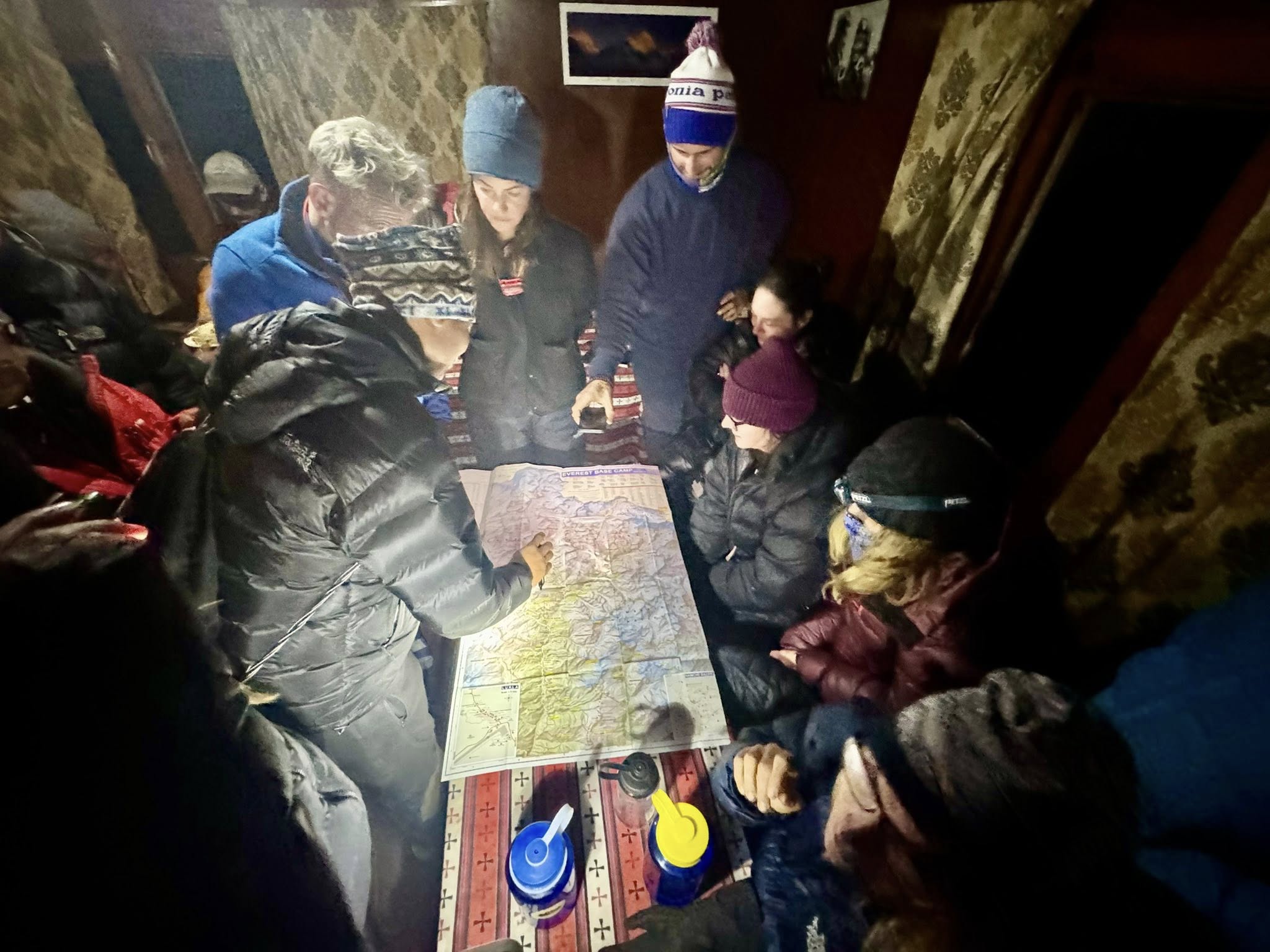
Our guides check weather conditions each morning before departure using a combination of satellite forecast data and direct radio contact with lodges further along the route, giving a more accurate picture than a single app-based forecast alone typically provides for planning that specific day’s walk.
Trekking leaders Bhim Tamang and Norbu Tamang build flexible timing into each day’s schedule specifically to work around weather patterns, such as starting the Kala Patthar sunrise climb early enough to beat typical afternoon cloud buildup at that elevation and give trekkers the clearest possible view.
Departures scheduled during the shoulder edges of spring and autumn, such as early March or late November, carry a built-in awareness of the season’s less stable pattern, with slightly more conservative daily targets and additional buffer time factored into those specific windows to absorb any weather-related delay.
Group gear checks before departure confirm that every trekker’s sleeping bag and jacket rating actually matches the season booked, since the gap between what a trekker packed for a warmer climate and what late-autumn nights at Dingboche actually demand is one of the more common, avoidable issues our guides catch before it becomes a problem on the trail.
Rental gear is also available in Kathmandu and Namche Bazaar for trekkers who discover mid-trip that their own equipment isn’t quite warm enough for the conditions ahead, which guides can help arrange quickly if a genuine gap in cold-weather protection turns up.
Frequently Asked Questions Everest Base Camp Trek Weather
When is the best time to trek to Everest Base Camp?
Spring, from March to May, and autumn, from September to November, offer the most stable Everest Base Camp trek weather, with October and April generally considered the two strongest single months.
When is the best time to visit EBC in autumn?
October through mid-November offers the best autumn weather, combining clear mountain visibility with comfortable daytime temperatures before the colder, harsher conditions of late November and winter set in.
What is the Everest Base Camp temperature in May?
May daytime temperatures at Base Camp typically range from 5°C to 10°C, with nighttime lows between -5°C and 0°C, making it the warmest month of the spring trekking season.
What is the Everest Base Camp temperature in April?
April daytime temperatures at Base Camp generally range from 0°C to 5°C, with nighttime lows between -5°C and -10°C, alongside blooming rhododendron forests at lower elevations.
What is the Everest Base Camp temperature in October?
October daytime temperatures at Base Camp typically range from -2°C to 3°C, with nighttime lows between -10°C and -5°C, alongside some of the clearest, most stable weather of the year.
What is the Everest Base Camp temperature in November?
November daytime temperatures at Base Camp generally fall between -5°C and 0°C, with nighttime lows reaching -15°C to -10°C, colder than October but often equally clear.
What month is best for the Everest Base Camp trek?
October and April rank as the two strongest single months, offering the most stable weather within the broader spring and autumn trekking seasons.
How can I check Everest Base Camp weather 10 days out?
Standard weather apps offer a reasonable general outlook a week or two ahead, though mountain forecasting in the Khumbu carries more uncertainty than lower-elevation destinations, so checking again closer to departure gives a more reliable read, particularly for the Lukla flight.