Annapurna Circuit Trek Cost: Permits, Food & Daily Expenses
October 5, 2026 Lhasso Adventure
The Annapurna Circuit trek cost ranges from USD 1,022 to USD 1,421 per person, depending on group size and which of our two guided departures you choose, fully inclusive of permits, accommodation, meals on the trail, and a licensed guide. Smaller private groups sit at the higher end of that range, while larger group departures bring the per-person price down considerably.
That figure covers the trek itself rather than the full trip. International flights to Kathmandu, travel insurance, personal gear, and a few optional extras sit outside the standard package price, and accounting for them upfront avoids any surprise once you’re already on the trail.
How Much Does the Annapurna Circuit Trek Cost?
The short answer: between USD 1,022 and USD 1,421 per person, depending on which package and group size you book. Both departures are priced separately below, so you can see exactly where your own trip lands rather than working from a single average figure.
Annapurna Circuit Trek Cost for 17 Days Trek
| Group Size | Price Per Person (USD) |
| 2–4 pax | $1,421 |
| 5–7 pax | $1,304 |
| 8–10 pax | $1,252 |
| 11–13 pax | $1,202 |
| 14–16 pax | $1,142 |
Annapurna Circuit with Tilicho and Ice Lakes Cost (14 Days)
| Group Size | Price Per Person (USD) |
| 2–4 pax | $1,273 |
| 5–7 pax | $1,168 |
| 8–10 pax | $1,121 |
| 11–13 pax | $1,076 |
| 14–16 pax | $1,022 |
This is the full package price for each departure, not a deposit or a starting-from figure that grows once extras get added. Both include permits, guide, teahouse accommodation, and meals throughout the trek, which is what most trekkers actually mean when they ask what the trek costs in total.
What isn’t covered is explained in detail further down this guide, alongside how to manage your total budget once flights, tips, and personal spending are factored in on top of these baseline figures.
Annapurna Circuit Trek Price: What’s Behind the Number
A trek price isn’t a single arbitrary figure; it’s built from several fixed and variable costs stacked together. Understanding what makes up that price helps explain why it shifts by group size and by package rather than staying flat for every trekker.
Fixed costs, like the Annapurna Conservation Area Permit, stay the same no matter how many people are in your group. Variable costs, like guide fees, porter wages, and vehicle transport, get spread across more people as group size grows, which is why the price per person drops at larger tiers on both departures.
The gap between the two packages comes down to itinerary structure rather than inclusions. The 14-day Tilicho and Ice Lake departure uses more vehicle support on the lower valley sections to fit both lake detours into fewer total days, which is why it prices lower than the longer 17-day route despite covering more ground.
The price shown here is the full package rate for each departure, not a “from” price that requires add-ons to become usable. Everything a trekker needs to safely complete either route is included at the tier shown.
Annapurna Circuit Trek Cost Per Person by Group Size
Group size is the single biggest factor shaping the per-person price on this trek, since fixed costs like guide fees, permits, and logistics coordination get spread across more people as a group grows larger. Both Lhasso Adventure departures follow the same group-size structure shown above.
A trekker joining a 14 to 16 person departure pays roughly 20% less per person than someone booking with just one or two companions, purely because the fixed costs of running the trip get divided across a larger group. Solo trekkers and pairs typically join a scheduled group departure rather than booking a private trip at the smallest tier, which keeps costs closer to the group rates shown above rather than the higher end reserved for genuinely private trips.
Private departures outside these group sizes are also available for trekkers who want full control over pacing and dates, though private trips generally cost more per person than joining an existing group departure at the same headcount, since there’s less flexibility to combine logistics with other travelers heading the same direction on the same schedule.
Larger groups don’t sacrifice quality for the lower per-person price either. Guide-to-trekker ratios, safety monitoring, and daily pacing decisions stay consistent regardless of group size, so the savings come purely from spreading fixed costs rather than from any reduction in the level of support each trekker actually receives on the trail.
What’s Included in the Annapurna Circuit Trek Price?
The package price covers everything essential to safely completing the trek, structured so trekkers arrive with a clear sense of what’s already paid for versus what to budget separately.
Permits make up a fixed portion of the cost, including the Annapurna Conservation Area Permit required to legally trek through the region. This fee doesn’t change based on group size, unlike guide and logistics costs, which is why the per-person savings on larger groups come specifically from those variable line items rather than from permits.
A licensed guide and porter support are included throughout the trek, along with all accommodation in teahouses along the route and three meals a day while on the trail. Private vehicle transfers on key sections, including the drive between Kathmandu and the trailhead, are also built into both packages, along with airport transfers in Kathmandu itself.
Government taxes and the operational costs of running a safe, well-supported trip, including daily oximeter monitoring above 3,000 meters and basic first aid supplies carried by guides, round out what’s covered.
What’s Not Included in the Annapurna Circuit Trek Cost?
A handful of costs sit outside the standard package price, and budgeting for them separately avoids any unwelcome surprise once already on the trail.
International airfare to and from Kathmandu tops this list, since flight costs vary considerably depending on departure city and booking timing. Nepal’s tourist visa fee, paid on arrival at Kathmandu’s airport (USD 30 for 15 days, USD 50 for 30 days), is a separate, relatively small cost every international trekker needs to budget for regardless of nationality.
Travel insurance covering high-altitude trekking and emergency evacuation is essential and sits outside the package price, since coverage needs and costs vary by trekker and by home country. Tipping for guides and porters, while not mandatory, is well-established practice on this route and worth budgeting roughly USD 150 to 250 per trekker for a standard group departure, split between the guide and support porters based on group size and trip length.
Personal expenses on the trail, including bottled or boiled water beyond what’s included, device charging at teahouses, hot showers, wifi access, and snacks or drinks bought along the way, add up gradually and are worth budgeting an extra USD 10 to 20 per day for. Personal trekking gear not already owned is the final variable; a four-season sleeping bag or down jacket can be rented for USD 35 each rather than purchased.
Is the Annapurna Circuit Trek Expensive?
Compared to many international adventure trips of similar length, the Annapurna Circuit trek sits in a moderate price range rather than at the extreme end of what high-altitude trekking can cost. A two-week guided trek supporting a full team of local staff, permits, and remote logistics naturally costs more than a domestic weekend hike, though considerably less than a full mountaineering expedition in the same range.
Much of the cost reflects genuine logistical complexity rather than markup. Every item consumed above Chame, from food to fuel, has to be carried in by porter or mule, since teahouse supply lines thin out considerably once the road ends. This drives meal and accommodation prices higher the further you climb, regardless of which package you book.
For what the price actually covers, including up to seventeen days of full logistical support, permits, meals, and a team of trained local staff supporting the trip throughout, most trekkers find the cost reasonable relative to the scale and remoteness of what’s being organized on their behalf.
Comparing this price purely on the headline number against any other quote can also be misleading, since a noticeably cheaper price elsewhere sometimes reflects fewer included services, a smaller support team, or reduced safety protocols rather than genuine savings. Confirming exactly what a given price includes, guide qualifications, porter ratios, and acclimatization days especially, matters more than the number on its own.
Annapurna Circuit Trek Cost for Nepali Citizens
Nepali citizens pay considerably less for the trek’s permit cost specifically, since the Annapurna Conservation Area Permit is set at a nominal domestic rate compared with the fee international trekkers pay. This difference applies to the permit portion of the cost rather than to guide, accommodation, or meal pricing, which stays broadly similar regardless of nationality.
Domestic trekkers often organize trips more independently than international visitors do, given the shorter distance from home and easier access to Kathmandu without the added cost of international airfare. This alone removes one of the largest line items international trekkers need to budget for, making the overall trip meaningfully more affordable for trekkers already based in Nepal.
Guide and porter costs, along with teahouse accommodation and meals, remain consistent regardless of a trekker’s nationality, since these reflect the actual cost of services provided on the trail rather than a fee tied to citizenship.
Annapurna Circuit Trek Cost for Indian Trekkers
Indian trekkers typically face one additional cost that domestic Nepali trekkers don’t: the flight to Kathmandu itself. Direct flights connect several major Indian cities to Kathmandu, and prices vary considerably depending on departure city, airline, and how far in advance the ticket is booked, so comparing a few routes ahead of time is worth the effort.
Beyond that flight, Indian trekkers benefit from the reduced SAARC permit rate on the Annapurna Conservation Area Permit, which brings the overall cost of the trek portion closer to the domestic rate than the full international rate charged to trekkers from outside the region.
Currency exchange is worth planning for before departure, since Indian Rupees aren’t always accepted directly at every point along the trail. Exchanging currency to Nepali Rupees or carrying US Dollars for larger payments tends to be the more practical approach, and doing this exchange in Kathmandu rather than en route saves both time and a less favorable exchange rate.
Annapurna Circuit Trek Cost for Foreigners
The pricing shown throughout this guide, from USD 1,022 to USD 1,421 per person depending on group size and package, is the standard international rate that applies to foreigners generally, meaning any trekker who isn’t a Nepali citizen or a SAARC national qualifying for the reduced regional rate.
This rate reflects the full Annapurna Conservation Area Permit fee, set higher for international visitors than for Nepali citizens specifically. Every other cost in the package, including the guide, porters, accommodation, and meals, stays identical regardless of nationality.
Foreign trekkers should budget for one additional layer that domestic and regional trekkers often skip: the international flight to Kathmandu itself, along with Nepal’s entry visa. Neither of these is part of the trekking package price, and both need to be arranged separately well ahead of departure.
Can You Trek the Annapurna Circuit on a Budget?
A genuinely budget version of this trek exists, though it involves real trade-offs rather than simply finding a cheaper package at the same scope of service. The core costs of permits and basic teahouse accommodation stay largely fixed regardless of budget, since these are set fees rather than negotiable extras.
The clearest way to reduce cost is joining a larger scheduled group departure rather than a small private trip, since the per-person price drops meaningfully as group size increases, as shown in the pricing tables earlier in this guide. Choosing the 14-day Tilicho and Ice Lake package over the 17-day standard route also brings the baseline price down, while still covering more ground.
Trimming personal spending on the trail, rather than cutting corners on safety-related services, offers the next-best savings. Limiting wifi use, device charging, and hot showers to only what’s genuinely needed, and sticking to teahouse meals rather than pricier trail snacks, can meaningfully reduce the daily personal expense estimate mentioned earlier.
What shouldn’t be trimmed for budget reasons includes travel insurance, a licensed guide, and adequate cold-weather gear, since cutting any of these to save money introduces real safety risk rather than genuine value.
Annapurna Circuit Trek Cost Without a Guide
Trekking the Annapurna Circuit without a licensed guide is no longer a straightforward option in the way it once was. Nepal’s tourism regulations now require registered local guides for trekkers in most of the country’s major trekking regions, including the Annapurna Conservation Area, which has effectively closed the fully independent, guideless version of this trek that some older guides describe from years past.
Where solo trekking without a guide isn’t permitted, the cost comparison shifts from guided versus unguided toward which guided package offers the right balance of service and price, since a guide is now a fixed requirement rather than an optional cost to remove from a budget entirely.
Trekkers researching this question are often really asking how to minimize cost while staying within current regulations, which points back toward the group-size pricing tables earlier in this guide as the most effective lever available.
How to Manage Your Annapurna Circuit Trek Budget
A few practical habits help trekkers stay close to their planned budget without cutting into anything that affects safety or overall trip quality. Booking with a group departure rather than a small private trip is the single biggest lever, given how much the per-person price shifts across the group-size tiers shown earlier in this guide.
Setting a daily personal spending estimate before departure, rather than figuring it out on the trail, helps avoid the gradual creep of small purchases that can add up over twelve to seventeen days. Budgeting USD 10 to 20 per day for wifi, charging, hot showers, and snacks gives a realistic buffer without over-budgeting unnecessarily.
Carrying enough Nepali Rupees or US Dollars in cash matters more on this trek than in most travel situations, since card payments and ATMs become unreliable or unavailable entirely past the lower villages. Withdrawing or exchanging enough cash in Kathmandu before departure avoids running short partway through the trek.
Booking travel insurance early, rather than as an afterthought, sometimes offers better rates and always ensures coverage is confirmed well before departure rather than scrambled together at the last minute.
Who Is the Guide for the Annapurna Circuit Trek?
Every guided departure with us is led by a licensed, government-certified trekking guide with direct experience on this route, supported by porters who handle the bulk of group gear along the way. Trekking leaders Bhim Tamang and Norbu Tamang, along with guide Shyam Bahadur Lama, lead the majority of our scheduled Annapurna Circuit departures.
Guide fees factor into the overall package price as a fixed cost rather than a separate line item trekkers pay directly, which is one reason group size affects the per-person price so significantly. A guide’s daily rate stays roughly the same whether leading a group of four or sixteen, so spreading that fixed cost across more trekkers naturally lowers everyone’s individual share.
Beyond route knowledge, our guides carry pulse oximeters for daily altitude monitoring above 3,000 meters, basic first aid supplies, and emergency communication equipment, all factored into the overall cost of running a safe trip rather than billed as optional add-ons.
This is also where the price difference between a well-run package and a cut-rate one usually shows up. A guide who monitors oxygen saturation daily and knows when to call an early rest day is doing work that a lower-priced, less-supported departure often simply doesn’t budget for.

Annapurna Circuit Trek Cost and Itinerary Length
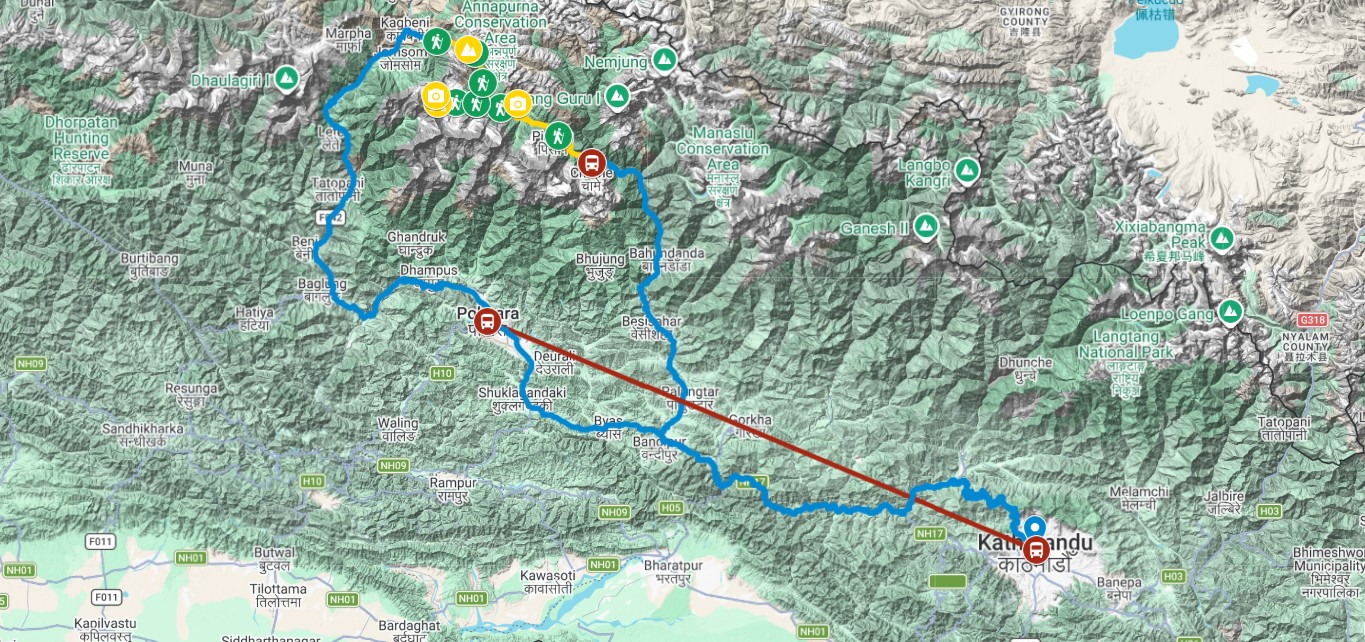
Cost and itinerary length move together on this route, since every extra day on the trail adds another round of guide, porter, lodging, and food charges even before group size is factored in. The two Lhasso Adventure departures priced throughout this guide, 17 days and 14 days, sit at opposite ends of that trade-off, with the shorter package leaning on more vehicle support to fit two lake detours into fewer total days.
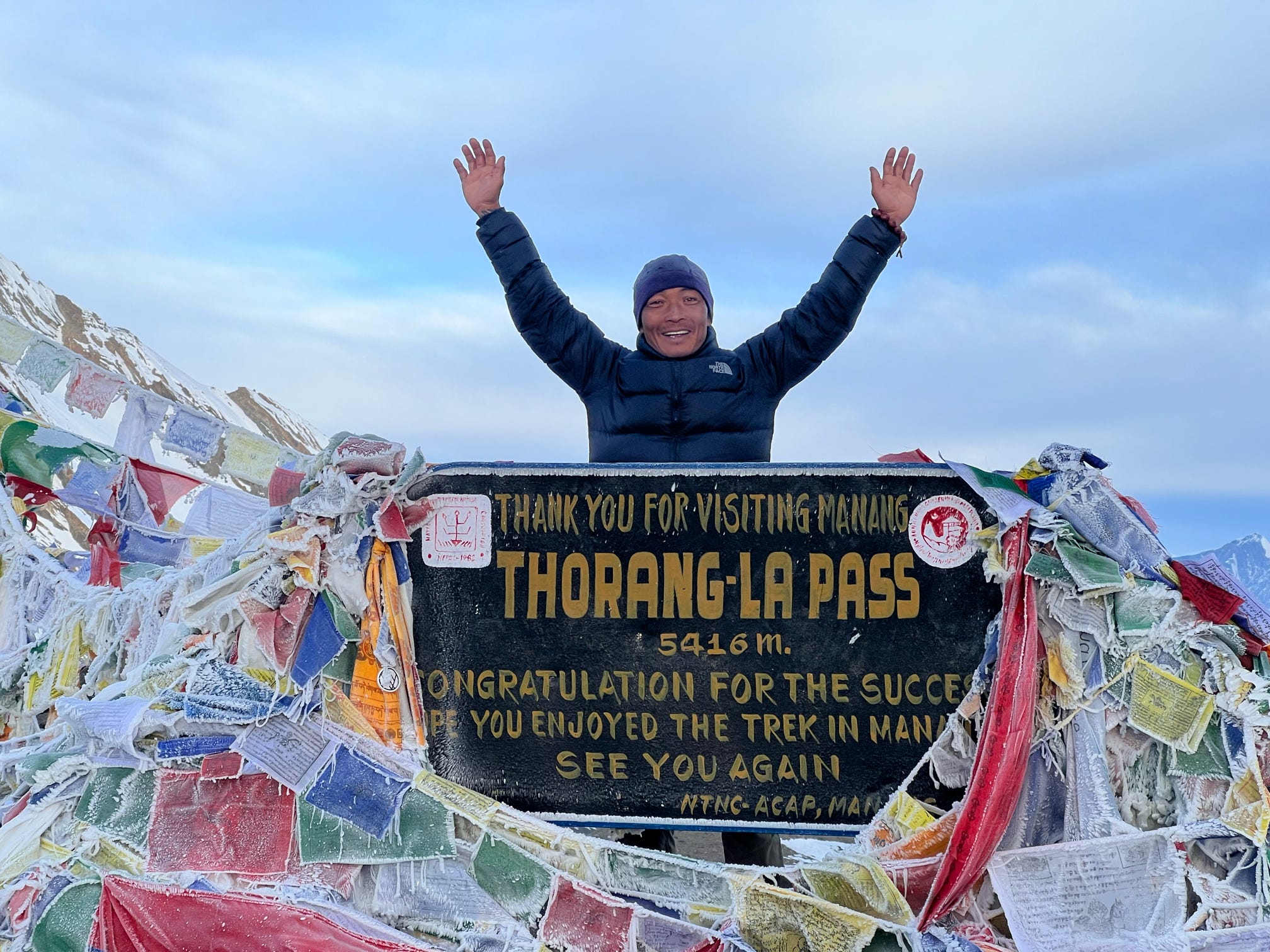
Budgeting realistically also means being honest about the 1,900-meter climb between Manang and the 5,416-meter Thorong La crossing, since a cheaper, compressed itinerary that skips acclimatization time raises both altitude risk and, if something goes wrong, your eventual cost through emergency evacuation and insurance claims. A well-built itinerary spends its rest days at the right altitude rather than cutting them to save a night’s lodging.
Comparing Annapurna Circuit Trek Cost to Other Himalayan Treks
Placing the Annapurna Circuit package price next to other Nepal treks helps put the cost into perspective. The Everest Base Camp trek typically runs somewhat higher across comparable group sizes, largely because the domestic Lukla flight adds a fixed cost that the Annapurna Circuit’s road access doesn’t carry.
The Manaslu Circuit tends to cost more per person despite a similar length, largely due to its restricted-area permit fees, which run considerably higher than the Annapurna Conservation Area Permit. Annapurna Base Camp, by contrast, typically runs lower than either Annapurna Circuit package, given its shorter duration and lower permit fees.
What holds fairly constant across all these comparisons is that per-day cost scales with remoteness and permit complexity more than with a destination’s name recognition.
Frequently Asked Questions for Annapurna Circuit Cost
Is the Annapurna Circuit trek expensive?
The trek sits in a moderate price range for a guided high-altitude trip of this length, with much of the cost reflecting genuine logistical complexity in a remote region rather than markup.
How do I manage my Annapurna Circuit trek budget?
Booking with a larger group departure, setting a daily personal spending estimate, and carrying enough cash before departure are the most effective ways to manage overall cost without cutting into safety-related services.
Can I trek the Annapurna Circuit without a guide?
Current Nepal tourism regulations require a licensed local guide for trekkers in the Annapurna Conservation Area, making a fully guideless trek no longer a standard option.
Can I do just Ice Lake without the full 14-day Tilicho package?
Ice Lake is bundled into the 14-day departure as a single acclimatization-day hike from Manang, so it isn’t sold as a separate standalone add-on to the 17-day route; the 14-day package is the way to include it.
Is it worth paying more for a smaller group departure?
It depends on priorities. A smaller group costs more per person but usually means more flexible pacing, while a larger group brings the price down without changing the route or safety standard.