Lukla Airport: The Complete Guide to Flights, Delays, and the Gateway to Everest Base Camp
July 20, 2026 Lhasso Adventure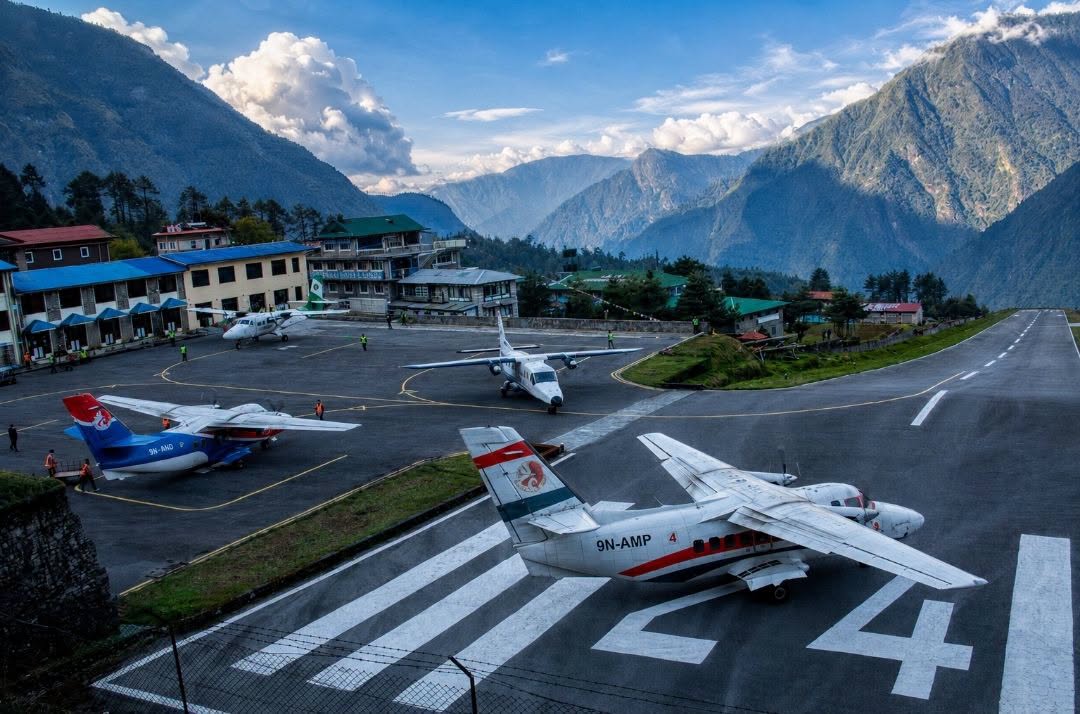
For most trekkers heading to Everest Base Camp, the adventure doesn’t begin on the trail, it begins with a mountain flight to Lukla Airport. Known for its dramatic runway, unpredictable weather, and breathtaking Himalayan scenery, Lukla is one of the world’s most talked-about airports and the main gateway to Nepal’s Everest region.
If you’ve been researching the Everest Base Camp Trek, you’ve probably also heard stories about Lukla flights being delayed, cancelled, or even described as one of the most thrilling flights in the world. While these stories often sound intimidating, understanding how the airport operates can help you travel with confidence and realistic expectations.
Despite its reputation, thousands of trekkers, climbers, guides, and local residents fly through Lukla every year. Flights are carefully scheduled during the early morning when weather conditions are generally more stable, and they’re operated by highly experienced mountain pilots who are specially trained for Himalayan flying.
This guide explains everything you need to know before flying to Lukla Airport, including flight schedules, baggage limits, weather conditions, common causes of delays, safety, permits, and practical travel tips. Whether it’s your first trek or you’re returning to the Khumbu region, this guide will help you prepare for one of the most memorable flights in Nepal.
What Is Lukla Airport?
Lukla Airport, officially known as Tenzing-Hillary Airport, is the main gateway to Nepal’s Everest region. Located at an altitude of 2,860 metres (9,383 feet), it serves as the starting point for some of the world’s most iconic Himalayan treks, including the Everest Base Camp Trek, Gokyo Lakes Trek, and Everest Three Passes Trek.
Unlike large international airports, Lukla is a small mountain airstrip built to connect the remote communities of the Khumbu region with the rest of Nepal. Every trekking season, thousands of travellers arrive here before beginning their journey on foot toward Namche Bazaar and the higher Himalayan villages.
The airport is named after Sir Edmund Hillary and Tenzing Norgay, whose successful ascent of Mount Everest in 1953 remains one of the greatest achievements in mountaineering history. It was later developed with Sir Edmund Hillary’s support to improve transportation and access for local Sherpa communities.
Although Lukla Airport is best known among trekkers, it also plays a vital role for the people who live in the Everest region. Daily flights transport food supplies, medical equipment, construction materials, and other essential goods to villages that have no road connection.
Today, Lukla Airport is far more than just an arrival point. It’s where the rhythm of the Everest region begins, bringing together trekkers, climbers, guides, porters, and local residents before they continue their journey into the Himalayas
Quick Facts About Lukla Airport
Before diving into the details, here’s a quick overview of the airport that serves as the gateway to the Everest region.
|
Feature |
Details |
| Official Name | Tenzing-Hillary Airport |
| IATA Code | LUA |
| Location | Lukla, Solukhumbu District, Nepal |
| Elevation | 2,860 metres (9,383 feet) |
| Runway Length | Approximately 527 metres |
| Runway Surface | Asphalt |
| Runway Gradient | Around 12% uphill |
| Flight Duration |
30–40 minutes from Kathmandu (around 20 minutes from Ramechhap) |
| Main Airlines | Tara Air, Summit Air, Sita Air |
| Operating Hours | Early morning (weather permitting) |
These figures help explain why Lukla Airport attracts so much attention from travellers around the world. Its short runway, high elevation, and mountainous surroundings make it unlike almost any other airport, yet it continues to operate as the primary air link to the Everest region.
Why Is Lukla Airport So Famous?
Lukla Airport is famous because it combines spectacular Himalayan scenery with one of the world’s most unique airport settings. Its short runway, steep gradient, and mountainous location have earned it international recognition among pilots, trekkers, and travel enthusiasts alike.
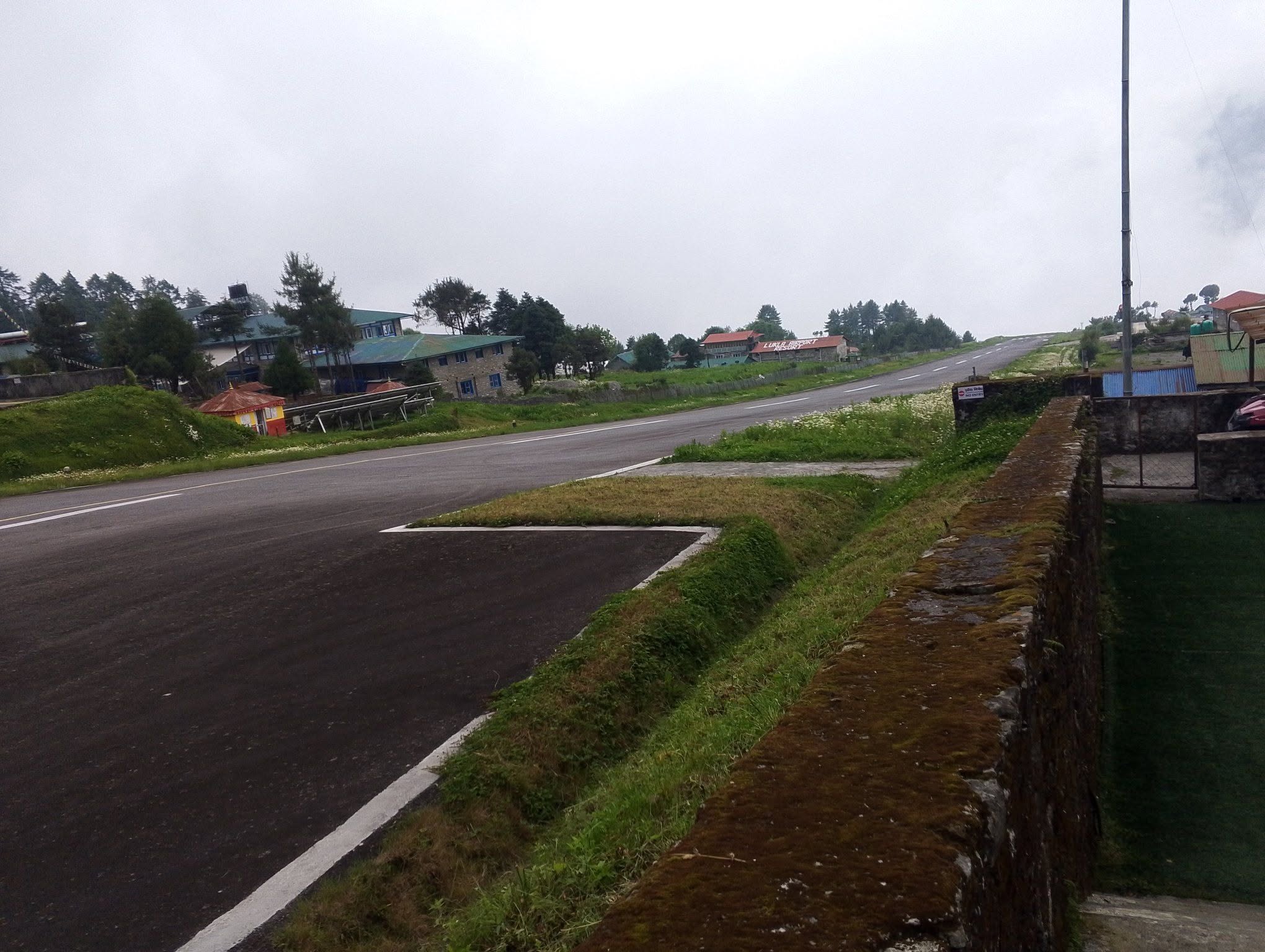
One of the airport’s most distinctive features is its runway. Measuring just over 500 metres in length, it slopes uphill towards a mountainside, while the opposite end overlooks a steep valley. This design helps aircraft slow down after landing, but it also means pilots have only one opportunity to complete the landing successfully.
The airport has frequently appeared in international travel documentaries, aviation programmes, and lists featuring some of the world’s most remarkable airports. These features have contributed to Lukla’s reputation, making the flight itself an experience that many travellers remember just as vividly as the trek that follows.
However, Lukla’s importance extends beyond its dramatic runway. For the Sherpa communities of the Khumbu region, it serves as a vital transportation hub that supports tourism, local businesses, healthcare, and everyday life. Nearly every Everest expedition and most Everest Base Camp trekkers begin their journey here.
Rather than viewing Lukla simply as an airport, it’s better understood as the entrance to one of the world’s most celebrated mountain landscapes. The moment you step off the aircraft, you’ll already be surrounded by Himalayan peaks, colourful prayer flags, and the unique atmosphere that makes the Everest region so unforgettable.

Is Lukla Airport Safe?
Yes, Lukla Airport is considered safe when weather conditions are suitable for flying. Although it is widely recognised as one of the world’s most challenging airports due to its terrain and weather, flights are operated under strict safety procedures by pilots specially trained in mountain aviation.
The airport’s reputation comes largely from its geography rather than its day-to-day operations. The runway is short, the surrounding mountains limit flight paths, and weather conditions can change quickly. Because of these factors, pilots rely on visual flying conditions, and flights are delayed or cancelled whenever visibility doesn’t meet safety requirements.
This cautious approach is one of the reasons flight delays are common. Instead of taking unnecessary risks, airlines simply wait for better weather before departing. While this may affect travel plans, it helps ensure that safety remains the highest priority throughout the trekking season.
Nepal’s mountain pilots undergo specialised training before flying routes into Lukla, gaining experience with high-altitude operations, narrow valleys, and rapidly changing weather patterns. Their familiarity with the region plays an important role in making these flights as safe as possible.
For travellers, the best way to prepare is to remain flexible. Building extra days into your itinerary and understanding that weather can affect flight schedules will make the experience far less stressful and allow you to focus on the adventure ahead.
How Do You Fly to Lukla Airport?
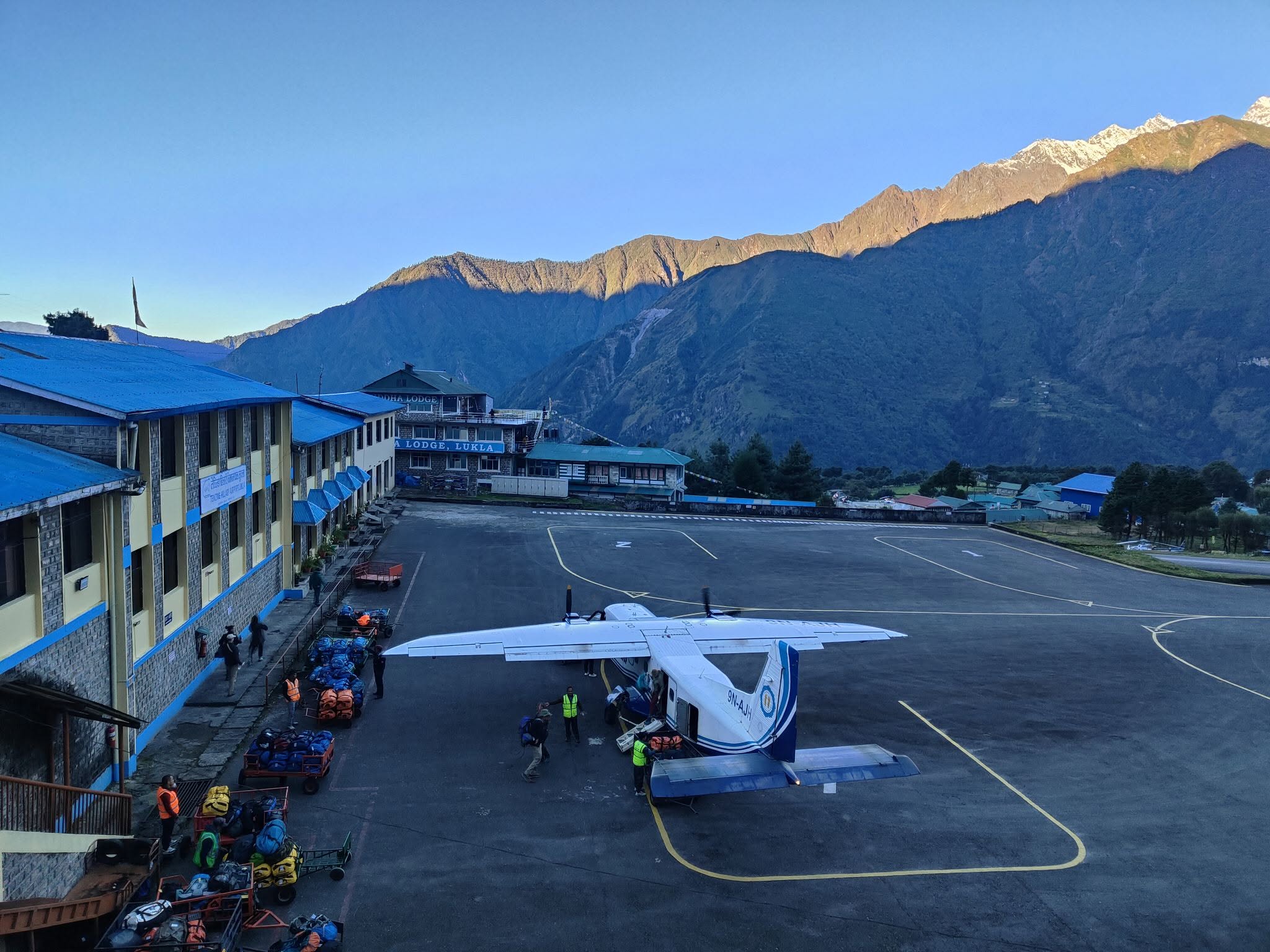
The most common way to reach Lukla Airport is by taking a domestic flight from Kathmandu or Ramechhap. These short mountain flights are the primary connection between Nepal’s capital and the Everest region, carrying trekkers, climbers, guides, and local residents throughout the year.
Historically, almost every Lukla flight departed directly from Kathmandu. However, during the busy spring and autumn trekking seasons, many flights are temporarily shifted to Ramechhap Airport (Manthali Airport) to reduce congestion at Kathmandu’s domestic terminal.
Regardless of the departure airport, the experience remains similar once you’re in the air. As the aircraft climbs above the Kathmandu Valley, the landscape gradually transforms into rolling green hills, deep river valleys, and eventually the snow-covered Himalayan peaks that make this one of Nepal’s most scenic flights.
Although the journey itself is relatively short, weather conditions play a major role in determining flight schedules. Early morning departures are preferred because mountain visibility is generally better and winds are usually calmer than later in the day.
If you’re planning an Everest Base Camp Trek or another adventure in the Khumbu region, it’s worth confirming your departure airport well before your travel date, as seasonal flight arrangements can change.
Why Do Some Lukla Flights Depart from Ramechhap Instead of Kathmandu?
During Nepal’s busiest trekking seasons, many Lukla flights operate from Ramechhap rather than Kathmandu. This temporary arrangement helps reduce air traffic congestion and allows more mountain flights to operate efficiently during periods of high demand.
Kathmandu’s domestic airport handles flights across Nepal while also accommodating international arrivals and departures. As trekking numbers increase during spring and autumn, the airport becomes considerably busier. Moving Lukla flights to Ramechhap helps minimise delays caused by limited runway availability.
Ramechhap is located approximately 130 kilometres (80 miles) east of Kathmandu. Reaching the airport usually involves a road journey of 4 to 5 hours, which often begins very early in the morning, or even the night before, to connect with the first flights of the day.
Although the additional drive can seem inconvenient, the actual flight from Ramechhap to Lukla is shorter than the flight from Kathmandu. Many trekkers find that, once airborne, the overall experience remains just as memorable.
Outside the main trekking seasons, flights commonly return to Kathmandu, although operational decisions always depend on airport traffic and weather conditions.
| Departure Airport | Typical Use | Approximate Flight Time |
| Kathmandu (KTM) | Off-season and selected flights | 30–40 minutes |
| Ramechhap (RHP) | Peak trekking seasons | 20–25 minutes |
Which Airlines Operate Flights to Lukla?
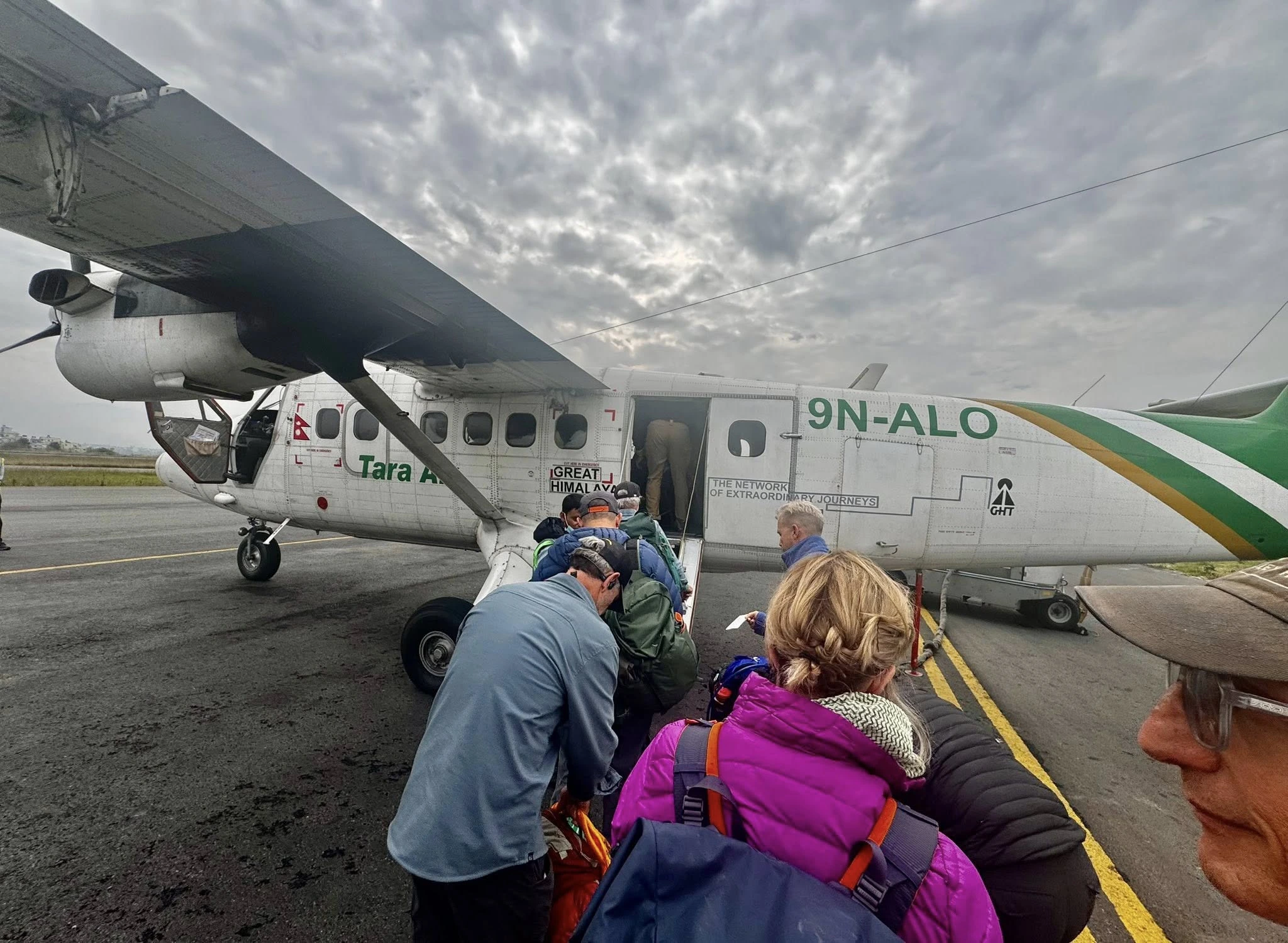
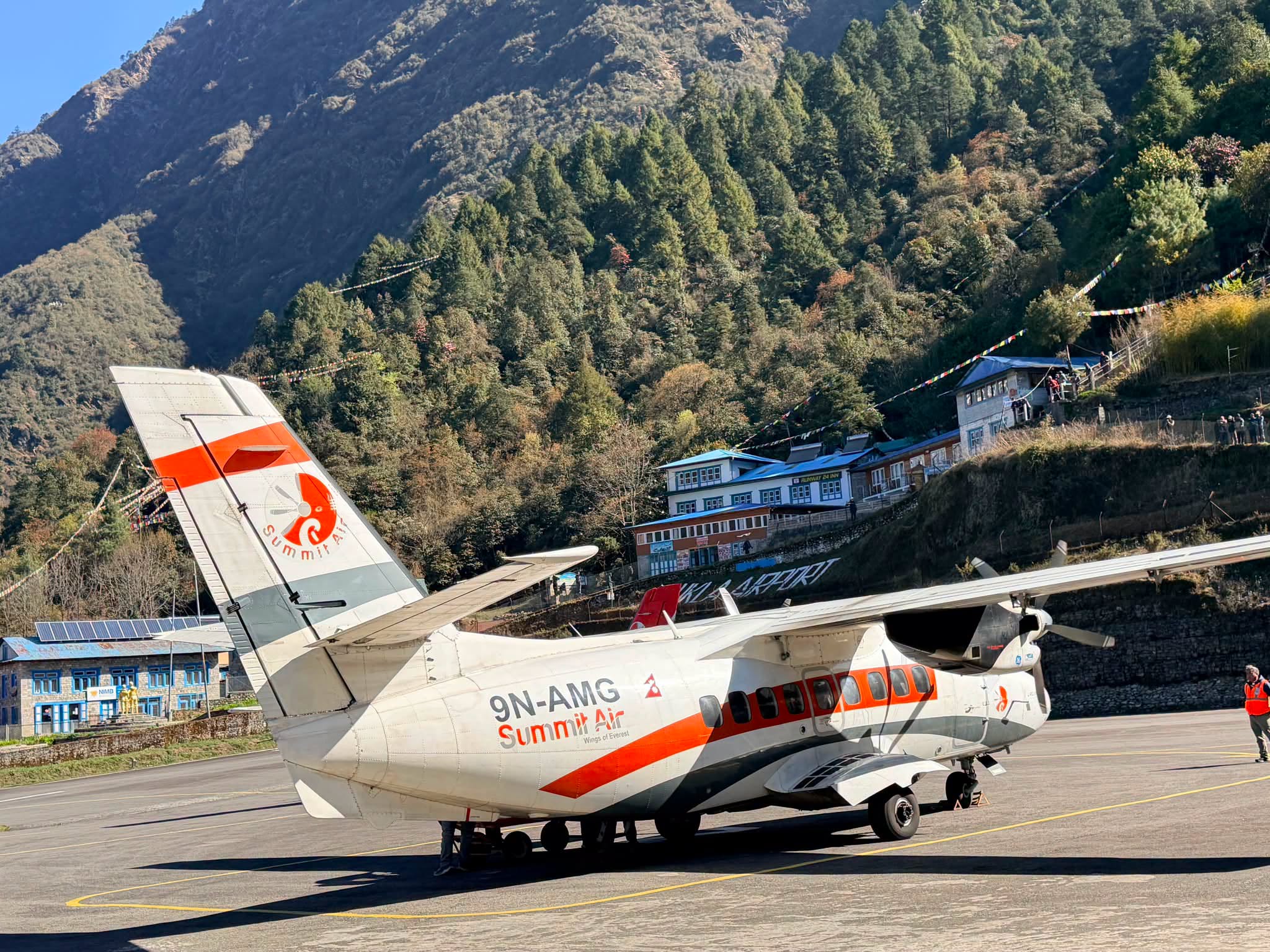
Several Nepalese domestic airlines operate scheduled flights to Lukla, using aircraft specifically designed for short take-offs and landings in mountainous terrain. These airlines have extensive experience flying in the Himalayas and are accustomed to Nepal’s unique operating conditions.
The airlines serving Lukla may vary slightly from season to season, but the most common operators include:
-
Tara Air
-
Summit Air
-
Sita Air
These airlines primarily use reliable Twin Otter and Dornier aircraft, both of which are well suited to Nepal’s mountain airports. Their ability to operate on shorter runways makes them ideal for destinations like Lukla.
While travellers sometimes compare airlines before booking, it’s important to remember that weather conditions affect all operators equally. Flight schedules are generally determined by visibility and safety rather than by the airline itself.
For this reason, choosing a flight based solely on departure time or price is usually more practical than trying to identify a “better” airline. All scheduled carriers follow the same aviation regulations and operate within the same mountain environment.
How Long Is the Flight to Lukla?
A flight to Lukla is surprisingly short, but it’s widely considered one of the most scenic journeys in Nepal. From Kathmandu, the flight usually takes around 30 to 40 minutes, while flights from Ramechhap typically take about 20 to 25 minutes.
Although the journey doesn’t last long, the views often become one of the highlights of the entire Everest experience. Shortly after take-off, passengers can enjoy dramatic landscapes that include forested hills, winding rivers, traditional villages, and snow-covered Himalayan peaks.
As the aircraft approaches Lukla, the scenery becomes even more impressive. The surrounding mountains appear much closer, and the descent into the narrow valley offers a unique perspective that can’t be experienced from the trekking trail.
Many travellers consider this flight to be the unofficial beginning of their Himalayan adventure, making it an experience that’s remembered long after the trek itself.
What Is the Baggage Allowance for Lukla Flights?
Because aircraft flying to Lukla are small and operate in high-altitude conditions, baggage allowances are more limited than on larger domestic or international flights. Travelling light helps ensure safe aircraft performance and smoother operations.
Although allowances can vary slightly between airlines, most passengers are generally permitted:
| Baggage Type | Typical Allowance |
| Checked baggage | 10 kg (22 lbs) |
| Hand luggage | 5 kg (11 lbs) |
| Total | 15 kg (33 lbs) |
If your luggage exceeds the permitted weight, you may be required to pay an additional baggage fee or make alternative arrangements, depending on aircraft capacity.
For trekkers, careful packing is especially important. Bringing only essential clothing and equipment makes travel easier and also reduces the weight that guides or porters may need to carry once the trek begins.
Before travelling, it’s worth checking that your backpack contains only the essentials. Carrying unnecessary weight can make long days on the trail more tiring, particularly on high mountain passes. The same packing principles apply to most Himalayan treks, including Everest Base Camp.
Why Are Lukla Flights Frequently Delayed?
Lukla flights are often delayed because weather conditions in the Himalayas can change rapidly. Unlike many airports, flights to Lukla operate under visual flying conditions, meaning pilots need clear visibility to safely navigate the surrounding mountains and land on the airport’s short runway.
Most flights are scheduled early in the morning, when skies are generally calmer and visibility is at its best. As the day progresses, clouds, wind, and changing mountain weather can reduce visibility, increasing the likelihood of delays or cancellations.
Although waiting for a flight can be frustrating, these delays are an important part of mountain aviation safety. Airlines prioritise suitable weather conditions rather than operating on a fixed timetable, helping ensure that flights only depart when it is safe to do so.
For travellers, the best approach is to remain flexible. Delays are a normal part of travelling to the Everest region and should be considered when planning your overall itinerary.
What Is the Weather Like at Lukla Airport?
The weather at Lukla Airport changes throughout the year and has a direct impact on flight operations. Clear mornings are common during the main trekking seasons, while cloud, rain, snowfall, or strong winds can occasionally interrupt flights.
The most stable flying conditions are usually found during spring (March to May) and autumn (late September to November). These months also coincide with Nepal’s busiest trekking seasons, offering better mountain views and a higher likelihood of successful flight operations.
During the summer monsoon (June to August), heavy rainfall and low clouds often reduce visibility, making delays and cancellations more frequent. Winter brings colder temperatures and generally clear skies, although occasional snowfall and frost can also affect flights.
Because mountain weather is highly localised, conditions in Kathmandu or Ramechhap may be completely different from those in Lukla. A clear day in one location doesn’t always mean flights can operate safely in another.
| Season | Typical Flying Conditions |
| —Spring (Mar–May) | Clear mornings, stable weather, excellent visibility |
| Summer / Monsoon (Jun–Aug) | Frequent rain, cloud, and reduced visibility |
| Autumn (Sep–Nov) | Stable weather and some of the year’s best flying conditions |
| Winter (Dec–Feb) | Cold but often clear, with occasional snowfall |
If you’re deciding when to visit the Everest region, weather is just one factor to consider. Trail conditions, temperatures, and crowd levels also vary throughout the year, making it helpful to plan your trek well in advance.
What Happens If Your Lukla Flight Is Cancelled?
If your Lukla flight is cancelled, you’ll usually be rebooked on the next available flight once weather conditions improve. Airlines work to accommodate affected passengers, although waiting times can vary depending on demand and the length of the weather disruption.
During peak trekking seasons, flights often operate at full capacity. This means that if cancellations continue for more than one day, there may be a backlog of passengers waiting to travel. Patience and flexibility become especially important in these situations.
Your trekking company or guide will usually help coordinate revised travel plans and keep you informed about flight updates. If you’re travelling independently, it’s a good idea to stay in regular contact with your airline and accommodation provider while waiting for further information.
Some travellers choose to take a helicopter if flights are delayed for an extended period. While this option can reduce waiting time, helicopter services depend on weather conditions as well and are generally more expensive than scheduled flights.
Although cancellations can affect your plans, they’re ultimately a reflection of Nepal’s strong focus on mountain aviation safety. Waiting an extra day is always preferable to flying in unsuitable conditions.
Should You Include Buffer Days in Your Everest Itinerary?
Yes. Including buffer days is one of the best ways to reduce travel stress when flying to or from Lukla. Since mountain weather is unpredictable, allowing extra time in your itinerary provides flexibility if flights are delayed or cancelled.
Many experienced trekkers plan two or three additional days at the end of their Everest trip before their international departure. This extra time creates a safety margin without affecting the overall experience of the trek.
Buffer days also allow you to enjoy Kathmandu at a more relaxed pace after returning from the mountains. Rather than worrying about a tight schedule, you can spend time exploring the city’s cultural sites, cafés, or local markets while waiting for your onward flight.
Although adding a few extra days may slightly increase your travel costs, it often saves far more inconvenience than trying to rearrange international tickets at the last minute.
Can You Take a Helicopter Instead of Flying?
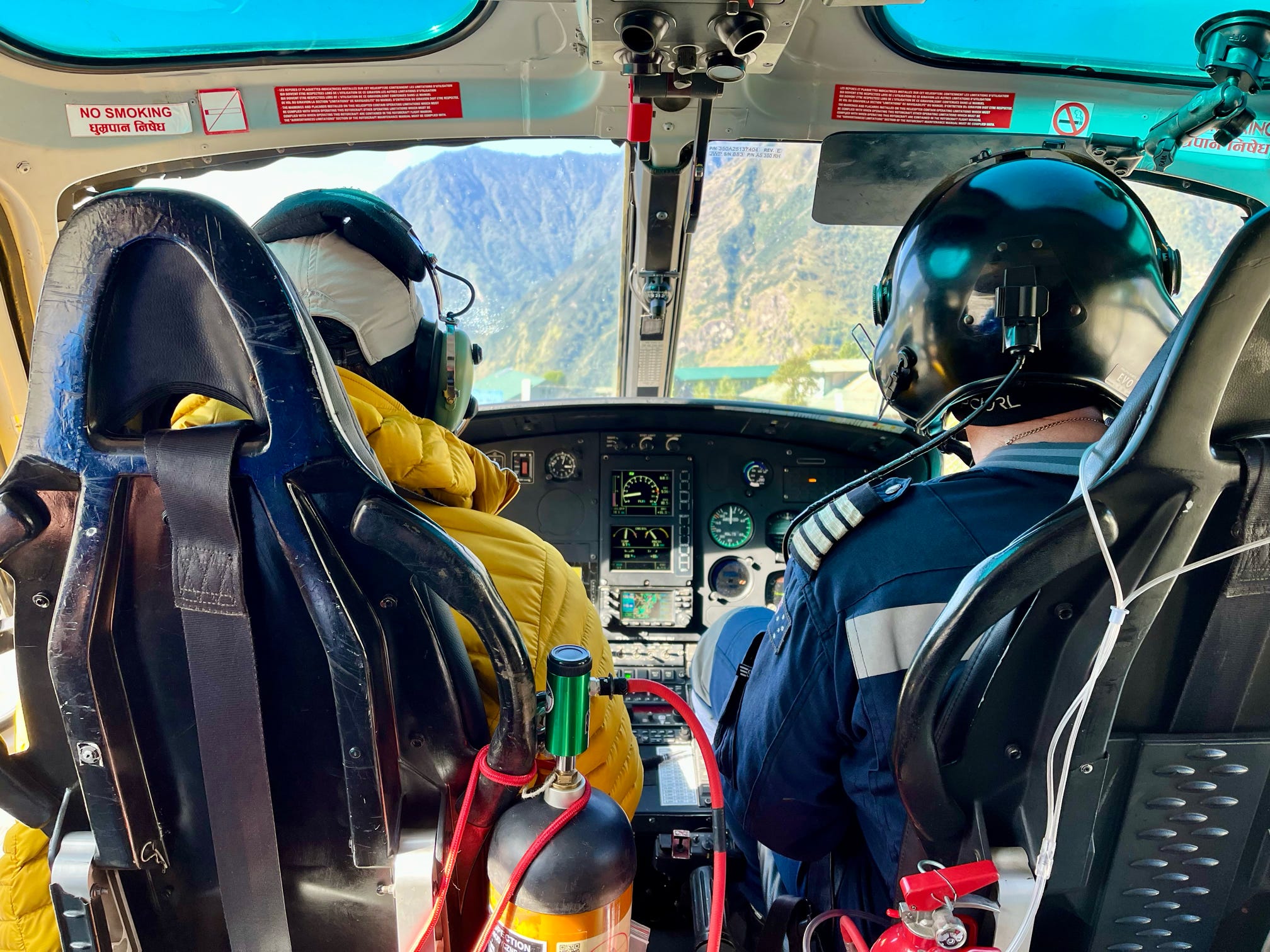
Yes. Helicopter flights are available between Kathmandu and Lukla and are sometimes used when scheduled flights are delayed or cancelled. They can also be arranged privately or as part of a shared charter, depending on availability.
Helicopters offer greater flexibility than fixed-wing aircraft and may operate in weather conditions that prevent regular flights, although they are still subject to safety restrictions. If visibility is poor or conditions become unsafe, helicopter departures may also be postponed.
For some travellers, sharing a helicopter with other passengers helps reduce costs while providing a quicker alternative to waiting several days for the next available flight. Availability, however, depends on demand and operational conditions.
Whether you choose a scheduled flight or a helicopter, weather remains the deciding factor. No aircraft will operate unless conditions meet the required safety standards.
What Should You Expect After Landing at Lukla Airport?
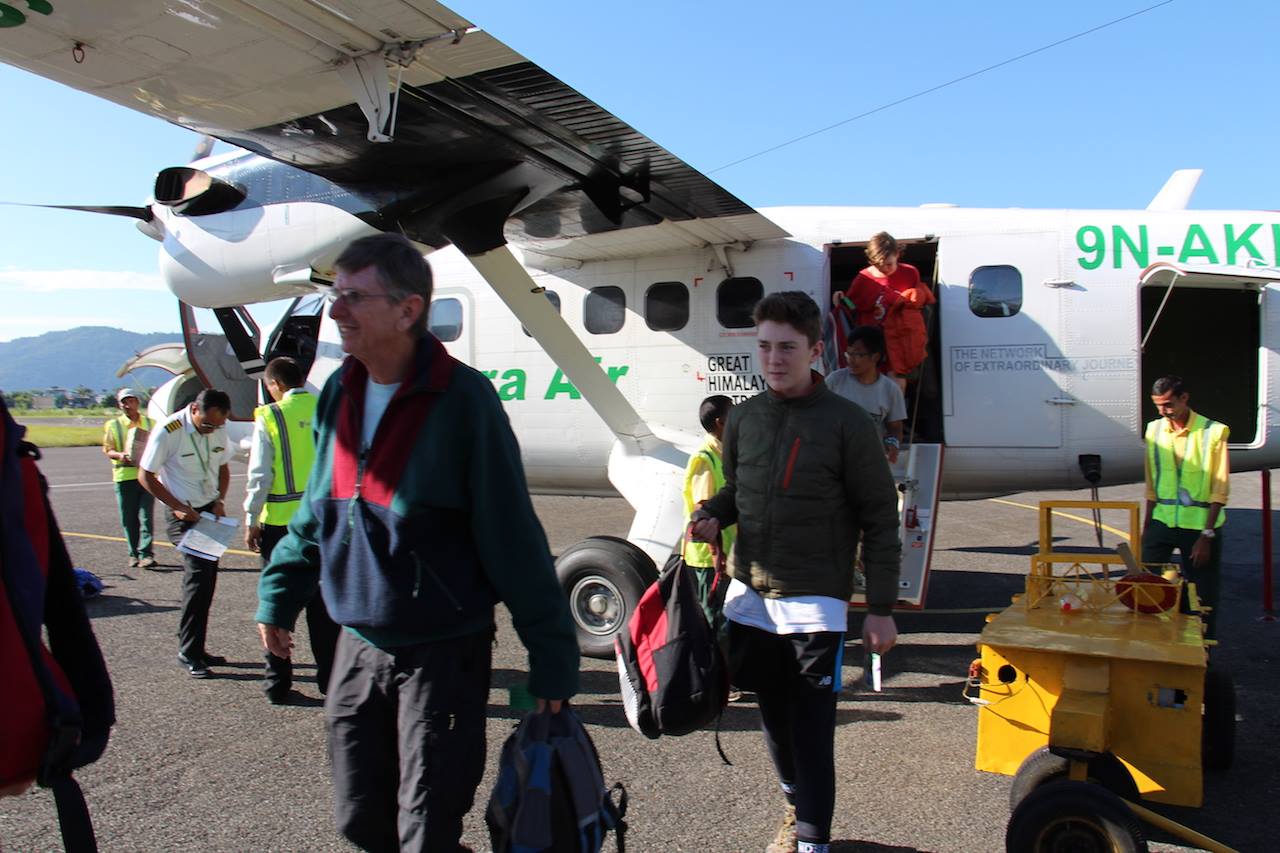
Landing at Lukla Airport marks the beginning of your Himalayan adventure. Once you step off the aircraft, you’ll immediately notice the cooler mountain air, surrounding peaks, and the lively atmosphere created by trekkers, guides, porters, and local residents preparing for the day ahead.
Unlike large airports, Lukla has a small terminal where luggage is unloaded manually. Collecting your bags is usually straightforward, and you’ll often find guides and trekking staff waiting outside to welcome their groups.
Before starting the trek, many travellers spend a little time organising their equipment, adjusting backpacks, or enjoying breakfast in one of the nearby cafés. This short break also gives your body a chance to adapt to the higher altitude before you begin walking.
Although the excitement to start trekking is understandable, it’s worth taking a few moments to check your gear, refill your water bottle, and make sure you have easy access to essentials such as sunscreen, a jacket, and trekking poles.
For most itineraries, the first day’s walk continues to Phakding, making it a gentle introduction to trekking in the Everest region.
Which Trekking Routes Begin at Lukla?
Lukla is the starting point for several of Nepal’s most iconic trekking routes. While the Everest Base Camp Trek is the best known, the airport also provides access to many other adventures throughout the Khumbu region.
The most popular route follows the trail through Phakding, Namche Bazaar, Tengboche, Dingboche, and Lobuche before reaching Everest Base Camp. This classic journey combines spectacular mountain scenery with Sherpa culture, Buddhist monasteries, and unforgettable Himalayan landscapes.
For trekkers looking for a longer and more challenging experience, the Everest Three Passes Trek explores high mountain passes, remote valleys, and additional viewpoints while connecting many of the Everest region’s highlights.
Another favourite is the Gokyo Lakes Trek, known for its turquoise alpine lakes, peaceful trails, and panoramic views from Gokyo Ri. Some trekkers even combine this route with Everest Base Camp to create a more comprehensive Himalayan adventure.
Regardless of the route you choose, Lukla remains the gateway to the Khumbu region, connecting travellers with some of the world’s most celebrated mountain trails.
Do You Need Permits for Trekking from Lukla?
Yes. Most treks that begin in Lukla require trekking permits before entering the Everest region. These permits help support conservation efforts, local communities, and the management of trekking routes.
For the Everest Base Camp Trek and many neighbouring routes, trekkers generally need:
-
Sagarmatha National Park Entry Permit
-
Khumbu Pasang Lhamu Rural Municipality Permit
These permits are checked at various points along the trail, so it’s important to keep them easily accessible throughout your trek.
If you’re travelling with a trekking company, permit arrangements are usually handled before the trek begins. Independent trekkers, however, should make sure they obtain the required permits before entering the restricted areas.
Since permit regulations can occasionally change, it’s always a good idea to confirm the latest requirements while planning your trip.
Where Can You Stay in Lukla?
Although many trekkers begin walking soon after arriving, Lukla also has a good selection of teahouses, lodges, and small hotels for those spending a night before or after their trek.
Accommodation ranges from simple family-run lodges to more comfortable guesthouses with private rooms and hot showers. Most properties also have dining areas where travellers can enjoy traditional Nepali meals, warm drinks, and meet other trekkers preparing for their journey.
During the busiest trekking seasons, accommodation in Lukla can fill quickly, particularly when poor weather delays flights and additional travellers remain in the village. Booking through your trekking company or reserving in advance can provide extra peace of mind.
Spending a night in Lukla can also be a good option if your flight arrives later in the day or if you’d simply prefer to begin trekking the following morning feeling well rested.
Essential Tips Before Starting Your Trek
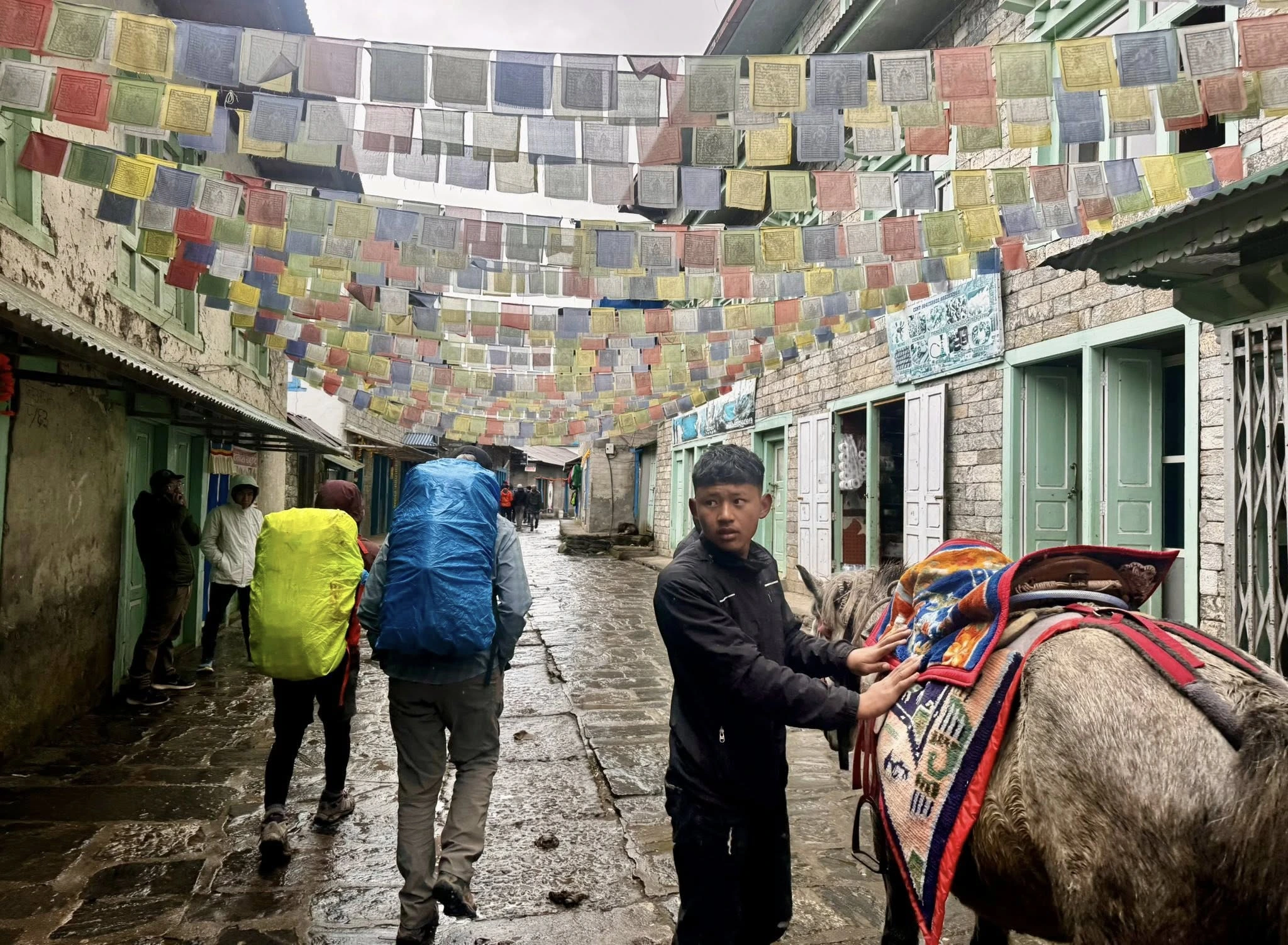
A little preparation in Lukla can make the first days of your trek much more comfortable. Before leaving the village, take a few minutes to organise your equipment and ensure everything you’ll need during the day is easy to access.
Before setting off, it’s worth checking that you have:
- Your trekking permits and identification.
- A reusable water bottle and purification method.
- Warm clothing, even if the morning feels sunny.
- Snacks for the day’s walk.
- Sunscreen, sunglasses, and lip balm.
- Cash for personal purchases along the trail.
It’s also important to begin the trek at a comfortable pace. The excitement of reaching Lukla often encourages people to walk too quickly, but a steady rhythm makes it easier to adjust to the increasing altitude over the coming days.
Finally, take a moment to enjoy the atmosphere before leaving the village. For many trekkers, this is the point where months of planning become a reality, making Lukla a memorable part of the Everest experience in its own right.
Essential Travel Tips for Flying to Lukla Airport
A little preparation before your Lukla flight can make your journey to the Everest region much smoother. Since mountain flights depend on weather conditions and operate differently from regular domestic flights, planning ahead helps you travel with greater confidence.
Before your trip, confirm your departure airport, as flights may leave from either Kathmandu or Ramechhap depending on the trekking season. Checking your flight details a day or two before departure helps avoid last-minute surprises.
Pack carefully and keep essential items such as your passport, trekking permits, medications, valuables, and a warm jacket in your carry-on bag. If checked luggage is delayed or you’re waiting at the airport for several hours, having these essentials with you makes the experience much more comfortable.
It’s also wise to carry some Nepalese Rupees before heading into the mountains. While you’ll find cafés, teahouses, and small shops in Lukla, cash remains the most convenient payment method throughout much of the Everest region.
Finally, approach your travel schedule with flexibility. Weather-related delays are a normal part of Himalayan travel, and allowing extra time in your itinerary will help you enjoy the experience without unnecessary stress.
Common Mistakes Travellers Make Before Flying to Lukla
Most Lukla journeys go smoothly, but a few common planning mistakes can create unnecessary challenges. Knowing what to expect before you travel helps you avoid these problems and enjoy a more relaxed start to your trek.
One of the biggest mistakes is planning an international departure immediately after returning from Everest. Since weather delays can affect flights in both directions, leaving no buffer days can create unnecessary pressure if your return flight is postponed.
Another common mistake is packing more than the baggage allowance. Lukla flights operate using small aircraft with limited capacity, so carrying unnecessary gear may result in additional baggage charges or the need to reorganise your luggage before boarding.
Some travellers also underestimate how much colder Lukla feels compared to Kathmandu. Wearing light clothing for your departure is fine, but keeping a warm jacket in your carry-on allows you to stay comfortable as soon as you land.
Finally, avoid relying entirely on mobile networks or internet access for travel updates. While connectivity has improved in recent years, weather and operational changes are usually communicated directly by airlines or trekking operators.
Interesting Facts About Lukla Airport
Lukla Airport isn’t only famous for its spectacular location, it also has a fascinating history and plays an essential role in daily life throughout the Everest region.
Here are a few interesting facts about Nepal’s most well-known mountain airport:
- The airport is officially named Tenzing-Hillary Airport in honour of Sir Edmund Hillary and Tenzing Norgay, who made the first confirmed ascent of Mount Everest in 1953.
- Lukla sits at an elevation of 2,860 metres (9,383 feet) above sea level.
- Its runway measures approximately 527 metres, making it one of the shortest commercial runways in regular use.
- The runway has a noticeable uphill slope, helping aircraft slow down after landing.
- Flights usually operate during the early morning when visibility and weather conditions are most favourable.
- Lukla has no road connection to Kathmandu, making air travel the quickest way to reach the Everest region.
- Besides tourism, the airport is a vital transport link for local communities, delivering food, medical supplies, construction materials, and everyday goods.
These facts help explain why Lukla Airport is recognised around the world. While it’s often described as one of the most unique airports on Earth, it’s also an essential part of life for the people living in Nepal’s Khumbu region.
Final Thoughts on Lukla Airport
For most trekkers, Lukla Airport is far more than a place to catch a flight, it’s where the Everest adventure truly begins. From the excitement of the mountain journey to the first steps along the trails of the Khumbu region, every part of the experience marks the start of an unforgettable Himalayan journey.
Although the airport is known for its short runway and weather-related delays, these are simply part of travelling in the mountains. Flights operate with safety as the highest priority, and understanding how mountain aviation works allows you to approach the journey with realistic expectations rather than unnecessary concern.
Preparing your itinerary carefully, travelling with flexible plans, and allowing a few extra days for possible delays will make your Everest adventure much more enjoyable. A little planning goes a long way, especially when trekking in one of the world’s most remarkable mountain regions.
Whether it’s your first visit to the Himalayas or another adventure in the Everest region, Lukla Airport is the place where unforgettable memories begin.

Frequently Asked Questions (FAQs) Lukla Airport – Tenzin Hillary Airport
Why is Lukla Airport so famous?
Lukla Airport is famous for its short uphill runway, dramatic Himalayan location, and its role as the main gateway to the Everest region. It is one of the world’s best-known mountain airports and the starting point for thousands of Everest trekkers each year.
Is Lukla Airport safe?
Yes. Although Lukla is considered one of the world’s most challenging airports due to its terrain and weather, flights are operated by experienced mountain pilots under strict safety procedures. Weather conditions are carefully assessed before every flight.
How long is the flight from Kathmandu to Lukla?
A direct flight from Kathmandu usually takes 30 to 40 minutes. During the peak trekking seasons, flights may depart from Ramechhap instead, reducing the flight time to around 20 to 25 minutes.
Why are Lukla flights delayed so often?
The main reason is changing mountain weather. Flights rely on good visibility, and airlines delay or cancel departures whenever conditions aren’t suitable for safe operations.
How much luggage can I take on a Lukla flight?
Most airlines allow approximately 10 kg of checked baggage and 5 kg of hand luggage, although allowances may vary slightly depending on the airline.
Should I include buffer days in my itinerary?
Yes. Most experienced trekkers recommend adding two or three buffer days before your international flight home. This provides flexibility if weather delays affect your return from Lukla.
Can I take a helicopter to Lukla?
Yes. Helicopter flights are available as private or shared charters and are often used when scheduled flights are heavily delayed. However, helicopter services also depend on suitable weather conditions.
What is the best time of year to fly to Lukla?
Spring (March to May) and autumn (late September to November) generally offer the most stable flying conditions and are also the most popular trekking seasons in the Everest region.