How Fit Do You Need to Be for the Everest Base Camp Trek?
August 1, 2026 Lhasso Adventure
You need moderate to good cardiovascular fitness and solid leg strength, not elite athletic conditioning, to complete the Everest Base Camp trek comfortably. Someone who can hike fifteen to twenty kilometers over hilly ground with a loaded daypack, on consecutive days, is usually fit enough for what the trail actually demands.
That’s the honest baseline, but fitness alone doesn’t guarantee an easy trip. Altitude changes the equation in ways gym numbers can’t fully predict, and two equally fit trekkers can have completely different experiences depending on how their bodies handle thin air. This guide walks through exactly what “fit enough” means here, broken down by the specific demands of the trail rather than a vague fitness rating.
What Fitness Level Do You Actually Need?
Moderate to good cardiovascular endurance, functional leg strength, and the ability to sustain five to eight hours of walking on consecutive days. That’s the core requirement, and it sits well within reach of most regular exercisers.
You don’t need to run marathons or lift heavy weights. What matters is stamina that holds up over long days, not short bursts of maximum effort. Someone who hikes regularly, cycles a few times a week, or trains at a gym three or four times a week generally has enough of a base to build on with focused preparation.
Fitness alone doesn’t control the other big variable here. The same trail that feels manageable near Lukla turns into a genuinely tougher physical test once daily walking hours and terrain difficulty increase past Dingboche, where thinner air changes what even a well-trained body can sustain. Fitness determines how comfortably you move. Acclimatization determines whether your body copes with the thinning air, and the two aren’t quite the same thing even though people often conflate them.
There’s a simpler way to think about the fitness bar here. If you can already do a full day of hiking on a weekend without needing the following week to recover, you’re closer to ready than you might think. The training block before departure isn’t about starting from zero. For most people it’s about extending stamina from a single good day to enough good days in a row to cover the trek’s full twelve to fourteen day duration, which is a different kind of challenge than raw strength or speed.
Why Fitness Level Matters More Than Prior Trekking Experience
A strong fitness base matters more for this trek than years of trekking experience. Someone who’s fit but has never trekked before often does better than someone with plenty of trail miles but a weak cardiovascular base.
Experience helps with things like packing smart, pacing mentally, and knowing what to expect from teahouse life. None of that replaces the raw physical capacity needed to walk five to eight hours a day for nearly two weeks straight. Trekkers who’ve done shorter, easier trails sometimes assume that experience alone will carry them through, and then find themselves struggling on day six purely because their cardiovascular fitness wasn’t where it needed to be.
The reverse also holds. A first-timer who trains seriously for two or three months, building real aerobic capacity and leg strength, frequently outperforms a casual hiker with a decade of trail experience but no structured preparation. Fitness is buildable in a way that experience, by definition, takes years to accumulate.
This shows up clearly in group departures. Guides often notice that the trekker who struggles most on day four isn’t the one who’s never trekked before, it’s the one who trekked casually for years without ever training specifically for sustained daily effort. Comfort on familiar trails back home doesn’t automatically transfer to twelve straight days of five to eight hour walks, especially once altitude enters the picture around Namche.
Cardiovascular Endurance: The Core Requirement
Cardiovascular endurance is the single most important fitness component for this trek, more important than raw leg strength or flexibility. The trail demands sustained moderate effort for hours at a time, and that’s exactly what cardio training builds.
Running, cycling, swimming, and stair climbing all build the aerobic base needed here, though not all of them translate equally well to actual trail conditions. Running builds excellent cardiovascular capacity but doesn’t load the legs the same way a loaded hike does. Stair climbing comes closer to the real demand, since it combines cardio output with the same muscles used on the trek’s stepped sections near Namche and Tengboche.
A reasonable target before departure: comfortable ability to sustain 45 to 60 minutes of continuous, moderate-intensity cardio, three to four times a week, for at least two months. This doesn’t need to be intense. Steady, repeatable effort matters far more than occasional hard sessions, since the trek itself is closer to a long, steady grind than a series of short sprints.
Heart rate zones offer a useful way to judge this without overcomplicating things. Training mostly in a zone where conversation is possible but a little breathless builds the kind of aerobic base the trek rewards, rather than training that leaves you gasping after a few minutes. Interval training has its place too, but it shouldn’t replace the longer, steadier sessions that mirror what the trail itself demands day after day, especially once the round trip’s roughly 130 kilometers between Lukla and Base Camp are broken down into daily stages rather than treated as one abstract total.
Leg Strength and Muscular Endurance
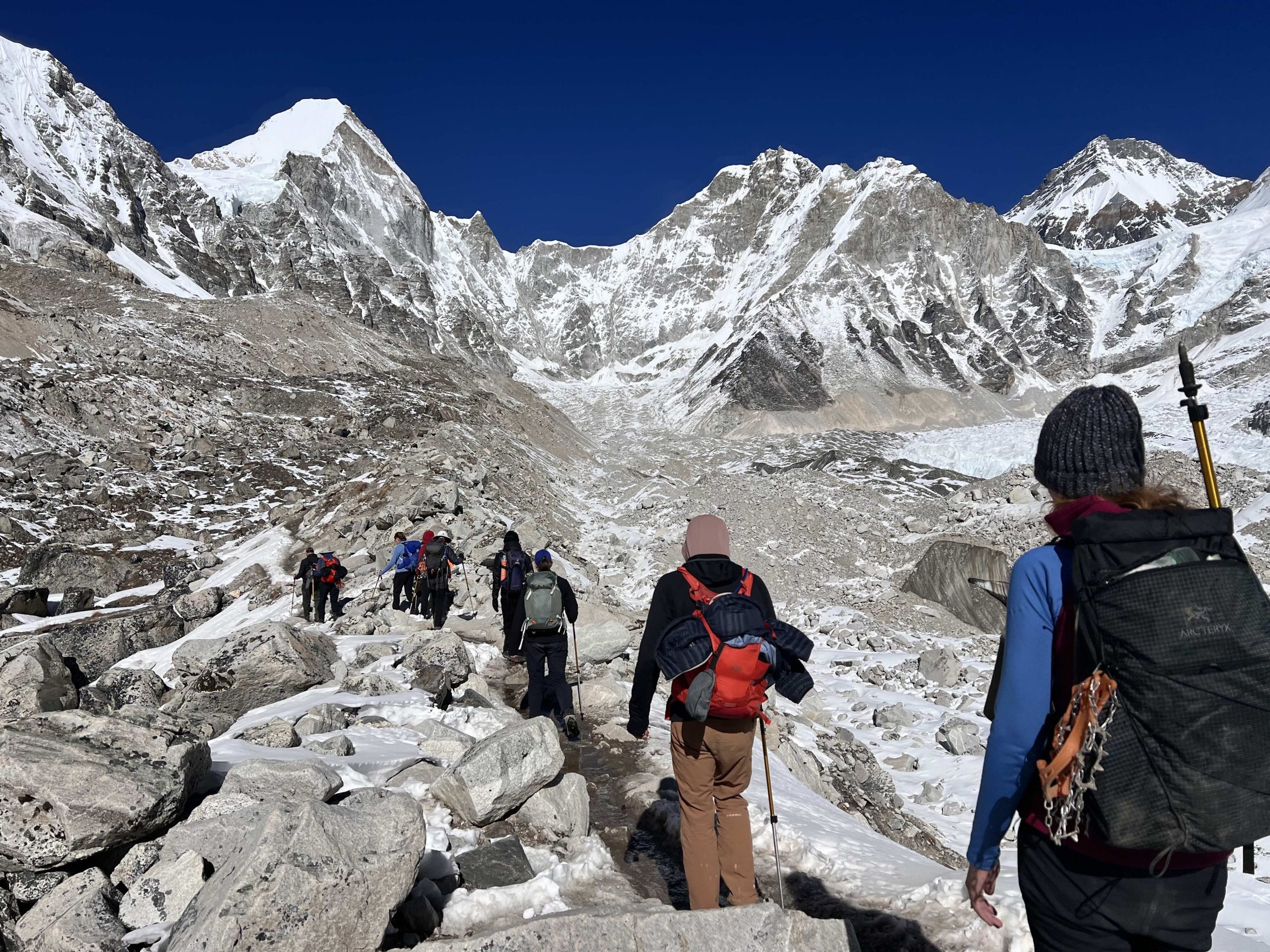
Leg strength shapes how comfortable the trek’s steep, stepped sections feel, particularly the climbs near Namche Bazaar and Tengboche where stone staircases gain significant elevation in short stretches. Weak legs don’t stop most trekkers from finishing, but they make the daily grind noticeably harder.
Quadriceps handle most of the load on ascents, while calves and hamstrings absorb more strain on the frequent descents that punctuate this route. Squats, lunges, and step-ups, done consistently over several weeks, build exactly the kind of strength these movements require. Trekkers who skip leg training and rely purely on cardio often find their legs fatiguing faster than their lungs, which is the opposite of what most people expect walking into the trek.
Descents deserve particular attention here, since they’re consistently underestimated. Coming down a long stone staircase for an hour puts more strain on the knees than climbing the same staircase does, and trekkers who haven’t trained for downhill walking sometimes find their legs shaking by the bottom of a long descent even if the climb up felt manageable.
Eccentric strength, the kind of control needed to lower the body slowly rather than just push it upward, is what most training plans skip entirely. Slow, controlled step-downs off a curb or low step build exactly this, and they’re worth adding alongside standard squats and lunges. Trekking poles help distribute some of this load away from the knees, but they work best as a supplement to trained leg strength, not a replacement for it, and they matter just as much on icy sections as they do on stone steps once the layered clothing system needed for sub-zero nights near Base Camp starts trading warmth for mobility.
Core Stability and Balance
Core strength plays a quieter role than cardio or leg strength, but it matters more than most trekkers expect once they’re actually on uneven terrain. A stable core helps with balance on loose ground and reduces strain from carrying a loaded daypack for hours at a time.
The glacial moraine sections past Lobuche test this directly, since the ground shifts underfoot in a way that flat trails simply don’t replicate. A weak core means more energy spent correcting small stumbles throughout the day, which adds up over a twelve to fourteen day trek even if no single stumble causes a problem. Planks, side planks, and basic rotational exercises, done two or three times a week, build enough stability for what the trail actually requires.
Balance training deserves a specific mention too, since it’s rarely part of standard gym routines. Single-leg exercises, even something as simple as standing on one foot while brushing your teeth, build the kind of proprioception that helps on the trek’s narrower, less predictable sections.
A loaded daypack changes core demands more than people expect, since even eight to ten kilograms shifts your center of gravity noticeably over hours of walking. Training with a similarly loaded pack on hikes beforehand, rather than always training empty-handed, conditions the core for the specific way weight behaves on uneven ground, which is different from how the same muscles respond in a gym setting.
How Age Affects Fitness Requirements
Age alone is a weak predictor of how someone handles this trek. Cardiovascular fitness, leg strength, and how closely someone follows the acclimatization schedule matter considerably more than the number on a birth certificate.
Trekkers in their sixties and seventies complete this route regularly, provided they’ve trained consistently and paced themselves sensibly on the trail. Younger trekkers in their twenties sometimes struggle more than expected, usually because they assume youth alone compensates for a lack of actual cardiovascular preparation. What changes with age isn’t capability so much as recovery speed, since older trekkers often benefit from slightly more conservative pacing and extra attention to sleep and nutrition along the route.
A doctor’s clearance becomes more relevant with age, particularly for trekkers over sixty or anyone with a pre-existing cardiovascular or respiratory condition regardless of age. This isn’t about disqualifying anyone. It’s about making sure the body’s baseline health matches the physical and altitude demands of a multi-day high-altitude trek before committing to one.
Older trekkers who succeed on this route tend to share one habit more than any other: they train earlier and more consistently than younger trekkers, often starting a full four to six months ahead rather than the standard eight to twelve weeks. That extra runway gives joints and cardiovascular systems more time to adapt gradually, which matters more the closer the itinerary gets to the trek’s highest point near 5,545 meters at Kala Patthar, where recovery windows shrink regardless of age.
Fitness Benchmarks Worth Testing Before You Book
A handful of practical tests give a much clearer picture of readiness than a gym membership or a general sense of being “in shape.” These benchmarks map directly to what the trail actually demands, rather than testing fitness in the abstract.
The most useful test: hike fifteen to twenty kilometers over hilly terrain with a loaded daypack, roughly eight to ten kilograms, on two consecutive days. If that feels manageable without severe soreness the following day, the baseline fitness is likely there. A second useful benchmark is stair climbing: comfortably climbing 500 to 1,000 steps continuously, without needing to stop and catch your breath repeatedly, mirrors the sustained climbing found near Namche Bazaar reasonably well.
A simple cardio check worth trying: can you hold a conversation while walking briskly uphill for ten minutes straight? If breathing is too labored to talk, more cardio conditioning is needed before departure. These tests aren’t pass or fail in a strict sense, but trekkers who struggle with them at sea level should expect the trail’s early days to feel considerably harder than expected, since altitude only compounds existing fitness gaps rather than creating new ones.
Testing recovery matters just as much as testing the effort itself. After a long training hike, note how you feel the next morning rather than just how you felt at the finish line. Lingering soreness that fades within a day is normal. Soreness that persists for three or four days suggests the body needs more base conditioning before it’s ready for back-to-back trekking days on the actual trail.
Can Beginners with No Trekking Experience Do This Trek?
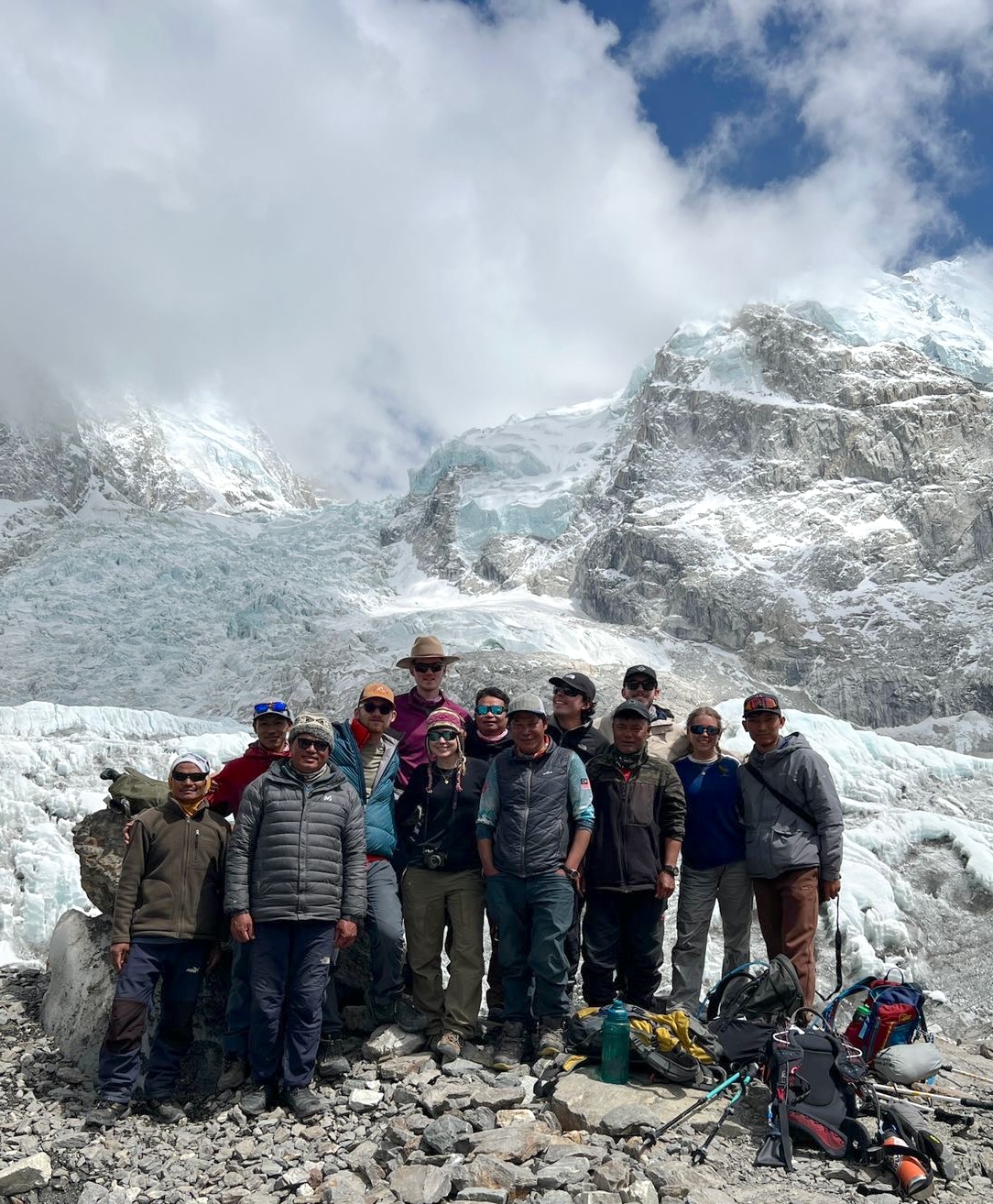
Yes, beginners with no prior trekking experience regularly complete this trek, provided they commit to genuine physical preparation in the months beforehand. Experience helps, but it isn’t a substitute for actual fitness.
The main risk for beginners isn’t the trekking itself but underestimating how different sustained daily walking feels compared to occasional weekend hikes. A beginner who trains consistently for eight to twelve weeks, building both cardio and leg strength, often arrives better prepared than an experienced hiker who assumes past trips will carry them through without any specific preparation. First-timers benefit from choosing a standard twelve to fourteen day itinerary rather than a compressed schedule, since the extra acclimatization time gives beginners a wider margin for error while their body adjusts to something entirely new.
Joining a group with an experienced guide, rather than attempting the route independently, also helps beginners considerably. Guides catch early signs of overexertion or altitude trouble that a first-timer might not recognize in themselves, and that kind of oversight matters more for someone who’s never dealt with high-altitude trekking before.
Beginners often worry most about the wrong thing before departure, usually fixating on distance or the highest point on the map rather than the cumulative effect of many moderate days back to back. In practice, the trekkers who struggle tend to be the ones who trained hard for a single tough hike and called it done, rather than building the kind of repeatable, day-after-day stamina the trek actually tests.
How Body Weight Factors Into Trek Difficulty
Body weight isn’t a disqualifying factor on its own, but it does influence how demanding the trek feels, particularly on the steep ascents and long descents. Trekkers carrying significant excess weight typically find the cardiovascular demand higher for a given pace compared with someone lighter, simply because more mass needs moving uphill.
This doesn’t mean the trek is only for a particular body type. Plenty of trekkers across a wide range of body weights complete the route successfully every year. What matters more than weight alone is functional fitness: the ability to sustain effort, recover overnight, and keep joints and cardiovascular systems working well under repeated daily strain. A heavier trekker with strong cardio and joint conditioning often manages better than a lighter trekker who hasn’t trained at all.
Weight loss undertaken specifically to prepare for the trek should happen gradually and sensibly in the months beforehand, not through crash dieting close to departure, since arriving depleted or under-fueled creates its own problems at altitude that have nothing to do with body weight itself.
Joint health matters more than the number on a scale in most cases. A heavier trekker with well-conditioned knees and ankles, built up through consistent training, typically handles the descents better than a lighter trekker whose joints haven’t adapted to repeated impact over long stretches. Training on similar terrain to what the trek offers, rather than only flat ground, conditions joints in a way that generic cardio machines simply don’t replicate, and it matters for recovery too, since teahouse accommodation grows more basic with every stage of altitude gained, leaving less margin for a body that hasn’t adapted to sleeping and eating well at height.
Health Conditions Worth Discussing With a Doctor First
Certain health conditions genuinely warrant a conversation with a doctor before booking, regardless of how physically fit someone otherwise feels. Altitude changes how the body handles exertion in ways that aren’t always intuitive from a sea-level fitness perspective.
Cardiovascular conditions, including arrhythmias or a history of heart problems, deserve particular attention, since reduced oxygen at altitude places additional strain on the heart even during otherwise moderate exertion. Respiratory conditions like asthma or COPD also warrant a pre-trip discussion, since thinner air can worsen symptoms that feel manageable at sea level. Anyone currently taking medication that affects heart rate, blood pressure, or fluid balance should check with a doctor specifically about how that medication interacts with high-altitude conditions.
None of this is meant to discourage trekkers with well-managed conditions. Many trekkers with controlled asthma, treated hypertension, or other manageable health issues complete this trek successfully every season, typically after a straightforward conversation with their doctor and some extra planning around medication timing and symptom monitoring.
Bringing a written note from a doctor, outlining any relevant conditions and current medications, is worth the small effort involved. It gives guides useful context if something does come up on the trail, and it removes any guesswork during a moment when clear information matters most. This is a small piece of preparation that costs almost nothing and occasionally makes a real difference.
How Altitude Changes What “Fit Enough” Actually Means
Fitness and altitude tolerance are related but distinct, and this distinction trips up plenty of well-prepared trekkers. A strong cardiovascular base makes physical walking easier, but it doesn’t prevent Acute Mountain Sickness, which affects fit and unfit trekkers at roughly similar rates.
This is why the extra day built around short acclimatization hikes above Namche Bazaar toward the Everest View Hotel matters regardless of fitness level. A marathon runner and a casual hiker face the same fundamental altitude challenge above 4,000 meters, since the body’s ability to adapt to reduced oxygen doesn’t correlate closely with cardiovascular fitness. Fitness determines how tired you feel walking. Acclimatization determines whether your body copes with the altitude itself, and treating these as the same thing is one of the more common misunderstandings among well-trained first-timers.
What fitness does provide is a buffer. A fit trekker experiencing mild altitude symptoms often has more physical reserve to manage discomfort and continue at a sensible pace, compared with an unfit trekker for whom altitude symptoms compound an already difficult physical struggle. Fitness doesn’t prevent altitude issues, but it does make managing them somewhat easier.
This distinction explains a pattern guides see often: two trekkers with similar fitness levels can respond completely differently once they cross 4,000 meters, and there’s rarely a clean explanation for why. Genetics, hydration, sleep quality, and simple luck all play a role that no amount of pre-trip training can fully predict or control. Approaching the trek with that uncertainty in mind, rather than assuming fitness guarantees a smooth ascent, tends to produce more realistic expectations.
How Guides Assess and Support Trekker Fitness on the Trail
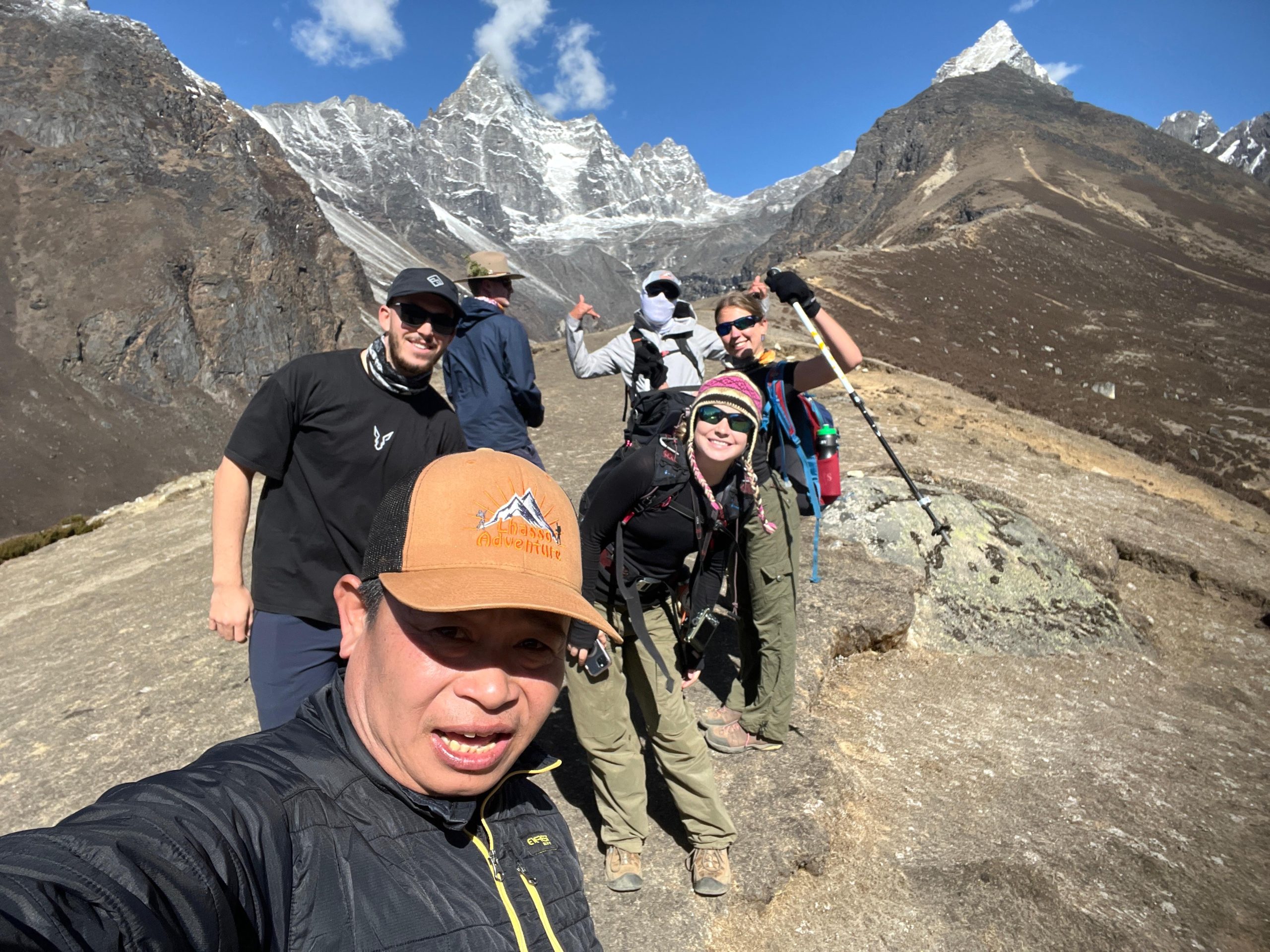
Experienced guides read fitness and altitude tolerance continuously throughout the trek, adjusting pace and rest based on how a group is actually performing rather than sticking rigidly to a printed schedule. This ongoing assessment matters more for overall trek difficulty than any pre-departure fitness test.
Daily oxygen saturation checks using a pulse oximeter give guides an objective measure that complements what they observe in a trekker’s pace, appetite, and mood. Trekkers who choose to hire a personal porter to carry the bulk of their gear under fair weight limits reduce the physical load they carry daily, which matters particularly for those whose fitness sits at the more moderate end of what’s needed. Guides experienced with a wide range of trekker fitness levels also know how to adjust daily pacing without singling anyone out, which keeps group morale intact even when individual trekkers move at noticeably different speeds.
Choosing an operator whose guides genuinely track this kind of detail, rather than simply walking a fixed itinerary regardless of how the group is coping, changes the practical difficulty of the trek considerably for trekkers whose fitness sits closer to the moderate end of acceptable.
This kind of attention shows up in small, unglamorous ways more than dramatic ones. A guide who notices a trekker eating less than usual at breakfast, or moving a little slower than the day before, and quietly adjusts the pace or checks in privately, prevents far more problems than any single piece of safety equipment does. That habit of watching a group closely, built over many seasons on the same route, is difficult to replicate through training alone.
So, How Fit Do You Really Need to Be?
The honest answer: fit enough to sustain five to eight hours of walking daily for nearly two weeks, with functional leg strength and reasonable cardiovascular endurance, but nowhere near elite athletic conditioning. Most regular exercisers who commit to focused preparation meet this bar comfortably.
What matters more than any single fitness metric is consistency in training over the two to three months before departure, rather than a single impressive workout close to the trip. Cardiovascular endurance carries the most weight, leg strength shapes daily comfort, and core stability supports balance on the trickier terrain sections. Altitude remains a separate variable that no amount of gym training fully controls, which is exactly why pacing and acclimatization matter just as much as fitness itself.
Training plans hold up best when they’re built against the actual shape of the climb rather than a generic fitness standard, since the route gains elevation unevenly across a twelve to fourteen day itinerary that spaces the toughest stages around built-in rest at Namche Bazaar and Dingboche, not in one steady climb.
There’s no perfect fitness score that guarantees an easy trip, and no minimum threshold that guarantees a hard one. What tends to separate a comfortable trek from a genuinely difficult one is preparation that matches the trail’s actual demands, rather than generic fitness built for a different kind of challenge entirely. Train for hours on your feet, train your legs for descents as much as climbs, and set aside a realistic sense of the daily budget most trekkers plan for food, snacks, and incidentals on the trail, since financial planning is its own quiet form of preparation that’s easy to overlook until the trek is already underway.
Frequently Asked Questions for How Fit Do You Need to Be for the Everest Base Camp Trek?
Do I need to be a runner to complete the Everest Base Camp trek?
No. Running helps build cardiovascular fitness, but it isn’t required specifically. Hiking, cycling, swimming, and stair climbing all build the aerobic base this trek actually demands.
How many months should I train before attempting this trek?
Eight to twelve weeks of consistent training, focused on cardio and leg strength, gives most people enough time to build the fitness this trek requires.
Can overweight trekkers complete the Everest Base Camp trek?
Yes, provided they build functional cardiovascular and leg strength beforehand. Body weight alone isn’t disqualifying, but it does affect how demanding the trail feels at a given pace.
Is a fitness test necessary before booking?
It isn’t mandatory, but testing yourself with a loaded weekend hike or a stair-climbing session gives a far more honest picture of readiness than assuming general fitness will translate directly to the trail.
Does fitness level affect altitude sickness risk?
Not significantly. Acute Mountain Sickness affects fit and unfit trekkers at similar rates, since it depends on how the body adapts to reduced oxygen rather than on cardiovascular fitness.
What’s the minimum age or fitness level for this trek?
There’s no strict minimum, but trekkers of any age should have moderate cardiovascular fitness and functional leg strength, along with a doctor’s clearance for anyone with pre-existing health conditions.
Will hiring a porter reduce the fitness I need?
Somewhat. Hiring a porter to carry the main bag reduces the physical load significantly, though the cardiovascular and altitude demands of the trek itself remain unchanged regardless of pack weight.