Everest Base Camp Packing List: What to Bring & Wear
September 14, 2026 Lhasso Adventure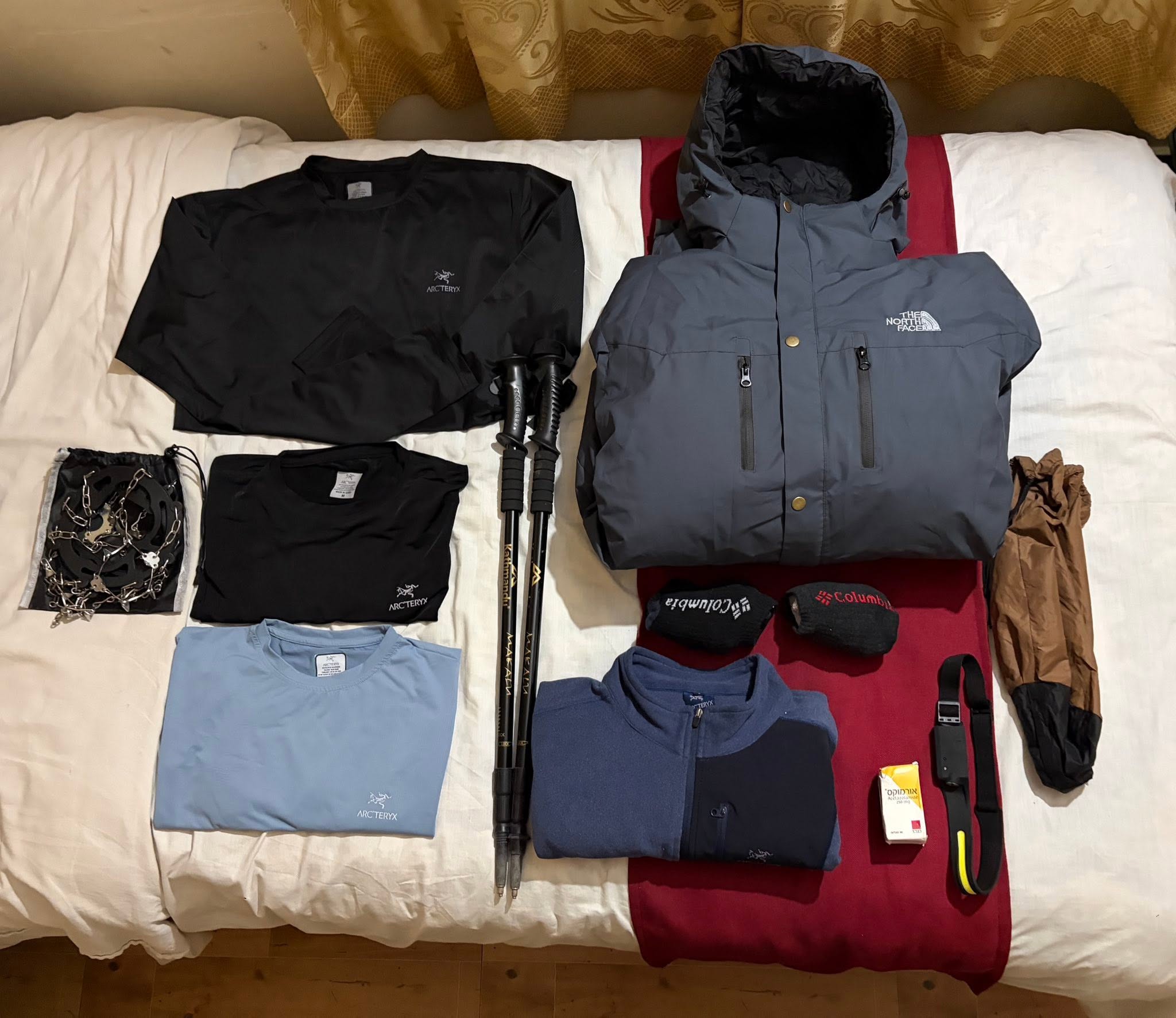
A complete Everest Base Camp packing list centers on layering, not a single heavy coat. You need a moisture-wicking base layer, an insulating mid layer, and a windproof outer shell. Add a sleeping bag rated to at least -15°C, sturdy waterproof boots, and a daypack around 30 to 40 liters, plus a larger duffel for your porter to carry.
Nothing here is exotic gear. Most of it is standard cold-weather trekking equipment, and a few pieces can be rented in Kathmandu if you’d rather not buy them at home. This guide walks through every category, backpack sizing, sleeping bag ratings, and how to dress for the sharp temperature swings this trek is known for.
Everest Base Camp Packing List: Full Gear Checklist
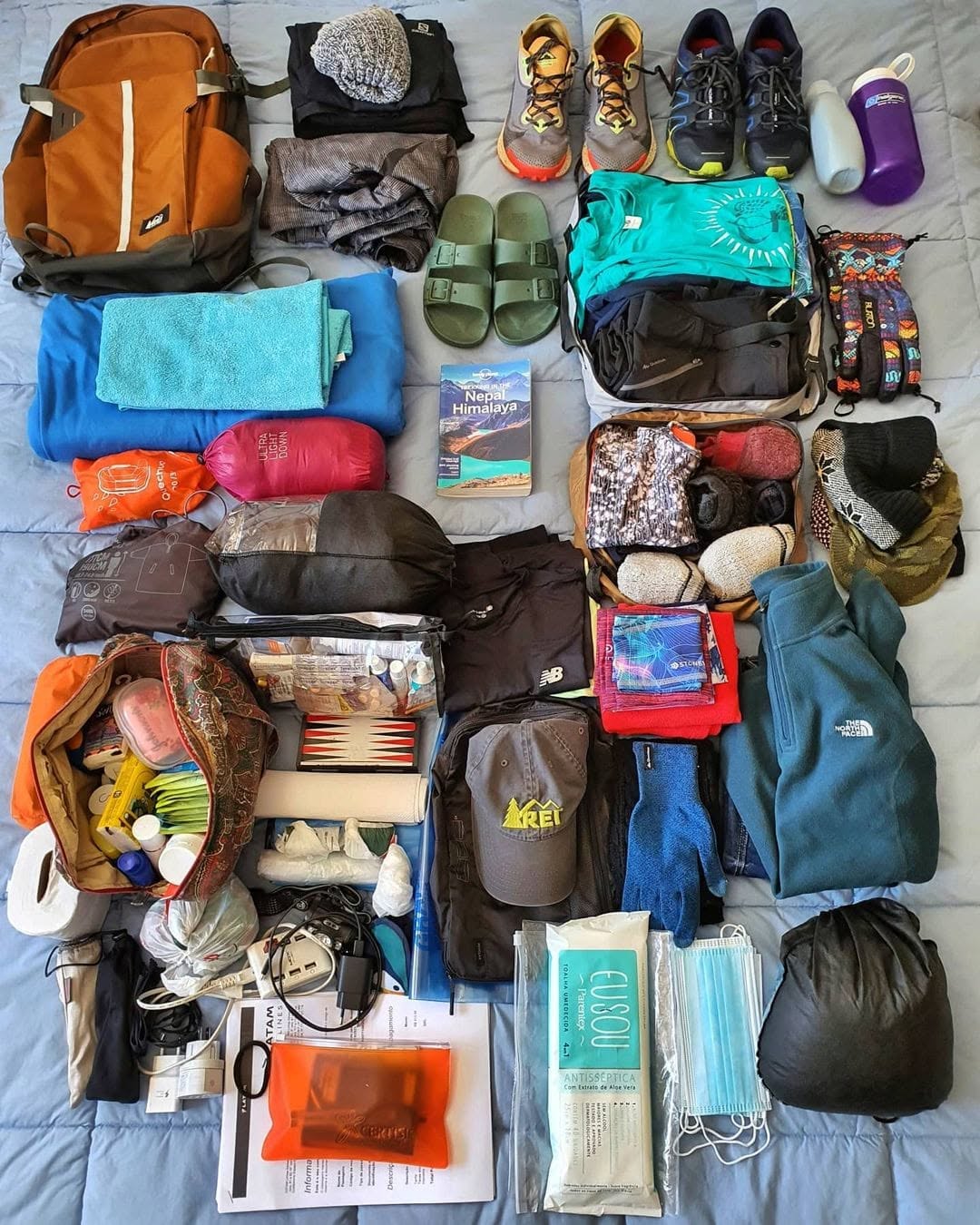
Organizing gear by category makes packing far less overwhelming than working from one long list. Here’s everything you need, grouped the way you’d actually pack it.
Upper body: 2–3 moisture-wicking base layer tops, a fleece or light down mid layer, a heavier down jacket for evenings and higher altitude, a waterproof and windproof outer shell.
Lower body: 2 pairs of moisture-wicking base layer bottoms, trekking pants (quick-dry, not cotton), waterproof shell pants for wind and snow.
Headwear and hands: a warm beanie, a sun hat or cap, a buff or neck gaiter, lightweight gloves for daytime, heavier insulated gloves or mittens for higher altitude.
Footwear: broken-in waterproof hiking boots, 3–4 pairs of wool trekking socks, a pair of camp shoes or sandals for evenings at the lodge.
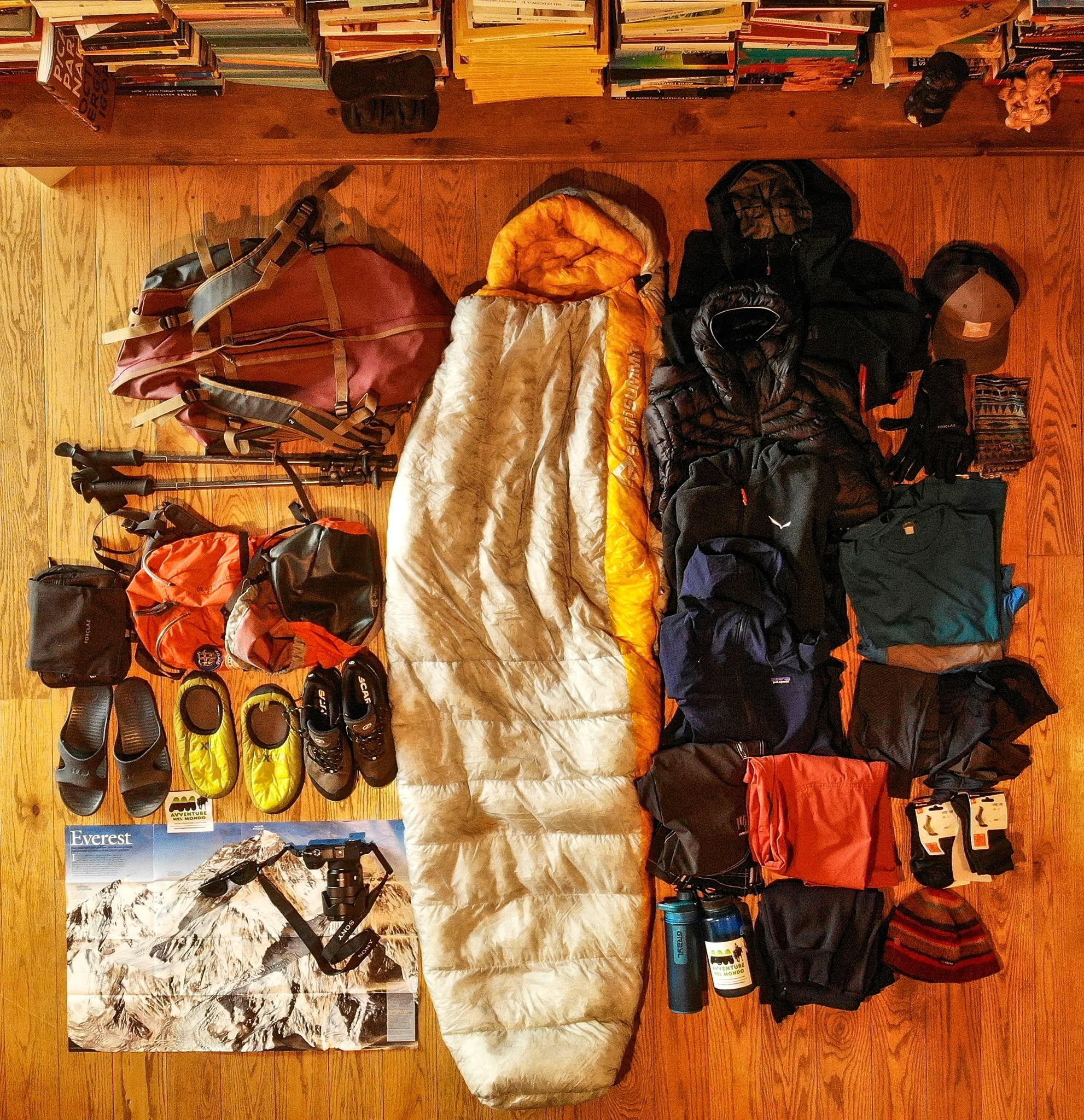
Sleep and shelter: a sleeping bag rated to -15°C or colder, a sleeping bag liner for extra warmth, an eye mask and earplugs for shared lodges.
Bags: a 30–40 liter daypack, a 70–80 liter duffel bag for your porter, dry bags or packing cubes to keep gear organized and dry.
Health and hygiene: a basic first aid kit, altitude sickness medication if prescribed, hand sanitizer, wet wipes, a small quick-dry towel, sunscreen, and lip balm with SPF.
Extras: trekking poles, a headlamp with spare batteries, a reusable water bottle, water purification tablets, a power bank, and a basic repair kit for gear.
What Size Backpack Should You Bring for Everest Base Camp?
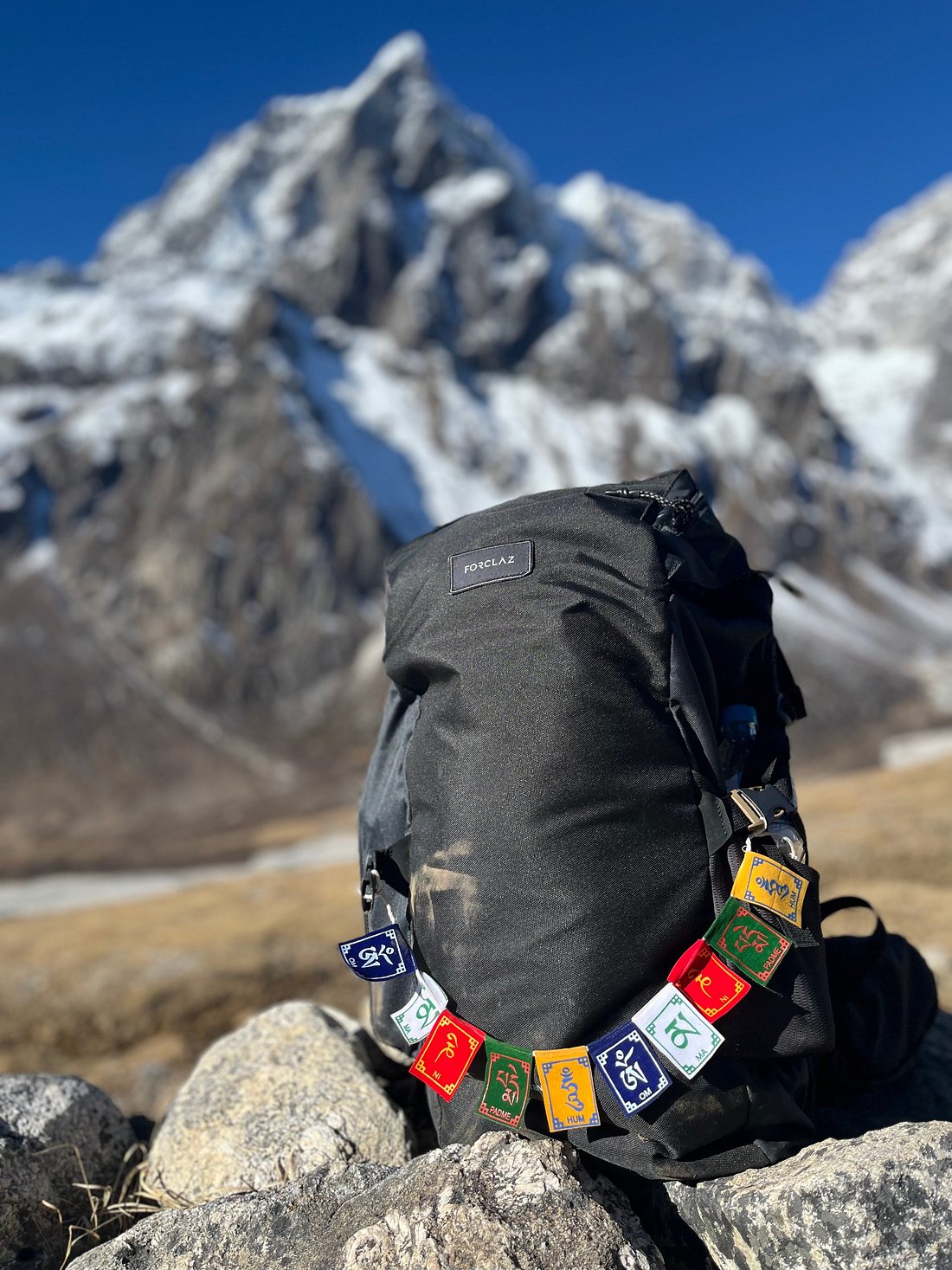
Two bags matter on this trek, and they serve completely different jobs. Your daypack, carried by you, should run 30 to 40 liters. Your duffel bag, carried by a porter, should run 70 to 80 liters.
The daypack holds what you need during the actual walking day: water, snacks, a camera, an extra layer, sunscreen, and your rain shell. It should sit comfortably on your back for five to seven hours without straining your shoulders.
The duffel holds everything else, your sleeping bag, spare clothing, and gear you won’t need until you reach that night’s lodge. Porters carry this bag, kept under a strict 20 to 25 kilogram weight limit, so it needs to be large enough to fit everything without exceeding that cap.
Trying to fit everything into one oversized bag rarely works well on this trek. Splitting gear between a daypack and a porter-carried duffel is standard practice, and it keeps your own back load light enough to actually enjoy the walking.
Is a 30L Backpack Too Big for a Day Hike?
No, a 30-liter daypack is close to ideal for Everest Base Camp specifically, even though it might feel large for a typical single-day hike back home. This trek isn’t a typical day hike.
You’re carrying gear for five to seven hours of walking at altitude, often crossing a temperature swing of 15 to 20 degrees between morning departure and afternoon arrival. A 30-liter pack gives enough room for a spare layer, a rain shell, snacks, a water bladder, and a camera, without forcing you to leave something essential behind.
Anything smaller than 25 liters tends to feel cramped once you add cold-weather layers and a 2 to 3 liter water capacity. Anything much larger than 40 liters usually means over-packing items that should be in your duffel instead.
If you already own a 30-liter pack for other hikes, it works fine here too. The trek doesn’t demand a specialized daypack, just one with a comfortable hip belt and enough room for the essentials listed above.
Best Backpack for the Everest Base Camp Trek
The right daypack comes down to fit and features more than brand name. A padded hip belt matters most, since it shifts weight off your shoulders and onto your hips, which makes a real difference across a multi-hour walking day.
Look for a rain cover, either built in or purchased separately, since afternoon weather can shift quickly at altitude. External straps for trekking poles are worth having too, freeing your hands during steeper sections without needing to stash the poles inside the bag itself.
Ventilated back panels help manage sweat on the lower, warmer stages of the trek, though this matters less once you’re walking through consistently cold air above Namche Bazaar. A hydration bladder sleeve is a nice-to-have rather than essential, since a standard water bottle works just as well.
Trying on a loaded pack before departure, rather than buying it new and testing it for the first time on the trail, avoids discovering a poor fit halfway through day one.
What Sleeping Bag Do You Need for Everest Base Camp?
A sleeping bag rated to at least -15°C is the standard recommendation for this trek, and a -20°C rating offers more comfortable margin during the colder autumn and winter months. Down-filled bags pack smaller and insulate better per gram than synthetic alternatives, which matters when your porter’s load is already capped.
Teahouses don’t heat individual bedrooms, even on luxury departures. Heating is generally limited to the shared dining area each evening, so your sleeping bag is doing the real work of keeping you warm once you’re in your room for the night.
A sleeping bag liner adds several extra degrees of warmth and keeps the bag itself cleaner across a two-week trip, worth packing alongside the bag rather than treated as optional.
Renting a 4-season sleeping bag in Kathmandu is a practical alternative to buying one, particularly for trekkers who don’t own cold-weather gear already and won’t need it again soon. This kind of rental option typically runs a modest daily or trip-length fee, worth asking about directly with your operator before departure.
Everest Base Camp Sleeping Bag Temperature: What the Rating Actually Means
Sleeping bag ratings can be confusing, since manufacturers often list two different numbers: a “comfort” rating and a “limit” or “survival” rating. The comfort rating is the one that matters for planning your trek.
A bag rated -15°C “comfort” means most people sleep warm at that temperature. The same bag might list a -25°C “limit” rating, meaning survival without hypothermia, not a comfortable night’s sleep. Always plan around the comfort figure, not the more extreme number printed alongside it.
Nighttime lows at higher camps on this trek regularly drop well past the -15°C mark, particularly once the trail climbs above Dingboche. A bag rated right at that threshold, rather than comfortably below it, can leave you cold on the coldest nights of the trip.
Layering a liner inside your bag, plus sleeping in a warm base layer rather than street clothes, adds a meaningful buffer if your bag’s rating sits closer to the edge of what the season demands.
How Cold Is Everest Base Camp?
Base Camp itself sits at 5,364 meters, where daytime temperatures typically range from -5°C to 5°C and nighttime lows regularly fall to -15°C or colder, even during the more moderate spring and autumn trekking seasons.
That range shifts considerably by month and by exact location on the trail. Villages lower on the route, like Namche Bazaar, run noticeably warmer than Base Camp or Gorak Shep, sometimes by 8 to 12 degrees during the day.
A closer breakdown of how temperatures shift, from the milder lower villages down near Namche to the sharp overnight cold once the trail climbs past Dingboche, is worth reading in full if you’re planning gear around a specific month rather than the trek in general.
Wind chill adds another layer on top of the raw air temperature, particularly at exposed points like Kala Patthar and the final approach to Base Camp. A windproof outer shell isn’t optional gear here; it’s doing real work against conditions that feel considerably colder than the thermometer alone suggests.
How to Dress for Everest Base Camp
Layering is the single most important dressing principle on this trek, more important than any individual piece of gear. Three thinner layers, added or removed as conditions shift, outperform one heavy coat almost every time.
Start with a moisture-wicking base layer against your skin, never cotton, since cotton holds sweat and loses its insulating value once wet. Add a fleece or light down mid layer for warmth, then a waterproof, windproof outer shell as your final layer against wind and precipitation.
Mornings typically start cold, warm up considerably by midday under direct sun, then drop sharply again once the sun dips behind the surrounding peaks in the afternoon. Dressing for this means removing layers as you warm up and adding them back before you actually feel cold, rather than waiting until discomfort sets in.
Hands and head lose heat disproportionately fast at altitude. A warm hat and quality gloves deserve as much attention as your jacket choice, even though they’re easy to underprioritize while packing.
Everest Base Camp Packing List for Women
Most of the packing list applies identically regardless of gender, though a few practical additions are worth planning for specifically. Sports bras suited to layering under a base layer, rather than a standard everyday bra, make multi-day wear considerably more comfortable.
Menstrual supplies deserve extra planning given limited resupply options once past Namche Bazaar. Packing more than you think you’ll need, plus a way to dispose of waste responsibly, avoids an awkward gap partway through the trek.
Women’s-specific fit hiking boots and base layers tend to run better than unisex sizing for smaller frames, worth trying on in advance rather than assuming a men’s small will fit the same way.
Sun protection matters equally for everyone on this trek. Trekkers with fairer or more sun-sensitive skin should pack a higher SPF sunscreen and consider a wider-brimmed hat, given how much stronger UV exposure is at altitude.
Everest Base Camp Packing List for Men
The core packing list applies the same way here too, with a couple of practical notes worth flagging. Men’s trekking pants with reinforced knees hold up better across the trek’s rockier, steeper sections than lighter everyday hiking pants.
Facial hair changes how a buff or neck gaiter fits and functions in cold wind, worth testing before departure if you’re not used to wearing one regularly. A well-fitted buff still does real work protecting against wind and dust regardless.
Extra pairs of moisture-wicking underwear are worth packing generously, since laundry access is limited once past the lower villages, and rewearing damp base layers in cold conditions is uncomfortable at best.
Boot fit deserves particular attention for larger or wider feet, since teahouse gear shops don’t always stock a full range of sizes if a swap turns out to be necessary partway through the trek.
Does Everest Base Camp Need Oxygen?
Standard trekking to Everest Base Camp doesn’t require supplemental oxygen for healthy trekkers following a proper acclimatization schedule. This is different from climbing Everest itself, which does typically require bottled oxygen above certain altitudes.
Base Camp sits at 5,364 meters, high enough that the air holds roughly half the oxygen found at sea level. Most trekkers adjust to this gradually through the built-in acclimatization days, rather than needing supplemental oxygen to manage the altitude safely.
Guides on well-run departures still carry emergency oxygen and a pulse oximeter for daily monitoring, as a safety backup rather than a routine tool every trekker uses. If altitude sickness symptoms become serious, oxygen and descent are the standard response, handled by your guide on the spot.
Trekkers with certain pre-existing respiratory or cardiac conditions should discuss this trek with a doctor before booking, since individual risk varies more than a general guideline can cover.
Is the Everest Base Camp Trek Difficult?
The trek is physically demanding but not technical. No ropes, no climbing, and no specialized mountaineering skill are required anywhere on the standard route to Base Camp.
Difficulty here comes almost entirely from altitude and sustained walking days, not from the terrain itself. A full breakdown of exactly where that difficulty concentrates, stage by stage, covers this in more depth than a packing guide reasonably can.
Reasonably fit trekkers with no major health concerns complete this trek successfully every season, provided they train beforehand and follow a properly paced, acclimatization-focused itinerary.
What Is the Hardest Day of the Everest Base Camp Trek?
Most trekkers point to the day from Lobuche to Base Camp and on to Gorak Shep as the hardest single day on the route. It’s the longest walking day, and it happens at the lowest oxygen levels of the entire trip.
The climb into Namche Bazaar earlier in the trek is a close second, given its steep single-day elevation gain, though it happens at a lower altitude where oxygen is still relatively plentiful.
Neither day involves technical difficulty. Both are hard simply because of sustained effort combined with thinning air, which is exactly the kind of demand a well-packed layering system and a properly rated sleeping bag help you recover from each evening.
Can a Beginner Do the Everest Base Camp Trek?
Yes, reasonably fit beginners with no prior high-altitude experience complete this trek successfully every season. No technical climbing skill is required anywhere on the standard route.
Training beforehand matters more for a beginner than natural athleticism does. The cardiovascular and leg-strength baseline most guides recommend building over eight to twelve weeks before departure makes a meaningful difference in how comfortable the walking days actually feel.
Proper gear, the kind covered throughout this guide, also does real work reducing how hard the trek feels for a first-timer. Staying warm and dry at each stop matters as much as fitness once you’re several days in.
How to Get Fit for Everest Base Camp
Cardiovascular training forms the foundation of trek preparation, ideally starting two to three months before departure. Hiking, running, or stair climbing, done consistently rather than in one intense burst close to your trip, builds the endurance this trek actually demands.
Leg strength matters just as much as cardio, particularly for the steep, sustained climbs into Namche Bazaar and the descent stress on your knees later in the trip. Squats, lunges, and step-ups translate directly to trail performance.
Practice hikes with a loaded daypack help too. Match the weight to what you’ll actually carry, so your body and your gear choices adjust together before departure, rather than discovering a fit problem on day one of the actual trek.
Everest Base Camp Packing List PDF: Downloadable Checklist
A printable, offline version of this checklist is genuinely useful once you’re packing at home, away from reliable internet access, or double-checking your duffel the night before departure.
We provide a downloadable packing list alongside your trek itinerary once you book, formatted to check off items as you pack rather than needing to scroll through this guide on a phone screen. Ask our team for a copy directly if you’re still in the planning stage and want one ahead of booking.
Printing a copy or saving it offline also means you’re not relying on a data connection while shopping for last-minute gear in Kathmandu, where wifi isn’t always dependable in every store.
Renting Trekking Gear in Kathmandu vs. Bringing Your Own Trekking Gears
Kathmandu has a well-established trekking gear rental market, particularly in the Thamel district, making it entirely reasonable to rent bulkier items rather than buy and transport them from home.
A 4-season sleeping bag and a down jacket are the two most commonly rented items. Both are bulky and expensive to buy for a single trip, but simple to rent for a fixed daily or trip-length fee. A modest rental fee covering both a sleeping bag and a down jacket, arranged directly with your operator before departure, is generally more economical than buying gear you may not use again soon.
Items worth bringing from home instead include your own broken-in boots. Rental boots carry a higher risk of blisters from an unfamiliar fit, along with any base layers or socks you already know work well for your body.
Quality varies between Kathmandu rental shops. Renting through your trekking operator, rather than an independent shop with no accountability to your trip, generally means better-maintained gear and a smoother exchange if something doesn’t fit right.
How Lhasso Adventure Helps You Pack Right
Every trekker booking with us receives a detailed packing list well ahead of departure. Our team also runs a pre-trek gear check in Kathmandu, reviewing what you’ve brought and flagging anything missing or inadequate for the season.
We provide a 70 to 80 liter duffel bag for your porter to carry, kept under the standard 20 to 25 kilogram weight limit. Rental options are also available for a 4-season sleeping bag or down jacket, if you’d rather not travel with your own.
Trekking leaders Bhim Tamang and Norbu Tamang personally check gear readiness before departure day. This catches gaps like an underrated sleeping bag or worn-out boots before they become a problem three days into the trek, rather than after.
Non-trekking items can be stored at your Kathmandu hotel at no extra cost while you’re on the trail, so you’re not carrying anything you won’t actually need above Lukla.

Frequently Asked Questions for Everest Base Camp Packing Lists
What size backpack should I bring for the Everest Base Camp trek?
A 30 to 40 liter daypack is the standard recommendation, carried by you during walking days, alongside a separate 70 to 80 liter duffel bag carried by a porter for the rest of your gear.
What sleeping bag do I need for Everest Base Camp?
A sleeping bag rated to at least -15°C comfort rating is standard, with -20°C offering more margin during colder months. Renting a 4-season bag in Kathmandu is a practical alternative to buying one.
How cold is Base Camp, Everest?
Daytime temperatures at Base Camp typically range from -5°C to 5°C, with nighttime lows regularly falling to -15°C or colder, even during the more moderate trekking seasons.
Does Everest Base Camp need oxygen?
No, standard trekking to Base Camp doesn’t require supplemental oxygen for healthy trekkers following a proper acclimatization schedule. This differs from climbing Everest itself, which typically does require bottled oxygen.
Is a 30L backpack too big for a day hike on this trek?
No, 30 liters is close to ideal for Everest Base Camp specifically, given the layers, water, and gear needed across a five to seven hour walking day at altitude.
Is the Everest Base Camp trek difficult?
The trek is physically demanding but not technical, with no climbing or ropes required. Difficulty comes mainly from altitude and sustained walking days rather than the terrain itself.
Can a beginner do the Everest Base Camp trek?
Yes, reasonably fit beginners with no prior high-altitude experience complete this trek successfully each season, provided they train properly and follow a well-paced, guided itinerary.