Standard vs Luxury Everest Base Camp Trek: Which One Is Right for You?
September 2, 2026 Lhasso Adventure
The Standard vs Luxury Everest Base Camp Trek choice comes down to comfort. It isn’t about the destination. Both trek styles follow the same trail. Both reach the same Base Camp at 5,364 meters.
What changes is where you sleep, what you eat, and how much support surrounds you. Standard trekkers stay in simple teahouses. They follow a well-tested 14 day itinerary at a moderate price. Luxury trekkers stay in upgraded lodges with private bathrooms and heated rooms. Their itinerary runs 13 days, and the price is considerably higher.
Neither route is objectively better. The right pick depends on your budget, your tolerance for basic conditions, and how much rest you want each evening. This guide walks through every meaningful difference, category by category, so you can make that call with confidence rather than guessing.
Standard vs Luxury Everest Base Camp Trek: The Core Difference
Every version of this trek shares the same physical challenge. You walk the same distance. You gain the same altitude. You face the same thin air near Base Camp, no matter which package you book.
What separates the Standard vs luxury Everest Base Camp Trek comes down to three things: accommodation quality, service level, and daily comfort. A standard trekker ends each day in a simple teahouse room with a shared bathroom down the hall. A luxury trekker ends the same day in a heated room with an attached bathroom and better bedding.
Guides on both trek styles carry the same qualifications. They follow the same safety protocols, since altitude doesn’t respect a higher price tag. The comfort difference shows up after the walking stops, not during it.
This distinction matters before you book either package. The physical and altitude demands that shape overall trek difficulty stay identical across both trek styles. Choosing luxury won’t make the climb itself any easier.
Standard vs Luxury Everest Base Camp Trek: Side-by-Side Comparison
Seeing both trek styles side by side makes the trade-offs easier to weigh. Here’s how they compare across the categories that matter most.
| Feature | Standard Everest Base Camp Trek | Luxury Everest Base Camp Trek |
|---|---|---|
| Duration | 14 days | 13 days |
| Accommodation | Basic teahouses, shared bathroom | Luxury lodges, twin-sharing, better facilities |
| Kathmandu Hotel | 3-star | 4-star or 5-star |
| Meals | Dal bhat, noodles, simple pasta | Wider menu, bakery items, better coffee (lower elevations) |
| Group Size | Larger, shared group pacing | Smaller, more private group pacing |
| Descent Option | Walking descent only | Walking, or optional helicopter return from Gorak Shep |
| Wifi/Charging | Small daily fee at most stops | Often included in room rate |
| Price (2–4 pax) | US$1,815 | US$4,870 |
| Price (14–16 pax) | US$1,457 | US$3,910 |
This table captures the headline differences. Several of these categories narrow considerably above 4,000 meters, where infrastructure limits apply to both trek styles almost equally. The sections below walk through each row in more depth.
Accommodation Comparison: Teahouses vs Luxury Lodges
Accommodation is where the two trek styles diverge most sharply. It’s usually the first thing trekkers notice at each evening’s stop. Standard teahouses offer simple twin rooms and thin walls. The bathroom is shared, often down a cold hallway.
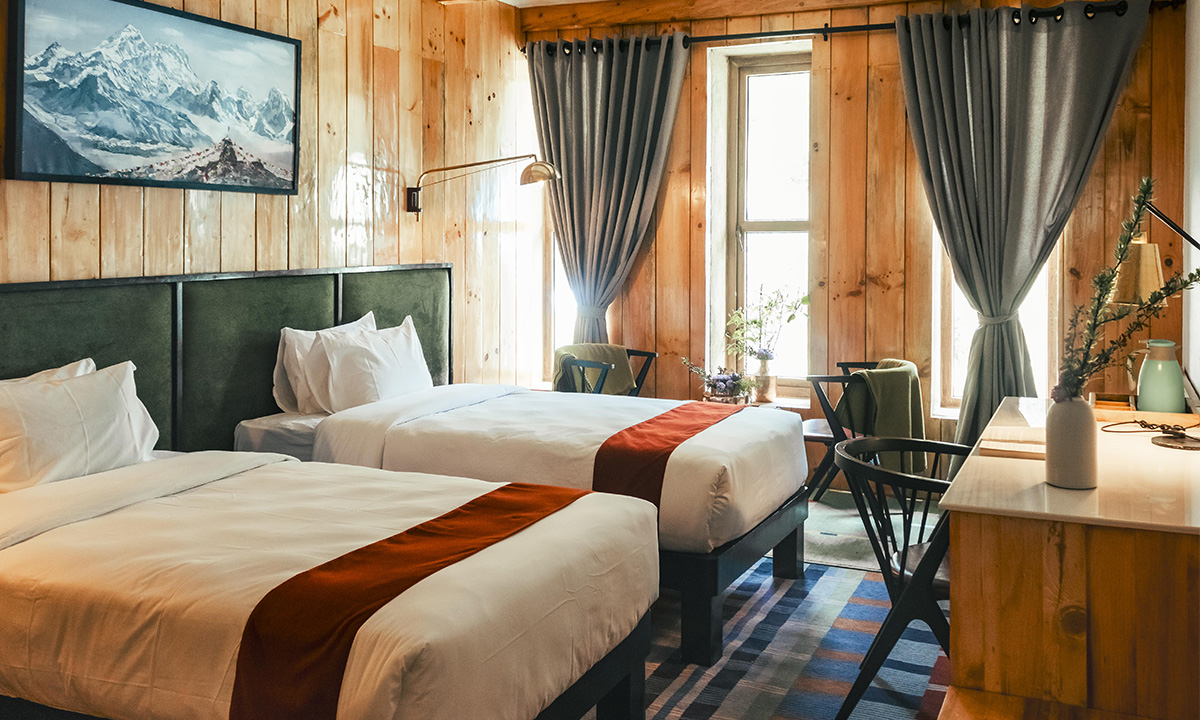
Luxury lodges offer something different. Trekking-industry names like Yeti Mountain Home and Everest Summit Lodge are examples of the kind of property this tier draws from: heated rooms, better bathroom facilities, and thicker mattresses than a standard teahouse. Rooms stay twin-sharing throughout, just as they do on the standard trek, so the upgrade is in comfort and quality, not in getting a room to yourself.
These lodges sit at select points along the route, not at every single stop, since the infrastructure doesn’t reach every village yet.
Higher up the trail, near Dingboche, Lobuche, and Gorak Shep, the luxury upgrade becomes less dramatic. Even premium packages settle for the best available room at these altitudes. True luxury infrastructure hasn’t reached the highest villages. The gap between standard and luxury narrows considerably above 4,000 meters, even though it feels wide lower down near Phakding and Namche.
Both accommodation types are genuinely safe and functional. The real difference is comfort, not safety. A trekker who sleeps easily anywhere may find the standard rooms perfectly sufficient throughout the trip.
Meals and Food Options: What Changes on the Menu
Food quality follows a similar pattern to accommodation. The widest gap appears at lower elevations, and it narrows as the trail climbs higher. Standard teahouse menus offer dal bhat, noodles, and simple pasta. The food is filling and reliable, rather than varied.
Luxury lodges expand that menu at lower stops. Expect bakery items, a wider range of Western dishes, and better coffee than a standard teahouse typically stocks. Some luxury packages also add stronger quality control around food hygiene, which matters more than it might seem on a two-week trip.
Above Dingboche, menu options shrink for both trek styles. Supply logistics become genuinely difficult regardless of budget. A luxury trekker at Lobuche eats a meal that’s only modestly better than a standard trekker’s, since the ingredients available at that altitude don’t change much between packages.
This narrowing gap is worth knowing before booking. Some trekkers expect the luxury food experience to stay consistent throughout. In reality, altitude limits what any kitchen can offer, no matter the price, and both trek styles rely on the same supply chain higher up.
Kathmandu Hotel Standard: 3-Star vs 4- or 5-Star
The comfort difference actually starts before the trekking begins, in Kathmandu itself. Standard packages include a comfortable 3-star hotel, twin-sharing with breakfast, for two nights before and after the trek. Luxury packages upgrade to a 4-star or 5-star property, often somewhere like Hotel Yak & Yeti or a comparable Kathmandu landmark.
This distinction matters more than it might first appear, particularly for the post-trek stay. Picture arriving back in Kathmandu after two weeks on the trail. Settling into a genuinely comfortable room, with a hot shower that doesn’t run out partway through, makes a real difference to how the trip ends.
Some luxury packages also add guided Kathmandu sightseeing to the itinerary. This gives trekkers a more curated city experience on either end of the trek. Standard packages generally leave city days more open-ended, which some trekkers actually prefer.
Neither approach is wrong. A trekker who values guided structure throughout the entire trip tends to lean toward luxury. A trekker happy to explore the city independently often finds the standard package’s flexible city time perfectly sufficient.
Standard vs Luxury Everest Base Camp Trek Price
Price is usually the deciding factor once trekkers see the real numbers side by side. Here’s the exact per-person pricing across every group size we run, for both trek styles.
| Group Size | Luxury Everest Base Camp Trek | Standard Everest Base Camp Trek |
|---|---|---|
| 2–4 pax | US$4,870 | US$1,815 |
| 5–7 pax | US$4,467 | US$1,665 |
| 8–10 pax | US$4,288 | US$1,598 |
| 11–13 pax | US$4,116 | US$1,534 |
| 14–16 pax | US$3,910 | US$1,457 |
The gap between the two trek styles narrows slightly as group size grows, but luxury still runs roughly 2.5 to 2.7 times the standard price at every tier. That ratio holds fairly steady, which tells you the price difference comes from fixed comfort upgrades, not from anything that shrinks proportionally with a bigger group.
Smaller luxury groups pay a real premium for that privacy and personalized pacing. Larger luxury groups still cost considerably more than the equivalent standard tier, since 4-star and 5-star Kathmandu hotels and luxury trekking lodges don’t get cheaper just because more people are booking them.
Standard vs Luxury Everest Base Camp Trek Cost: What’s Included
Both packages share most of their inclusions. The real differences sit in accommodation tier and one optional transport upgrade. Here’s what separates them.
| Category | Luxury Everest Base Camp Trek | Standard Everest Base Camp Trek |
|---|---|---|
| Kathmandu Hotel | 4-star or 5-star, with breakfast | 3-star, with breakfast |
| Trek Accommodation | Luxury lodge, twin-sharing | Standard teahouse, twin-sharing |
| Helicopter Return | Optional, Gorak Shep to Kathmandu | Not offered |
| Guide | Licensed, English-speaking | Licensed, English-speaking |
| Porter Support | 1 porter per 2 clients | 1 porter per 2 clients |
| Oximeter Monitoring | Daily above 3,000m | Daily above 3,000m |
| Support Level | 24/7 trekking support | Standard guide support |
Everything else stays identical across both packages. Both include the Kathmandu–Lukla–Kathmandu flight, airport transfers by private vehicle, all trek meals, purified drinking water, welcome and farewell dinners in Kathmandu, and hot drinks and snacks along the trail.
Both packages also cover the same paperwork: the Sagarmatha National Park Entry Permit, the Khumbu Pasang Lhamu Rural Municipality Permit, the TIMS card, and all government taxes and service charges. Neither trek style skips any of these requirements, and neither charges them separately.
Both include the same small extras too. Every trekker gets a Lhasso Adventure duffel bag, t-shirt, and cap, plus a comprehensive first aid kit carried by the guide. A 70 to 80 liter duffel bag is provided either way, kept under 20 to 25 kilograms for your porter to carry.
Gear rental works the same across both trek styles as well. A 4-season sleeping bag or down jacket rents for USD 35 each, arranged ahead of departure. Non-trekking items can be stored at your Kathmandu hotel at no extra cost, regardless of which package you book.
The 24/7 trekking support and higher overall service attentiveness listed under luxury reflect the smaller group sizes and extra staff coordination that come with the premium tier. It isn’t a completely different support structure. Standard trekkers still get full guide support throughout the trip.
What’s Not Included in Either Package
Both the luxury and standard packages exclude the same list of costs, so budgeting outside the package price works identically no matter which trek style you choose.
International flights and Nepal’s departure tax sit outside both packages. So does the Nepal entry visa, obtainable on arrival for USD 30 for 15 days or USD 50 for 30 days. Lunch and dinner in Kathmandu, aside from the included welcome and farewell dinners, are also on you.
Travel insurance with helicopter evacuation coverage is excluded from both trek styles too, and it’s worth arranging before departure regardless of package tier. Personal trekking gear you don’t already own falls outside both packages as well, though rental remains available at USD 35 per item.
Personal expenses, including bar bills, laundry, wifi, phone charges, and souvenirs, sit outside both packages. Tips for your guide, porters, and driver aren’t included either, and neither package covers costs from unforeseen circumstances like illness, strikes, or weather delays.
This matching exclusion list means the price gap between luxury and standard reflects the trek package itself, not different hidden costs waiting on one side or the other.
Guide-to-Trekker Ratio and Group Size
Group size and guide support shift noticeably between the two trek styles. This affects the overall feel of the trip as much as accommodation does. Standard group departures often run larger. A guide supports a wider group, and porters are typically shared across two trekkers rather than assigned individually.
Luxury packages frequently run smaller, more private groups. Some include a higher guide-to-trekker ratio, even though both packages formally include one porter per two clients. This means more personalized pacing and generally faster attention from staff throughout the day.
A higher guide ratio also means more one-on-one attention if altitude symptoms appear. A guide managing a smaller group can respond faster to individual changes in pace or appetite. Larger standard groups still receive attentive guiding, just spread across more people at once, since Nepal’s licensing rules keep every guide’s group size within a safe, manageable range regardless of package tier.
Trekkers who enjoy a social, larger-group atmosphere often prefer the standard trek. Those wanting a quieter, more private experience tend to gravitate toward luxury’s smaller group format. Neither preference is wrong; it simply reflects how each trekker wants to experience the journey.
Standard vs Luxury Everest Base Camp Trek Itinerary and Customization Differences
Standard itineraries follow a fixed, well-tested route: Lukla, Phakding, Namche, Tengboche, Dingboche, Lobuche, Gorak Shep, and back the way you came, with little room to adjust once booked.
Luxury itineraries often reroute slightly for comfort, staying in Deboche or Pangboche instead of Tengboche, for instance, and generally allow more flexibility to shift a rest day or adjust pace if something isn’t working.
This flexibility becomes especially useful for trekkers who aren’t sure how their body will respond to altitude ahead of time. A private luxury itinerary can absorb an extra rest day without disrupting anyone else’s plans; a fixed group departure usually can’t.
The exact day count also differs, and it’s worth understanding before comparing prices side by side, how many days each version of this trek actually takes shapes the total cost as much as the comfort tier does, so it’s a detail worth checking against any itinerary you’re considering.
Overnight stop selection is one of the more overlooked differences buried inside “itinerary.” Standard treks stay in Tengboche, home to the region’s largest monastery, while some luxury itineraries route through nearby Deboche or Pangboche instead, trading the monastery stop for a quieter, more comfortable overnight village.
Rest day activities can also flex more on a luxury schedule. Where a standard group follows a set acclimatization hike, a private luxury departure sometimes extends that same rest day into a longer exploratory walk if the group is feeling strong, or shortens it if someone needs more recovery time.
None of these itinerary shifts change the destination or the core acclimatization schedule, both trek types still require the same gradual altitude gain , but they do change how much the day-to-day experience can bend around individual needs versus a fixed group plan.
Everest Base Camp Trek with Helicopter Return: Skipping the Walk Down
Our 13-day luxury itinerary gives you a choice on the way down. You can fly by helicopter from Gorak Shep straight to Kathmandu, or walk the same descent route used on the standard trek. Both options sit inside the same 13-day package.
The helicopter option replaces the standard three to four day walk back down. It appeals strongly to trekkers who’ve already used their buffer days, or who simply want a faster, more dramatic finish to the trip.
Choosing to walk instead isn’t a downgrade. The descent offers a fresh perspective on villages passed quickly on the way up, once the pressure of reaching Base Camp has already eased. Weather can delay helicopter flights too, just as it delays fixed-wing flights to Lukla, so walking remains the more weather-proof choice either way.
Trekkers deciding between the two should weigh time saved against the descent’s own value as part of the journey. Walking down isn’t simply a chore to skip past, and some trekkers regret cutting it short once the trip is over.

Itinerary Length and Pace: 14-Day Standard vs 13 Day Luxury Everest Base Camp Trek
Our luxury package runs 13 days, slightly shorter than the standard trek’s 12 to 14 day range. Both cover the same trail and reach the same destination. The luxury timeline stays fixed at 13 days either way. That’s true whether you choose the walking descent or the helicopter return from Gorak Shep. The difference sits in how those final days are spent, not in the total package length.
Despite the shorter length, luxury itineraries don’t rush the acclimatization schedule that makes this trek safe. The two essential rest days, at Namche Bazaar and Dingboche, stay built into luxury itineraries just as firmly as they do on the standard route. Altitude physiology doesn’t change based on how much a trekker paid.
Pace during walking days stays broadly similar across both trek styles too. The day-by-day distance and elevation gain outlined in the standard itinerary applies almost identically to luxury departures. The trail itself sets the physical demands, regardless of package tier.
Don’t assume luxury means an easier or slower walking pace. The comfort upgrade happens at the lodge each evening, not on the trail during daylight hours.
Wifi, Charging, and Connectivity Along the Everest Base Camp Route
Connectivity differences between the two trek styles are smaller than accommodation differences. Luxury packages sometimes include wifi as part of the room rate, rather than charging separately at each stop. Standard trekkers typically pay a small daily fee for wifi at most teahouses along the route.
Device charging follows a similar pattern. Some luxury lodges include charging in the room rate. Standard teahouses often charge a modest per-device fee, particularly at higher, more remote stops where solar power capacity is limited.
Neither trek style offers reliable mobile signal much beyond Namche Bazaar, regardless of price point. This comes down to regional infrastructure, not package tier. Trekkers on either route should plan for patchy to nonexistent connectivity once past the Khumbu’s main town.
This is one area where the luxury upgrade offers convenience rather than a meaningfully different experience. Both trek styles ultimately face the same infrastructure limits once the trail climbs high enough.
Acclimatization and Comfort at Altitude
Better sleep quality is one of the more understated benefits of the luxury trek. It matters more than trekkers often expect once they’re actually on the trail. A warmer, quieter room supports better rest, and better rest supports the body’s ability to acclimatize each night.
Standard teahouse rooms are entirely functional, but they can be colder and noisier, particularly in busier villages during peak season. This doesn’t put standard trekkers at meaningfully greater risk. It can mean a slightly rougher night’s sleep at exactly the altitude where good rest matters most.
Neither trek style skips or shortens the acclimatization schedule itself. The two built-in rest days at Namche Bazaar and Dingboche remain non-negotiable regardless of comfort tier. The physiological need for these days doesn’t shrink just because a trekker booked the luxury package.
Trekkers who feel the cold sharply, or who know poor sleep affects them significantly, may find the luxury upgrade offers a genuine, tangible benefit beyond simple comfort preference.
Everest Base Camp Luxury Trek 11 days Itinerary
The luxury itinerary follows the same route as the standard trek for the ascent: Lukla, Phakding, Namche Bazaar, Tengboche, Dingboche, Lobuche, and Gorak Shep, before reaching Base Camp itself. The two acclimatization days sit in the same spots, at Namche and Dingboche.
Where the luxury itinerary differs is the return leg. At Gorak Shep, you choose: fly by helicopter straight to Kathmandu, or walk the same three to four day descent that standard trekkers follow. Either choice keeps the trip inside its 13-day frame.
Kathmandu days also look different on the luxury itinerary. You check into a 4-star or 5-star hotel rather than a 3-star property, and some departures add a guided city tour on either end of the trek.
Trekkers comparing this against the standard 14 day itinerary should focus on the return leg and the Kathmandu stay as the two real points of difference. The trekking days in between follow an almost identical structure either way.
Standard Everest Base Camp Trek Itinerary
The standard itinerary runs 12 to 14 days, following the same route through Lukla, Phakding, Namche Bazaar, Tengboche, Dingboche, Lobuche, and Gorak Shep to reach Base Camp. Two acclimatization days, at Namche and Dingboche, are built into the schedule the same way they are on the luxury trek.
The full descent is walked, retracing the ascent route back through Namche and into Lukla for the return flight to Kathmandu. This typically takes three to four days, a touch longer than the luxury package’s shortest possible timeline.
Kathmandu stays bookend the trek at a comfortable 3-star hotel, with two nights included before and after the trekking days themselves. City time is generally left open rather than tightly guided.
This itinerary suits trekkers who want the complete, traditional Everest Base Camp experience without paying for the extra comfort layered onto the luxury version. The trail, the views, and the achievement stay exactly the same.
Everest Base Camp Trek Accommodation Type: What to Expect
Accommodation on this trek comes in two broad types, and both trek styles use the same underlying model: locally run teahouses along the trail, with a hotel stay bookending the trip in Kathmandu.
On the standard trek, trail accommodation means basic twin-sharing rooms with a shared bathroom down the hall, heated only in the shared dining space most evenings. This is functional, warm enough to sleep well, and consistent with what most trekkers picture when they imagine a teahouse.
On the luxury trek, trail accommodation shifts to upgraded lodges at select points along the route, still twin-sharing, but with better insulation, thicker mattresses, and improved bathroom facilities. Higher up the trail, near Lobuche and Gorak Shep, both trek styles converge on the best available room, since luxury infrastructure hasn’t reached those altitudes yet.
Knowing this accommodation pattern in advance helps set realistic expectations. Neither trek style guarantees a private room throughout, and both rely on the same basic teahouse network that makes this remote trail possible to walk in the first place.
Best Luxury Lodges on the Everest Base Camp Trek
Several lodge brands define what the luxury tier actually looks like on the ground. Yeti Mountain Home operates properties in villages including Lukla, Phakding, Namche, and Tengboche, offering heated rooms and considerably better facilities than a standard teahouse.
Everest Summit Lodges runs a similar network, with properties positioned at key overnight stops lower on the route. Both chains focus their strongest properties on the lower, more accessible villages, where supply logistics make higher-end infrastructure genuinely possible to maintain.
Above Dingboche, the lodge landscape changes. Even the better-known luxury chains scale back their offering, since construction materials and supplies become harder to transport at that altitude. The best available room at Lobuche or Gorak Shep is still a meaningful step up from nothing, but it isn’t the same experience as a Yeti Mountain Home property lower down.
This uneven distribution is worth understanding before booking. The luxury experience is strongest in the first half of the trek and becomes more modest, though still better than standard, in the final push toward Base Camp.
Standard vs Luxury Everest Base Camp trek Comfort Level
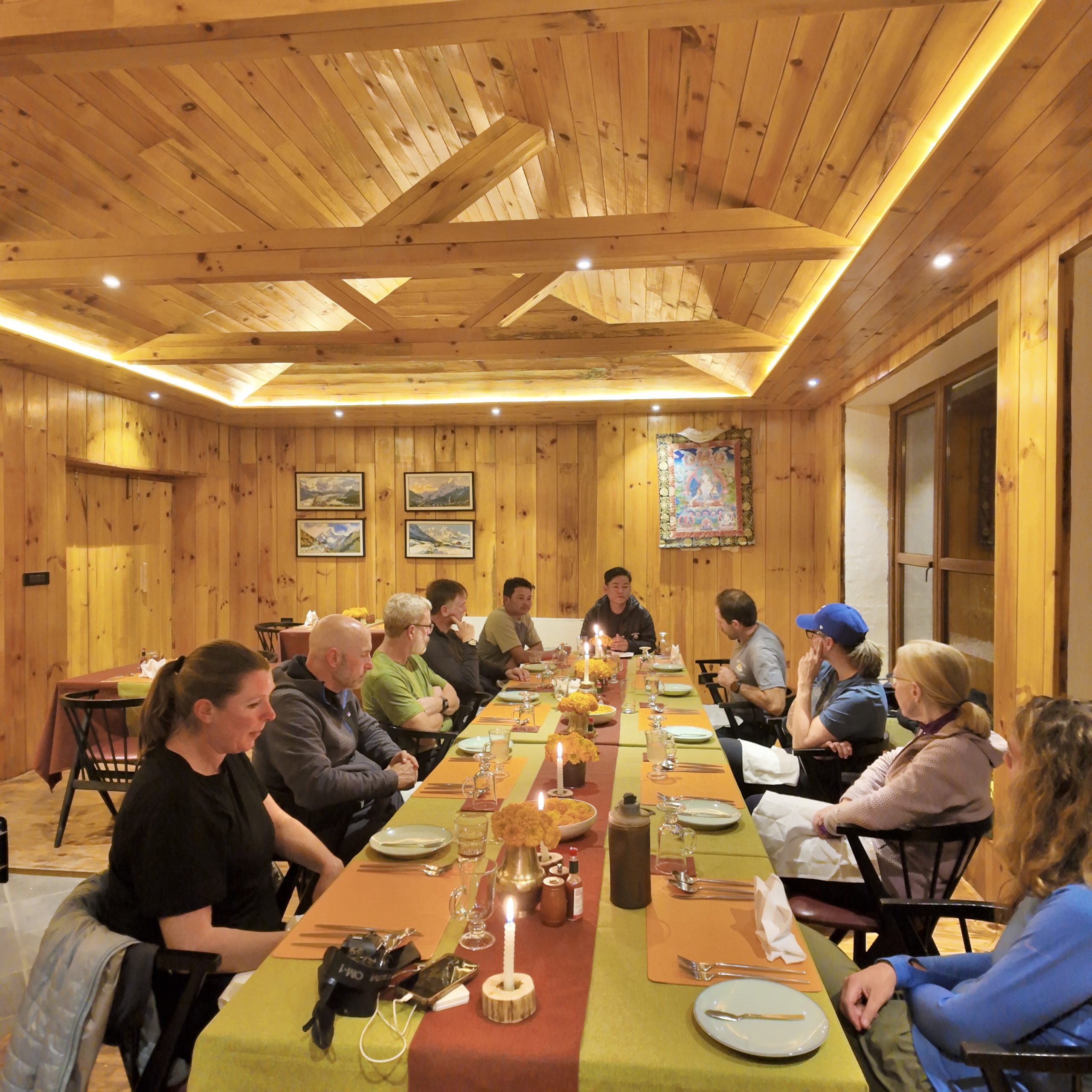
Comfort level is really what this entire comparison comes down to, more than any single feature on its own. Standard trekking means accepting cold hallways, shared bathrooms, and basic bedding in exchange for a lower price and a more traditional trail experience.
Luxury trekking means warmer rooms, better bathroom facilities, and a wider food menu at lower elevations, in exchange for a considerably higher price. Neither comfort level changes the physical demands of the walk itself or the altitude your body has to adjust to.
Sleep quality is where comfort level matters most in practice. A warmer, quieter room supports better rest, and better rest supports how well your body handles each day’s climb. Trekkers who feel the cold sharply, or who know poor sleep affects them badly, tend to notice this difference more than trekkers who sleep well anywhere.
Comfort level is a preference question, not a safety question. Both trek styles get you to Base Camp with the same guide standard and the same acclimatization protection either way.
Is the Luxury Everest Base Camp Trek Worth It?
Whether the luxury trek is worth it depends entirely on what you’re weighing it against. If you’re comparing it purely on price, the standard trek delivers the same destination for roughly a third of the cost, and it includes everything genuinely necessary to trek safely.
The luxury trek earns its price for a specific kind of trekker. Think someone who wants better sleep, a shorter overall trip, and the option of a helicopter return. If that comfort is worth two to three times the cost to you, it’s absolutely worth it.
For a trekker who’s comfortable with basic conditions and mainly cares about reaching Base Camp, the extra cost buys comfort they may never fully notice they’re missing on the standard trek. Worth is personal here, not universal.
A useful way to decide: if cold rooms and shared bathrooms sound like a minor inconvenience, standard delivers excellent value. If they sound like something that would genuinely affect your enjoyment of a two-week trip, luxury is worth the premium.
Can You Get a Private Room on the Everest Base Camp Trek?
Both trek styles are built around twin-sharing rooms as standard, rather than guaranteed private single rooms. This applies across the entire route, on both the standard and luxury packages.
Solo trekkers booking either trek style are typically paired with another solo trekker of the same gender for room-sharing, unless a single supplement is arranged in advance. This is standard practice across the industry, not something unique to one package tier.
A private room is sometimes available on request, particularly on smaller or private luxury departures, though it usually comes with an added single supplement cost on top of the base package price. Availability also depends on that specific teahouse or lodge having a spare room to offer, which isn’t guaranteed at busier stops during peak season.
Trekkers who specifically want a private room throughout should raise this directly when booking, rather than assuming either trek style includes it automatically. It’s an add-on request, not a default feature of either package.
Everest Base Camp Helicopter Return Cost
The helicopter return from Gorak Shep to Kathmandu is included within our 13-day luxury package rather than billed as a separate line item, when you choose that return option over the walking descent.
Trekkers booking the standard package who want a similar helicopter segment should expect this as an extra cost. It isn’t part of that package’s built-in inclusions.
Weather remains a factor for helicopter flights just as it does for the fixed-wing Lukla flight. Delays are possible, and it’s worth keeping a buffer day in your schedule even when a helicopter return is planned, rather than booking an international flight home for the same day.
Trekkers weighing this option should confirm directly with their operator whether the helicopter segment is bundled into a quoted price or priced separately. This detail shapes the real cost comparison between trek styles more than almost anything else.
Standard vs Luxury Everest Base Camp Trek: What Trekkers Say
Feedback patterns from trekkers on both trek styles tend to cluster around the same themes. Standard trekkers consistently mention the trail, the mountain views, and the sense of achievement as the highlights, with accommodation rarely coming up as a complaint beyond the occasional cold night.
Luxury trekkers consistently mention sleep quality and recovery as the standout benefit, particularly after the longer, harder walking days. Several also cite the shorter overall trip length and the helicopter return option as reasons the extra cost felt justified for their specific circumstances.
Neither trek style draws meaningfully different feedback about the guide quality or safety experience, which tracks with both packages sharing the same licensed guide standard and acclimatization protocol throughout.
The clearest pattern across feedback from both trek styles is that satisfaction tracks expectations set before departure. Trekkers who understood exactly what their package included, and didn’t expect luxury-level comfort from a standard booking or vice versa, consistently reported a better overall experience.
Which Everest Base Camp Package Is Best for Families?
Families trekking with older children or multiple generations often lean toward the luxury package, mainly for the better sleep quality and the shorter overall trip length. Warmer rooms and a wider food menu at lower elevations can also make the trip more comfortable for younger or less experienced trekkers.
The optional helicopter return adds flexibility for families managing a tighter travel schedule around school holidays, cutting several walking days off the total trip without skipping any part of the ascent or the acclimatization schedule.
That said, plenty of families choose the standard trek successfully too, particularly larger groups or families comfortable with a more traditional, budget-conscious trekking style. The social atmosphere of a larger standard group can also suit families well, especially for older children who enjoy the company of other trekkers along the route.
The right choice for a family comes down to the same factors as any other trekker: budget, tolerance for basic conditions, and how much each family member values comfort over cost. Neither package is inherently safer or better suited to families from a risk standpoint.
How to Choose Between Standard and Luxury Everest Base Camp Trek: Matching the Trek to Your Priorities
Choosing between these two trek styles comes down to a short list of honest questions. Budget is usually the first filter, since luxury pricing sits well above the standard package across nearly every operator in the region.
Beyond budget, consider how much comfort actually matters to your enjoyment of the trip. Some trekkers barely notice teahouse conditions once absorbed in the scenery and the challenge. Others find a cold, shared bathroom genuinely wears on their mood after a long day of walking.
Group preference matters too. Trekkers who enjoy a larger, social group atmosphere often lean standard. Those wanting a quieter, more private experience with closer guide attention tend to prefer luxury and its personal pacing.
One mistake worth avoiding: choosing luxury purely because it sounds like the safer option, without actually needing the extra comfort it provides. Both trek styles are equally safe and equally capable of getting you to Base Camp. The choice is about comfort preference, not risk level.
Who Should Choose the Luxury Everest Base Camp Trek?
The luxury trek suits trekkers who want the achievement of reaching Base Camp without sacrificing comfort. This includes first-timers to high-altitude trekking who value extra rest and recovery each evening.
It also appeals to trekkers with limited vacation time. The shorter 13-day itinerary, plus the option to add a helicopter return, shaves meaningful time off the total trip length compared with the standard route.
Older trekkers, or those managing minor health considerations, sometimes prefer luxury specifically for the better sleep quality it offers. Warmer, more comfortable accommodation each night reduces overall physical strain, which can matter more at higher altitudes than it does lower down.
Honeymooners, milestone celebrations, and trekkers treating this as a genuine once-in-a-lifetime splurge also gravitate toward luxury. The added comfort turns a demanding trip into something that still feels indulgent, rather than purely an endurance challenge to survive.
Who Should Choose the Standard Everest Base Camp Trek?
The standard trek suits budget-conscious trekkers who want the full, authentic experience. They’d rather not pay a premium for comfort upgrades they may not personally need.
It also appeals to trekkers who enjoy the more rustic, traditional teahouse atmosphere. Simpler lodges often mean more direct interaction with the local Sherpa families running them, an experience some trekkers value more than a heated room.
Trekkers comfortable with basic conditions, who’ve camped or hiked in simpler settings before, generally find the standard trek’s accommodation entirely manageable. It’s not a hardship worth paying extra to avoid, particularly for trekkers who spend most of the day outdoors anyway.
Larger groups of friends or trekking clubs often default to standard packages too. This saves money across the group and keeps the more social, communal dynamic that larger departures naturally offer around a shared dining table each evening.
How Lhasso Adventure Supports Both Standard and Luxury Everest Base Camp Trek Styles
We run both standard and luxury Everest Base Camp departures with the same core safety standards. Licensed guides, daily oxygen saturation monitoring above 3,000 meters, and a non-negotiable acclimatization schedule apply regardless of comfort tier.
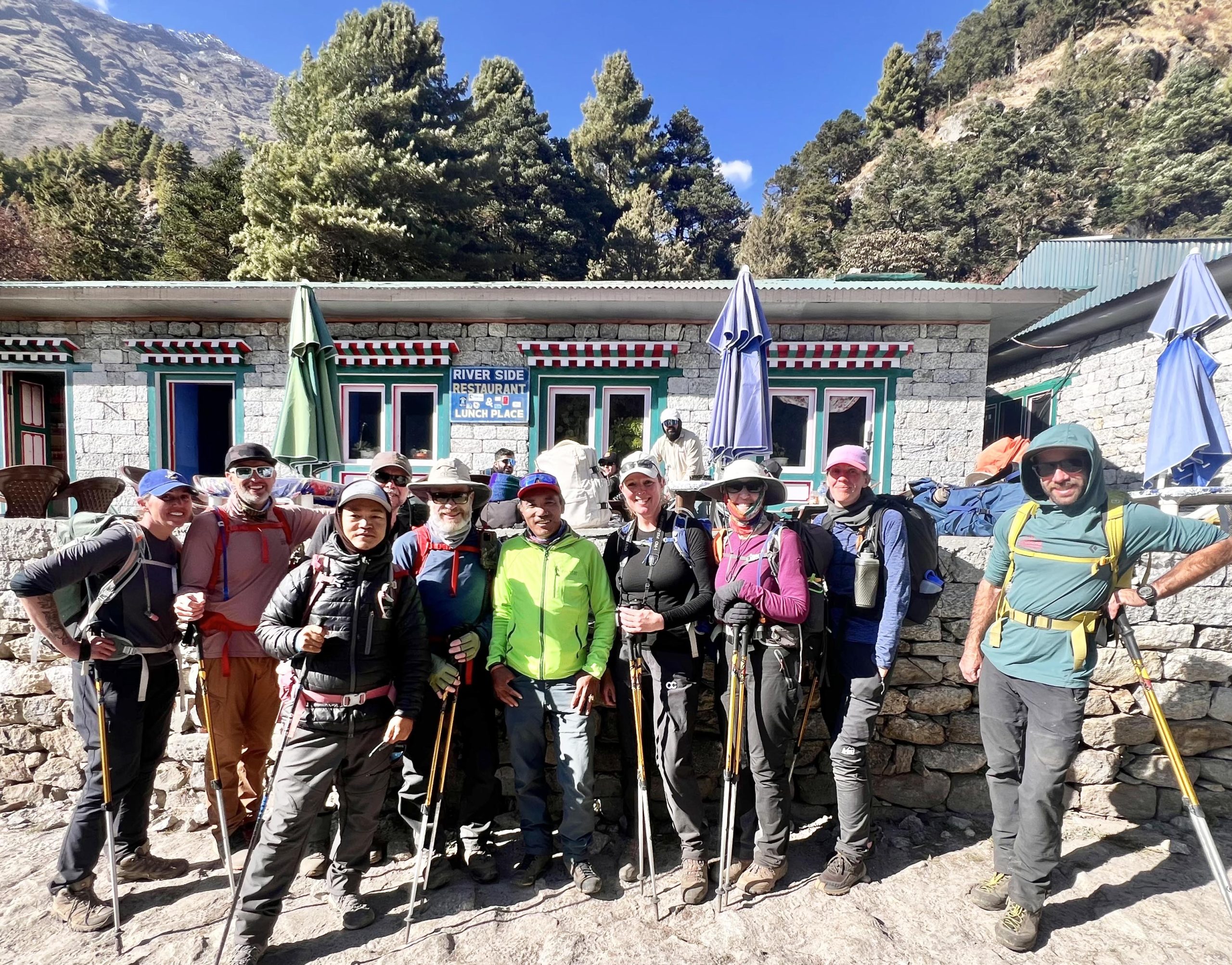
Trekking leaders Bhim Tamang and Gopal Raj Lama lead departures across both trek styles. They apply identical pacing judgment and altitude awareness, whether a group is staying in a basic teahouse or a heated luxury lodge that evening.
Our team can walk you through current pricing, lodge availability, and helicopter return options for the luxury package directly. These details shift more frequently than the standard trek’s fixed itinerary and pricing structure.
Whichever style fits your budget and comfort preference, the guide quality, safety protocols, and acclimatization schedule stay consistent. That’s ultimately what determines whether a trekker reaches Base Camp safely, not which lodge they slept in along the way.
What Stays the Same on Both Standard and Luxury Everest Base Camp Trek Styles
It’s easy to focus on the differences and forget how much actually stays identical. Both trek styles use the same permits: the Sagarmatha National Park entry fee and the Khumbu Pasang Lhamu Rural Municipality fee. Neither package skips these, and neither charges differently based on comfort tier.
Both trek styles also follow the same acclimatization rules. The Namche Bazaar rest day stays fixed. The Dingboche rest day stays fixed. No amount of extra spending shortens the body’s need to adjust to altitude, so neither package tries to.
Guide qualifications don’t shift either. Every guide leading a Lhasso Adventure departure, standard or luxury, is licensed and government-certified. Emergency protocols, including daily oxygen monitoring above 3,000 meters, apply identically across both trek styles.
The trail itself is unchanged too. Every trekker crosses the same suspension bridges. Every trekker passes through Tengboche Monastery. Every trekker stands at the same 5,364-meter Base Camp marker at the end of the walk. The comfort differences covered throughout this guide sit on top of an experience that’s fundamentally shared, not separate.
Frequently Asked Questions For Standard vs Luxury Everest Base Camp Trek
What is the difference between the Luxury and Standard Everest Base Camp Trek?
The Standard vs Luxury Everest Base Camp Trek difference comes down to accommodation quality, Kathmandu hotel tier, group size, and the optional helicopter return. Both trek styles follow the same trail and reach the same Base Camp destination.
What is the Standard vs Luxury Everest Base Camp Trek price?
For a 2 to 4 person group, the standard trek costs US$1,815 per person and the luxury trek costs US$4,870 per person. Prices drop for both trek styles as group size increases, reaching US$1,457 and US$3,910 per person for a 14 to 16 person group.
What is the Standard vs Luxury Everest Base Camp Trek cost breakdown?
Both trek styles include the same guide, permits, meals, and flights. Luxury cost covers a 4-star or 5-star Kathmandu hotel and upgraded trekking lodges, while standard cost covers a 3-star hotel and standard teahouses. Both packages exclude international flights, visa fees, tips, and personal expenses.
Is the Luxury Everest Base Camp Trek easier than the standard trek?
No. The physical difficulty is identical, since both trek styles cover the same distance, elevation gain, and acclimatization schedule. Luxury adds comfort at each evening’s stop rather than reducing the walking effort itself.
How many days is the Luxury Everest Base Camp Trek?
The luxury itinerary typically runs 13 days, slightly shorter than the standard trek’s 12 to 14 day range, while still including both essential acclimatization days.
Does the Luxury Everest Base Camp Trek include a helicopter return?
A helicopter return from Gorak Shep to Kathmandu is offered as part of the luxury package where included, replacing the standard walking descent. Confirm with your operator whether it’s built into the price you’re quoted or offered as an add-on.
Which trek style is better for beginners, luxury or standard?
Both trek styles suit beginners equally well from a safety standpoint. Luxury may appeal more to first-time high-altitude trekkers who want extra comfort and rest. Budget-conscious beginners often find the standard trek entirely manageable.
Does the price difference include better guides or more safety support?
No. Both trek styles include the same licensed, English-speaking guide standard and the same daily oximeter monitoring above 3,000 meters. The price difference pays for accommodation tier and comfort, not a higher level of safety.