How Long Does the Everest Base Camp Trek Take?
August 17, 2026 Lhasso Adventure
The Everest Base Camp trek takes 12 to 14 days round trip from Lukla, including two built-in acclimatization days. Most trekkers spend 8 to 9 days walking toward Base Camp and 3 to 4 days walking back down the same trail.
That single number rarely tells the full story, though. The real answer shifts depending on the itinerary style, how your body responds to altitude, and how much buffer you leave for Lukla’s weather-sensitive flights. This guide walks through exactly where those days go, so you can plan a schedule that holds up on the trail rather than one that just looks tidy on paper.
How Long Does the Everest Base Camp Trek Take?
The Everest Base Camp trek runs 12 to 14 days for most standard itineraries, counted from your outbound Lukla flight to your return flight from the same airstrip. Once you add a couple of days in Kathmandu on either side for arrival, orientation, and departure, the full trip usually stretches closer to 14 to 16 days from door to door.
This isn’t a rough estimate pulled from a brochure. It reflects a fixed acclimatization curve that shapes nearly every safe itinerary running through the Khumbu, regardless of which operator is leading the group.
Roughly 8 to 9 of those days go toward the ascent, working steadily up toward Base Camp, while the remaining 3 to 4 days cover the walk back down, moving noticeably faster since the body no longer needs new elevation to adjust to.
Two rest days sit inside that ascent window, one at Namche Bazaar and a second at Dingboche. Neither is a day off in the usual sense; both function as the mechanism that lets the body catch up to elevation gained over the preceding two or three days.
Shorter itineraries do exist, and a few operators offer helicopter-assisted returns that compress the whole trip to 9 or 10 days. Both cut directly into that acclimatization buffer, which is exactly why the standard 12 to 14 day structure remains the safer starting point for anyone without prior high-altitude trekking behind them.
Everest Base Camp Trek Duration at a Glance
Different trekkers arrive with different constraints, and matching the right itinerary style to your available time makes more difference than most people expect going in.
| Itinerary Type | Duration | Best For |
| Standard EBC Trek | 14 days | First-time high-altitude trekkers |
| Luxury EBC Trek | 13 days | Comfort-focused trekkers with upgraded lodge stays |
| Short/Compressed EBC | 10 days | Experienced trekkers with a tight schedule |
| Helicopter Return EBC | 8–9 days | Time-limited travelers using a one-way heli segment |
| Gokyo & EBC via Cho La | 16 days | Trekkers adding Gokyo Lakes and a pass crossing |
| Everest Three Passes | 20 days | Experienced trekkers wanting the full high-pass circuit |
The 12 to 14 day window has held its position as the standard for a practical reason: it’s the shortest schedule that still gives the body a genuine chance to adjust before crossing 5,000 meters. Anything shorter trades acclimatization time for speed, a trade that isn’t always visible until symptoms show up mid-trek, while anything longer tends to add side valleys or extra passes rather than simply covering more ground toward Base Camp itself.
Day-by-Day Duration Breakdown of the Standard Itinerary
Breaking the trip into its individual stages makes the 12 to 14 day figure easier to picture, since each day carries its own distance, elevation gain, and walking time.
The first two days ease trekkers into the region rather than throwing them straight into altitude. Day one covers arrival and orientation in Kathmandu, and day two combines the scenic flight to Lukla with a gentle three-hour walk down to Phakding at 2,650 meters, following the Dudh Koshi River past small Sherpa farming settlements.
Days three and four bring the first real elevation jump, climbing into Namche Bazaar at 3,440 meters before pausing there for acclimatization, crossing the Dudh Koshi several times and passing through Sagarmatha National Park’s entrance gate at Monjo along the way.
From Namche, the trail continues through Tengboche Monastery at 3,867 meters on day five, then pushes on to Dingboche at 4,410 meters by day six, where forest gives way to open, wind-scoured high country. A second acclimatization day follows there, giving the body another full cycle to adjust.
Days eight and nine cover the most demanding stretch of the whole trip: Dingboche to Lobuche at 4,930 meters, then on to Base Camp itself at 5,364 meters with an overnight at Gorak Shep, 5,164 meters. A pre-dawn climb to Kala Patthar at 5,545 meters on day ten delivers the clearest close-up view of Everest on the route, before the descent toward Pheriche begins.
The final stretch, days eleven through fourteen, retraces the trail back through Namche and into Lukla, closing with the return flight to Kathmandu and a day held open for departure. Descent days move faster throughout, since the body is no longer adjusting to new elevation with each step.
How Many Days Does It Take to Reach Everest Base Camp?
Reaching Base Camp itself takes 8 to 9 days from Lukla, covering the ascent-only portion of the trip at a pace built around the acclimatization schedule rather than raw walking speed. That distinction matters more than it might first appear.
This 8 to 9 day figure stays remarkably consistent across reputable itineraries, and that consistency isn’t a coincidence. It’s dictated largely by altitude physiology rather than how quickly a trekker can physically cover ground, since the body needs a certain number of overnight cycles at each elevation band to adjust safely.
Trekkers sometimes ask whether walking longer hours each day could shorten this window. Technically, a fit trekker could push further and shave time off the ascent, but doing so removes the overnight adjustment periods the body depends on, raising altitude sickness risk far more than it saves in travel time.
The stages that make up this ascent aren’t evenly weighted either. Early days near Lukla and Phakding cover shorter distances at gentler elevation gain, while the final push from Lobuche toward Base Camp and Gorak Shep asks for a longer walking day precisely when oxygen levels are at their lowest, which is exactly why the elevation gain and oxygen drop across each stage of the climb matters more than the kilometer count alone.
Guides pacing a group through this ascent window watch for more than distance covered. A trekker moving noticeably slower than expected on day seven or eight, particularly alongside reduced appetite or broken sleep, often signals that the schedule needs a touch more room rather than a push to keep pace.
How Long Is the Descent from Everest Base Camp?
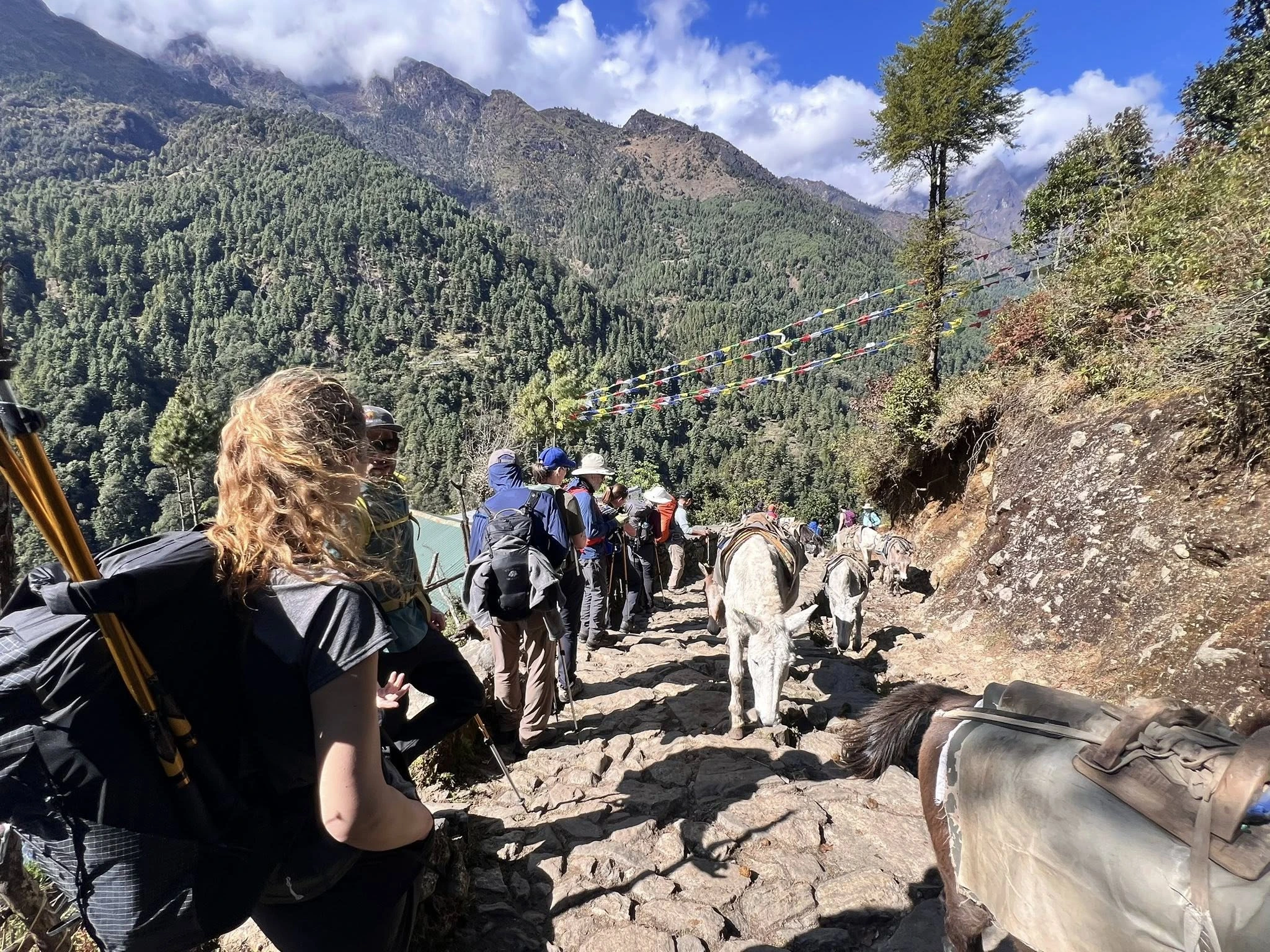
The descent back to Lukla takes 3 to 4 days, a noticeably quicker pace than the climb up, since the risk of altitude sickness drops sharply once the trail starts heading downhill instead of gaining elevation.
Some itineraries compress this return stretch further by arranging a helicopter transfer from Gorak Shep or Pheriche straight to Kathmandu. This tends to appeal most to trekkers who’ve already used their buffer days elsewhere and need a firmer guarantee of making a fixed return flight home.
Walking the full descent instead of flying it offers something a helicopter transfer skips over. Villages passed quickly on the way up, often while focused on pacing and altitude, appear in a completely different light on the way back down, once the pressure of reaching Base Camp has eased.
The descent isn’t entirely free of challenges, either. Knees take on more strain heading downhill than they did climbing, particularly across the stone staircases near Namche, which is one reason trekking poles earn their keep just as much on the way down as up.
Most trekkers describe the descent as almost anticlimactic after the intensity of reaching Base Camp and Kala Patthar, which is a fairly normal reaction rather than a sign anything went wrong. The trip settles into a steadier, more reflective rhythm before the Lukla flight brings it to a close.
Why Acclimatization Days Extend the Trek Duration
Acclimatization days exist because the body needs time, not just steady exposure to altitude, to adjust to progressively thinner air. Skipping or rushing them remains the single biggest reason trekkers turn back before ever reaching Base Camp.
The standard itinerary places these rest days at Namche Bazaar and Dingboche, positioned right before two of the largest elevation jumps anywhere on the route. That placement isn’t arbitrary. Both stops sit just below the altitude bands where symptoms typically start appearing.
On both rest days, the widely recommended approach follows a simple pattern known as “climb high, sleep low.” Trekkers hike up to a higher point during the day, then return to sleep at the lower elevation, giving the body a gentler overnight adjustment than sleeping at the day’s peak altitude would allow.
Namche’s rest day, in particular, offers more than empty downtime if it’s used well. Spending it on a short, well-paced acclimatization hike above Namche Bazaar does far more for the body’s adjustment than a full day in a teahouse bed, while also delivering some of the clearest early mountain views on the route.
Removing either of these two days from an itinerary to save time does more than raise the physical risk. It strips out two of the more memorable, lower-pressure days on the trek, the kind where there’s room to wander a market stall or watch light shift across the peaks without a schedule pulling at the back of your mind.
Can You Trek Everest Base Camp Faster?
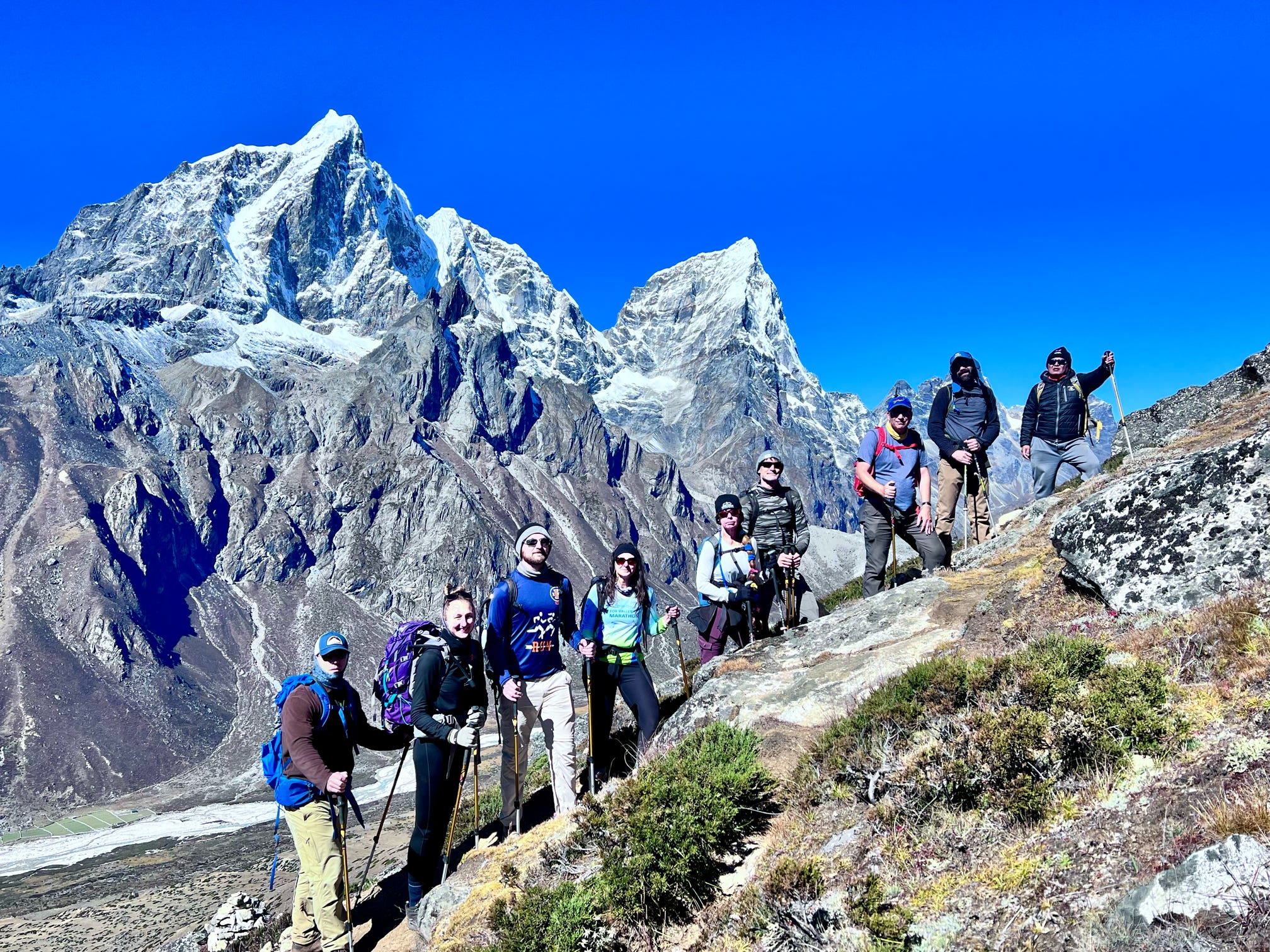
Yes, shorter itineraries do exist, generally ranging from 9 to 11 days. They work by combining walking days, adding a helicopter segment somewhere along the route, or trimming one of the standard rest days, and each of these adjustments comes with a meaningfully higher altitude sickness risk attached.
A typical helicopter-assisted itinerary has trekkers walk up over 6 to 7 days, then fly directly back to Kathmandu from Gorak Shep or Pheriche, cutting what would normally be 3 to 4 descent days down to under an hour in the air.
This kind of compressed schedule tends to suit trekkers who’ve already handled high altitude elsewhere, or travelers working around a genuinely fixed vacation window. It’s a poorer fit for first-time trekkers, since removing days removes exactly the buffer that makes the standard trek forgiving of an off day.
When a schedule is tight, adjusting travel dates around the trek tends to produce a far better outcome than compressing the trek around fixed dates. That reshuffling costs nothing beyond a bit of early planning and consistently leads to a safer trip.
Cost is worth mentioning too, since faster itineraries aren’t automatically cheaper. Helicopter segments add a meaningful expense on top of the package price, so a shorter trek sometimes costs more overall than the standard 12 to 14 day version once flights are factored in.
What Happens If You Extend the Trek Beyond 14 Days?
Extending beyond the standard 14 days usually means adding a distinct side trip rather than simply walking the same route more slowly. Two extensions come up most often among trekkers looking for more time in the Khumbu: the Gokyo Lakes and the full Everest Three Passes circuit.
Adding the turquoise Gokyo Lakes and a crossing of Cho La Pass to the standard route stretches the trip to roughly 16 days. The extra distance winds through a different valley entirely, opening up views of Cho Oyu and the Ngozumpa Glacier the standard trail never quite reaches.
Trekkers chasing a longer route sometimes look toward the full Three Passes circuit, which stretches to 18 to 20 days and adds crossings of Kongma La, Cho La, and Renjo La on top of Base Camp and Kala Patthar. It covers significantly more remote terrain, with multiple passages above 5,000 meters rather than the single sustained push the standard trek involves.
Both extensions suit trekkers who’ve already handled some high-altitude trekking rather than a first Himalayan trip. The added passes demand a stronger acclimatization tolerance than the gentler, single-peak structure of the standard route.
There’s a middle ground for trekkers wanting a bit more time without a full pass crossing. Simply adding an extra rest day or two into the standard itinerary gives a slower, more relaxed pace through the same villages.
Factors That Affect Everest Base Camp Trek Duration
A handful of variables can shift the actual length of a trip beyond the standard 12 to 14 days, and planning around them tends to work out far better than being caught off guard partway through.
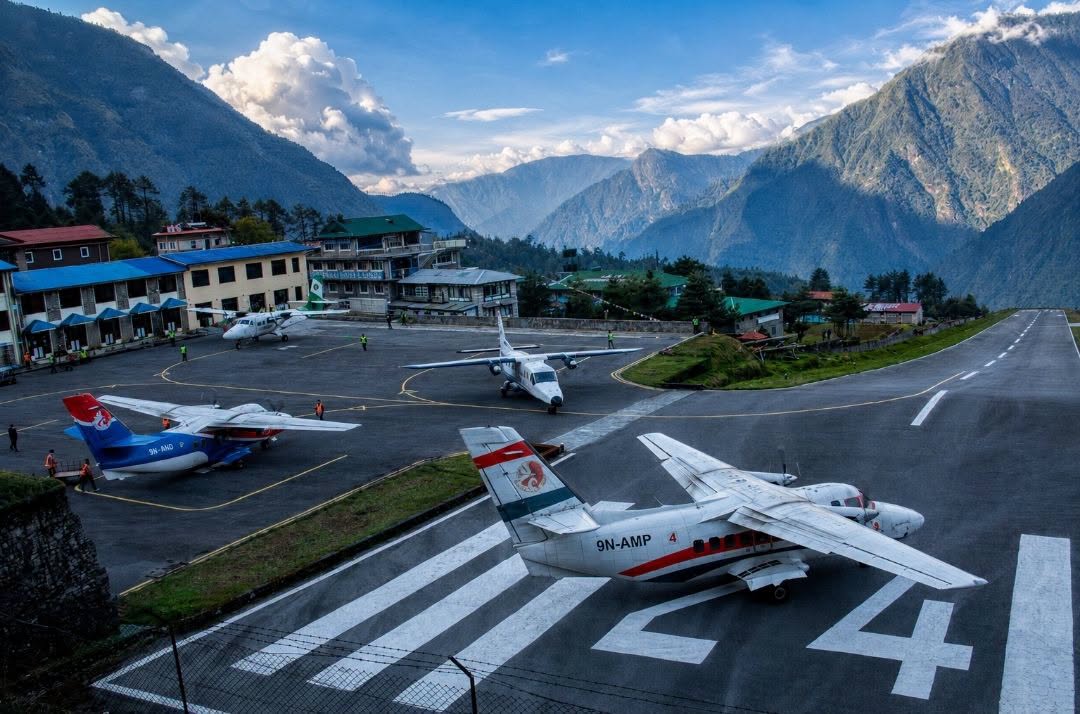
Lukla’s flight schedule sits at the top of that list. Weather regularly delays or cancels flights in both directions, since the airstrip’s short runway and mountain approach leave little margin for poor visibility. Building in one to two buffer days on either end protects against a delay eating into an international connection home.
Private and group departures behave differently, too. Private trips can be shortened, extended, or adjusted more freely, while fixed group departures follow a set itinerary from the start, offering more predictability but noticeably less flexibility.
Fitness and walking pace play a smaller role in overall duration than most trekkers assume. Some move faster than the standard schedule requires and simply arrive at each lodge earlier, though few genuinely benefit from pushing past the pace the acclimatization schedule already allows for.
Weather beyond the Lukla flight can also add a day here and there. Heavy snow or a sudden storm occasionally forces an unplanned rest day, particularly on stretches above Dingboche where the trail crosses more exposed terrain.
Health and individual altitude response round out the list. Mild symptoms sometimes call for an extra rest day at a given elevation, which is a normal part of trekking at altitude rather than a sign anything has gone wrong.
How Many Hours Do You Walk Each Day on the Trek?
Most days on the Everest Base Camp trek involve 5 to 7 hours of walking, though the exact figure shifts depending on which stage of the trip a trekker happens to be on. Acclimatization days replace this fixed walking schedule with a shorter, optional hike instead.
Early days ease trekkers in gently, closer to three hours of walking as the itinerary works to introduce altitude gain gradually. That gentler start matters more than it might seem, since it gives the body its first taste of the trail’s rhythm before the terrain asks for more.
The day running from Lobuche to Base Camp and on to Gorak Shep stands out as the longest on the route, often stretching close to six hours one way across increasingly rocky ground, made harder by thinning oxygen rather than distance alone.
Walking pace naturally slows the higher the trail climbs, and that slowdown is expected rather than any sign of struggling. A slower, steady rhythm above 4,000 meters actually conserves more oxygen per minute than a faster pace broken up by frequent stops, which is part of why guides set a deliberately unhurried tempo once the trail passes Dingboche.
Rest breaks factor into these hourly estimates too, growing both more frequent and more necessary as elevation increases, since a pause at 4,800 meters is less about scenery and more about giving the lungs a genuine chance to recover.
Everest Base Camp Trek Duration vs. Distance
Duration and distance are related but far from identical, and trekkers researching the trip often blur the two together when trying to gauge how demanding a given day will actually feel. The full round trip covers roughly 130 kilometers, or about 80 miles, from Lukla and back.
Daily distances vary considerably across the route, ranging from short three-hour stretches near the start to longer segments approaching seventeen kilometers deeper into the itinerary. What tends to surprise first-time trekkers is how little the raw kilometer count predicts about difficulty once elevation enters the picture.
A fourteen-kilometer day at 3,000 meters bears almost no resemblance to a fourteen-kilometer day at 4,800 meters, even though the map distance reads identically on paper. Thinner air at the higher elevation slows pace considerably and demands more frequent rest, which is exactly why duration gets measured in days and acclimatization stops rather than kilometers alone.
This distinction becomes especially relevant when comparing itinerary options side by side. A shorter 9-day trek doesn’t cover meaningfully less ground than the standard 14-day version; it covers roughly the same 130 kilometers in far fewer days, which is precisely the trade-off that raises its altitude sickness risk. The kilometers stay fixed. What changes is how much time the body gets to adjust along the way.
Best Time Frame to Plan Your Trip Around
The 12 to 14 day duration itself holds steady across the calendar, but the season chosen for departure still shapes how those days actually feel once underway. Spring and autumn remain the two windows most commonly recommended for booking, and for good reason.
Both seasons bring more stable weather patterns overall, which directly lowers the odds of a Lukla flight delay eating into the buffer days built around a trip. Winter and monsoon departures remain possible and are walked by plenty of trekkers each year, though both carry a somewhat higher chance of an unplanned extra day somewhere along the route.
Spring brings blooming rhododendron forests lower on the trail alongside comfortable daytime temperatures, while autumn tends to deliver the clearest mountain visibility of the year following the monsoon’s departure. Either season pairs well with the standard 12 to 14 day structure without requiring any adjustment to the itinerary itself.
Matching travel dates to the right conditions matters just as much as the itinerary length in shaping how a trip actually unfolds. A closer, month-by-month look at temperature shifts and trail conditions across the Everest region makes it easier to line up a departure window with the specific experience a trekker is after, whether that’s quieter trails, peak flower season, or the sharpest possible mountain views.
How Lhasso Adventure Structures the Standard Itinerary
Our standard departure follows the exact day-by-day pattern outlined earlier in this guide, built around two fixed rest days and enough built-in flexibility to absorb a Lukla flight delay without throwing the rest of the schedule off balance.
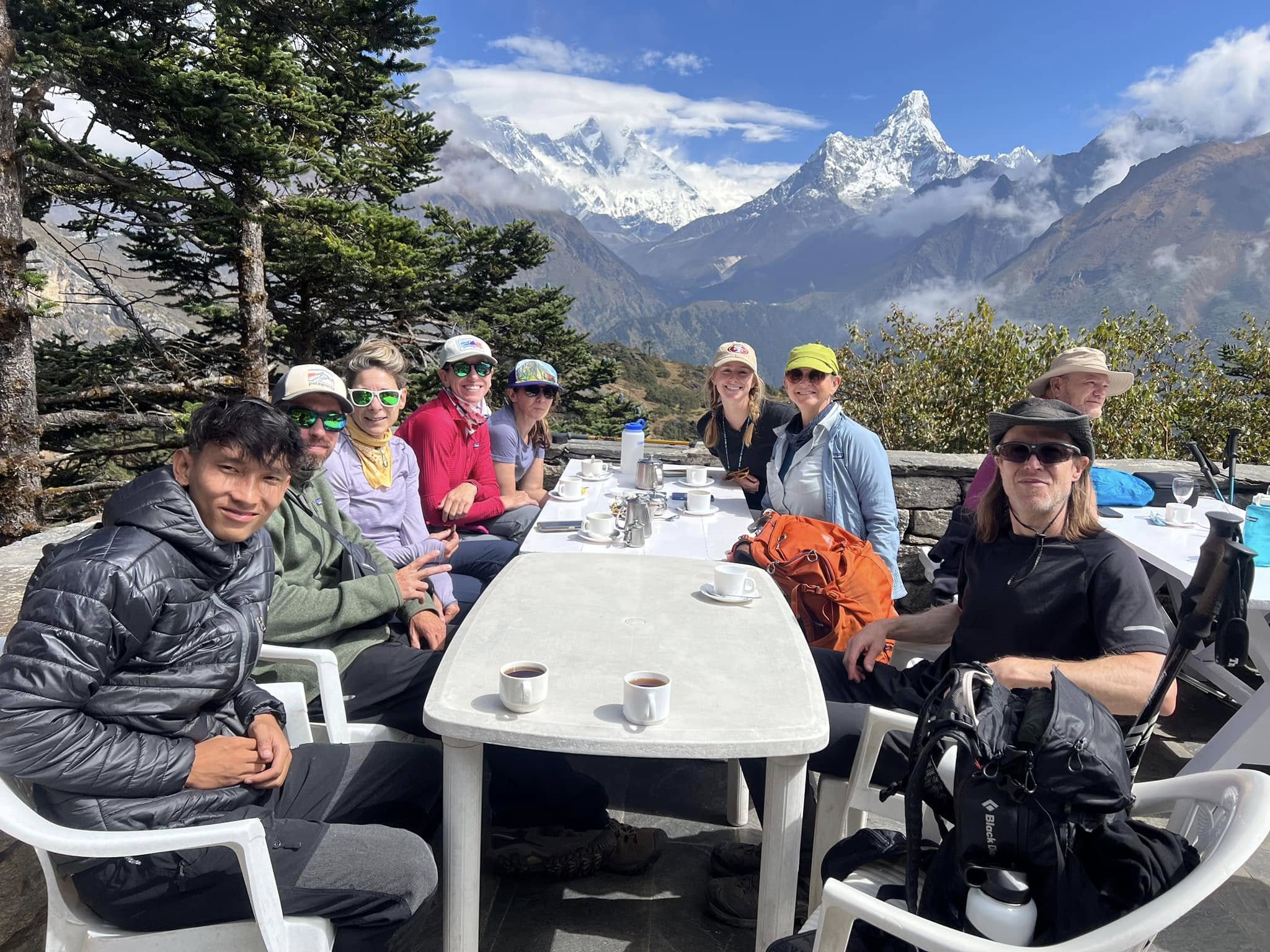
Trekking leaders Bhim Tamang and Norbu Tamang, together with guide Shyam Bahadur Lama, run this itinerary on a near-weekly basis through spring and autumn, which means the pacing reflects years of watching how real groups respond at each stage rather than a schedule copied from a generic map.
Daily oxygen saturation checks above 3,000 meters, taken with a simple pulse oximeter, let our guides catch early warning signs before they become obvious to the trekker experiencing them. Porters carry the bulk of the gear under a strict 20 to 25 kilogram weight limit, keeping daypacks light enough that trekkers can focus purely on pacing.
Group departures cap at sixteen trekkers, a size that keeps the itinerary personal enough for a guide to notice if someone’s pace or appetite has shifted between day three and day eight. Anyone comparing operators tends to find that the guide qualifications and safety standards behind a well-run itinerary matter more than the daily plan printed on paper.
Buffer days sit built into the schedule around the Lukla flight on both ends of the trip, absorbing most weather-related delays without forcing a compressed itinerary later on.

Everest Base Camp Trek Duration Compared to Other Himalayan Treks
Placing the Everest Base Camp timeline alongside other Nepal treks helps put the 12 to 14 day figure into perspective. It sits toward the longer end of the region’s moderate treks, though well short of the longest multi-pass routes on offer.
The Annapurna Base Camp trek typically wraps up in 12 to 14 days, a couple of days shorter, largely because its maximum altitude tops out lower than the Khumbu route reaches. The Manaslu Circuit runs closer to 15 days, similar in overall length but spread across a longer trail with a genuine high pass crossing at Larke La.
Shorter regional routes such as Poon Hill or Mardi Himal conclude in 7 to 9 days, since neither climbs high enough to require the same acclimatization structure. None of these comparisons make one trek objectively harder than another; each simply reflects how much altitude and remoteness a route asks trekkers to handle.
Trekkers weighing routes against each other sometimes ask whether an extra two or three days elsewhere buys a meaningfully different experience. In the Khumbu’s case, it generally does, since those additional days are exactly what let the itinerary breathe rather than stacking elevation gain back to back.
Trip length alone tends to get underweighted next to altitude and terrain, yet it deserves real consideration. Twelve to fourteen days of sustained physical effort is a considerably longer window than a short hike, and that stretch changes how fatigue and motivation behave across the entire trip.
Common Mistakes That Add Unplanned Days to a Trek
A handful of recurring mistakes turn a clean 14-day plan into a stressful one, and nearly all of them are avoidable with a bit of forward planning well before departure.
Booking an international flight with no buffer stands out as the most common misstep. Trekkers who fly out of Kathmandu the same day their trek officially ends leave zero room for a delayed Lukla flight, and a single day of poor weather can cascade into a missed connection home.
The short flight between Kathmandu and Lukla remains one of the most weather-sensitive legs of the trip, given its mountain approach and short runway. Autumn and spring keep delays relatively rare, though they’re never fully off the table.
Trying to “make up time” partway through the trek creates its own problems. A trekker who falls slightly behind sometimes attempts to combine two walking days into one, which is precisely the kind of compressed pacing that raises altitude sickness risk at the wrong point in the itinerary.
Pushing through early symptoms to avoid losing a day follows a similar logic. An extra half-day of rest taken early tends to cost far less than a forced descent triggered by symptoms ignored for too long.
Arriving without adequate fitness preparation rounds out the list. Trekkers who show up undertrained often move slower than the itinerary allows for, turning a comfortable six-hour day into a rushed eight-hour one.
Tips for Managing Your Trek Duration
A few practical habits make the difference between a smooth 14-day trip and a stressful one, drawn from patterns that repeat across nearly every departure that runs through the Khumbu.
Building in 2 to 3 extra buffer days beyond the planned 14, split between the start and end of a trip, isn’t optional planning so much as standard practice. Lukla flight delays happen often enough that skipping this step tends to create far more stress than the extra days would ever cost.
Compressing the ascent to save a single day rarely pays off. The itinerary’s structure exists specifically around acclimatization physiology, and shaving a day off the climb remains one of the changes most likely to end a trek early.
Making full use of both rest days, rather than resting in bed, pays off more than it might seem. A short acclimatization hike does far more for the body’s adjustment than a full day spent lying still, while also offering some of the trip’s more relaxed moments.
Padding an international departure with at least 2 to 3 buffer days after the scheduled return to Kathmandu prevents more travel stress than almost any other habit on this list.
Trusting a guide’s pacing, even when it feels slower than a trekker might choose independently, rounds out the list. The built-in slowness above 4,000 meters functions as a safety feature rather than an unnecessary delay.
Frequently Asked Questions for How Long Does the Everest Base Camp Trek Take
How long is the trek from Lukla to Everest Base Camp?
The one-way trek from Lukla takes 8 to 9 days, covering roughly 65 kilometers with two acclimatization stops built in.
What is the shortest way to reach Everest Base Camp?
The shortest route pairs a Lukla flight with a helicopter return from Gorak Shep, compressing the round trip to around 8 to 9 days, trading acclimatization buffer for speed.
Is trekking to Everest Base Camp difficult?
The trek is physically demanding but not technical, with no climbing or ropes involved anywhere on the route. Difficulty comes mainly from the altitude and sustained walking days rather than the terrain itself.
Is the Everest Base Camp trek dangerous?
The main risk comes from altitude sickness, which is why the standard 12 to 14 day itinerary builds in acclimatization days and daily health monitoring. With proper pacing and a licensed guide, the trek is completed safely by most trekkers who attempt it.
Can the Everest Base Camp trek be done as an easy trip?
No version qualifies as genuinely easy, since altitude above 4,000 meters demands adjustment regardless of fitness. The 12 to 14 day itinerary remains the most manageable version, spacing the effort out enough for reasonably fit trekkers.
What is the Everest Base Camp hike distance?
The round-trip distance comes to approximately 130 kilometers, or 80 miles, split into daily stages ranging from roughly three to seventeen kilometers.
What is the Everest Base Camp trek route?
The route runs from Lukla through Phakding, Namche Bazaar, Tengboche, Dingboche, Lobuche, and Gorak Shep to Base Camp, then retraces the same trail back to Lukla.
How fit do I need to be to complete the trek within the standard duration?
Moderate cardiovascular fitness paired with solid leg strength is generally enough to complete the standard 12 to 14 day itinerary comfortably, without requiring elite conditioning.
How should I prepare for the time commitment of a 14-day trek?
Beyond physical training, it helps to block out 16 to 18 days total once Kathmandu arrival, departure, and Lukla flight buffers are factored in.